

Intel Unveils Core Series 3: Premium at a Budget Price
20.04.26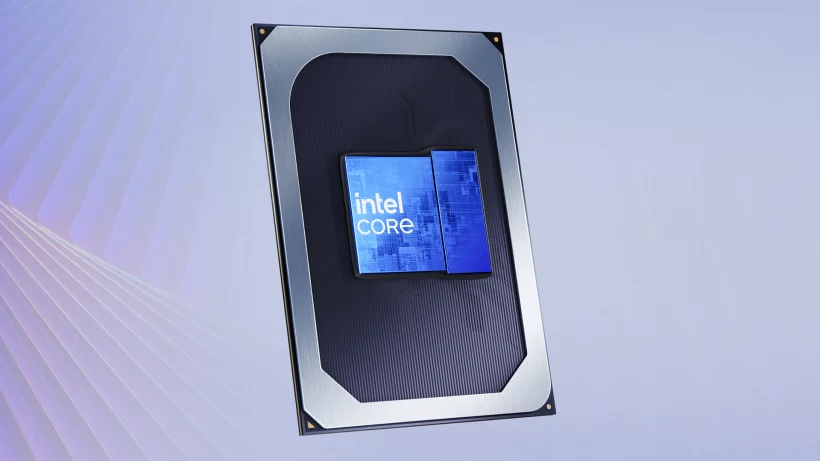
Intel is staging a mini-revolution by bringing flagship-level technologies to the mainstream Core Series 3 lineup. Thanks to the transition to the 18A process node, the new processors combine a massive boost in graphics performance with record-breaking energy efficiency, giving affordable laptops premium-level capabilities.
Intel’s New Strategy: The Evolution of Accessible Performance
After releasing flagship Core Ultra Series 3 solutions (Panther Lake architecture), the company shifted its focus to “entry-level” processor variants designed specifically for the budget and mid-range segments. The lineup without the Ultra branding is aimed at mainstream users and small businesses looking to upgrade systems that are around five years old. Compared to the Core i7-1185G7, single-threaded performance has increased by 47%, while multi-threaded performance has improved by 41%. The leap in graphics performance and AI workloads is especially impressive, with integrated GPU performance increasing by 2.8×.
The new chips are built on Intel’s 18A process technology, which the company calls its most advanced logic node to date. This advancement significantly improves energy efficiency. Compared to models like the Core 7 150U, the new chips consume 64% less power, enabling record-breaking battery life—modern laptops based on this platform can last through an entire workday on a single charge.
Artificial Intelligence and Technical Specifications
One of the key features of Core Series 3 is its “hybrid AI-ready” status. Despite their affordable price, the chips deliver up to 40 TOPS of total performance in machine learning tasks. This opens the door to advanced neural network capabilities on budget devices. In terms of connectivity, the platform also includes premium standards such as Wi-Fi 7, Bluetooth 6, and up to two Thunderbolt 4 ports.
Intel Core Series 3 Processor Lineup Specifications
| Model | Cores/Threads | Max Frequency (GHz) | Cache (MB) | AI (NPU TOPS) | Graphics | GPU Frequency (GHz) | AI (GPU TOPS) | Memory | TDP (W) |
|---|---|---|---|---|---|---|---|---|---|
| Core 7 360 | 6/6 | 4.8 | 6 | 17 | Intel Graphics 2Xe | 2.6 | 21 | LPDDR5x-7467 / DDR5-6400 | 15–35 |
| Core 7 350 | 6/6 | 4.8 | 6 | 17 | Intel Graphics 2Xe | 2.6 | 21 | LPDDR5x-7467 / DDR5-6400 | 15–35 |
| Core 5 330 | 6/6 | 4.6 | 6 | 16 | Intel Graphics 2Xe | 2.5 | 20 | LPDDR5x-7467 / DDR5-6400 | 15–35 |
| Core 5 320 | 6/6 | 4.6 | 6 | 16 | Intel Graphics 2Xe | 2.5 | 20 | LPDDR5x-7467 / DDR5-6400 | 15–35 |
| Core 5 315 | 6/6 | 4.4 | 6 | 15 | Intel Graphics 2Xe | 2.3 | 18 | LPDDR5x-7467 / DDR5-6400 | 15–35 |
| Core 3 304 | 5/5 | 4.3 | 6 | 15 | Intel Graphics 1Xe | 2.3 | 9 | LPDDR5x-7467 / DDR5-6400 | 15–35 |
Almost all processors in the series feature 6 cores, with only the entry-level Core 3 304 offering five cores. It is also the only model that does not deliver graphics performance on par with its immediate higher-tier counterpart.
The differences between the Core 5 315 and the higher-end Core 7 360 are no longer that significant. The main leap occurred in the Core 5 and Core 7 models, which received powerful Xe2 graphics and full AI support. The Core 3 model remains a more modest solution: it retains all the benefits of improved efficiency and the 18A process, but lags behind its higher-tier siblings in graphics and neural processing performance.
Memory support is limited to up to 48 GB for LPDDR5x-7467 and up to 64 GB for standard DDR5-6400. A TDP level of 15W allows manufacturers to build thin, nearly silent laptops with passive or minimal active cooling across the entire Core Series 3 lineup.
Expected Pricing of Core Series 3 Laptops
It is expected that more than 70 laptop models based on the new platform will be released soon by major manufacturers such as ASUS, Lenovo, MSI, HP, Dell, Samsung, Acer, as well as popular Chinese brands like Honor, Tecno, and Infinix. Estimated launch prices start at $550–600 for entry-level Core 3 devices, while more advanced Core 7-based systems are expected to be priced between $900 and $1200.
The End of the Premium Concept?
The release of Core Series 3 effectively challenges the concept of “premium.” Intel is bringing flagship-level power to budget laptops. A $300 device (and such models will likely appear in the near future) will be capable of handling everyday tasks such as working with neural networks, extended video playback, or gaming on the go. If it performs on par with the more expensive Ultra series, the distinction between budget and premium categories becomes largely symbolic.
It seems Intel has realized that to encourage users to upgrade from older systems, it’s not enough to offer luxury at a high price—this “luxury” must become affordable and part of everyday computing.
Don't miss interesting news
Subscribe to our channels and read announcements of high-tech news, tes

Oppo A6 Pro smartphone review: ambitious

 0
0 
Creating new mid-range smartphones is no easy task. Manufacturers have to balance performance, camera capabilities, displays, and the overall cost impact of each component. How the new Oppo A6 Pro balances these factors is discussed in our review.
In-Ear headphones Active Noise Cancellation: how Oppo eliminate noise
0 
In-ear headphones remain one of the most popular form factors due to their lightweight design. However, this design is considered one of the most challenging to implement active noise cancellation (ANC). We’ll explain how Oppo solved this problem.
ZTE U25: 5G Connectivity for 32 Devices with 8-Hour Battery Life

The ZTE U25 is one of the company’s first portable routers to feature 5G RedCap support.
Vivo V70 Lite 4G Debuts With Massive 8100mAh Battery and IP69 Rating

Vivo has announced the V70 Lite 4G version powered by the Unisoc T7300 processor. The device’s highlights include an 8100mAh battery and full IP69-rated body protection.