

Hanyuan-2 200-qubit quantum computer: powerful, compact and economical
13.05.26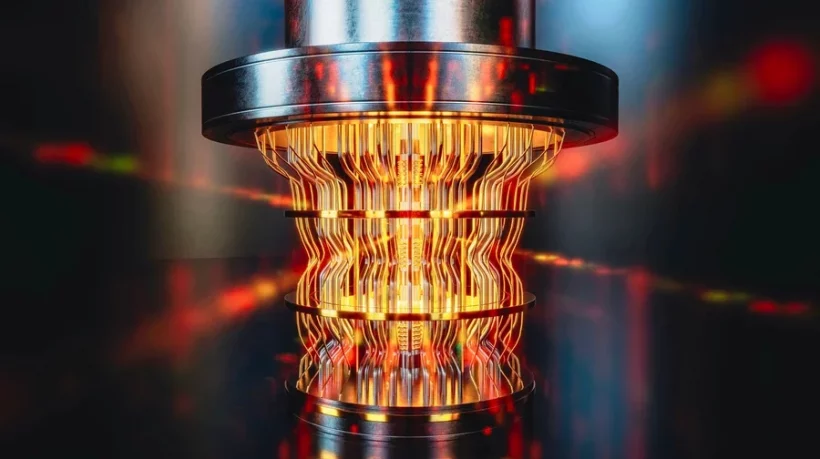
A new 200-qubit Hanyuan-2 quantum computer has been officially unveiled in China, which uses neutral atom technology and dispenses with complex, cumbersome cooling. This device, developed by CAS Cold Atom Technology with the participation of the Chinese Academy of Sciences, marks an important transition from laboratory experiments to real industrial applications of quantum computing.
What is Hanyuan-2 and why is it needed
Hanyuan-2 is an innovative quantum computing system focused on solving complex applied problems in industry. One of the main features of the device was the dual-core architecture, which allows two quantum processors to function in parallel. This method makes it possible to efficiently distribute the computing load between the cores, as well as to detect and correct data processing errors on the fly. According to the developers, this significantly increases the overall reliability and speed of the system.
Technical specifications and architecture description
The basic building block of Hanyuan-2 is 200 qubits formed from neutral atoms. The current indicators of the stability and operation time of the qubits in this system meet world standards. Unlike many competitors, the Chinese technology comes in an integrated, compact cabinet form factor, making it more suitable for use outside specialized laboratories.
- Number of qubits: 200;
- Processor type: dual-core;
- Cooling: low-power laser system;
- Total energy consumption: less than 7 kW.
Features and advantages of neutral atoms
Hanyuan-2 is based on neutral atoms instead of the usual ions, photons or artificial superconducting atoms. The absence of electric charge of particles allows to significantly reduce energy consumption. But the most important thing is that such atoms do not require the creation of an environment with extremely low temperatures. Instead of powerful cryogenic units, a compact laser cooling system is used. This greatly simplifies operation and makes maintenance of the device much cheaper compared to classic analogues.
As CEO of CAS Cold Atom Technology Tang Biao points out, such a solution allows a quantum computer to consume less than 7 kW of electricity. This allows you to integrate the machine into standard server conditions or industrial facilities without creating special “refrigeration” halls.
How does Hanyuan-2 differ from competitors
Most modern quantum computers are trying to scale systems up to millions of qubits, facing intractable control problems. Chinese developers took a different route, betting on the practical value and scalability of the system to hundreds of stable qubits. The main difference is in compact design and autonomy, which is extremely difficult to achieve on superconductors.
Release date
The Hanyuan-2 system is already preparing for an active market entry. The last generation Hanyuan-1 device started receiving the first contracts from both domestic Chinese and foreign customers in November of last year. The current version is designed to expand the commercialization of neutral atom technology on a global scale, offering businesses a ready-to-use next-generation computing tool that does not require superpower to maintain.
Don't miss interesting news
Subscribe to our channels and read announcements of high-tech news, tes

Oppo A6 Pro smartphone review: ambitious

 0
0 
Creating new mid-range smartphones is no easy task. Manufacturers have to balance performance, camera capabilities, displays, and the overall cost impact of each component. How the new Oppo A6 Pro balances these factors is discussed in our review.
Oppo Reno16 Pro 5G smartphone review: well-heeled
0 
Oppo Reno16 Pro 5G looks like a balanced smartphone, in which the manufacturer tried not to make a single characteristic the defining one. It has many advantages. Let’s tell you what
Infinix Xpad 30 Pro Debuts With 11-Inch Display and 2TB Storage Support

Infinix has officially unveiled the Xpad 30 Pro tablet, combining an 11-inch 90Hz screen with an affordable price tag. The device offers support for memory cards up to 2TB and is powered by the MediaTek Helio G200 processor.
Xiaomi Debuts Robot Vacuum with Active Roller Mop and AI Mapping
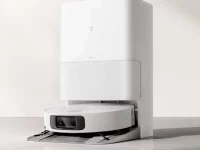
Xiaomi has announced the Mijia 7C robot vacuum, featuring an active scrubbing roller, 30,000 Pa of suction power, and an intelligent obstacle recognition system. The new model aims to revolutionize wet cleaning with its continuous washing system.