

Dangerous selfie: AI learned to copy fingerprints from pictures from social networks
18.05.26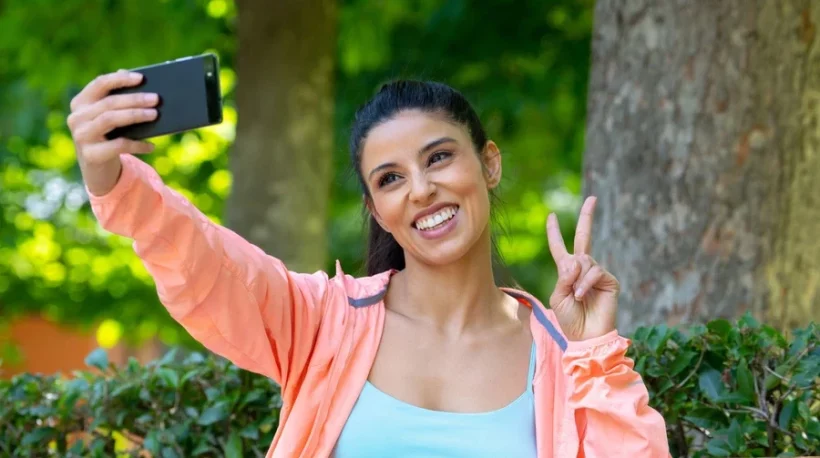
Do you like to pose for a photo with your index and middle fingers raised? New research shows that photo fingerprint theft is a reality. Cybersecurity experts say that artificial intelligence technologies are capable of reconstructing papillary patterns even from ordinary pictures posted on social networks, given the right lighting and focus conditions.
According to the Korea Herald, artificial intelligence has learned to read biometric data from images that clearly show palms or fingertips. Gestures popular in Asian countries – the sign “V” and “heart” from the fingers fall under the main impact. On one of the specialized reality shows, Chinese security expert Cha Chang demonstrated how criminals can use pictures of celebrities to gain access to their personal data.
Under what characteristics are photo data at risk?
The risk of restoring biometrics directly depends on the quality of the frame and the distance to the lens. Lee Chan cites the following metrics:
- Up to 1.5 meters: there is a high probability of almost complete recovery of the fingerprint pattern if the pads are in focus.
- From 1.5 to 3 meters: AI algorithms are able to extract up to 50% of fine details of the papillary pattern.
It is worth noting that the brightness of the lighting and the resolution of the camera of your smartphone also play a critical role.
From theory to practice
Specialists’ fears are confirmed by practical examples. Last year in the Chinese province of Zhejiang, a group of cybercriminals attempted to break into a “smart” door lock. For identification, they used a printout or a digital analogue of the owner’s hand, a detailed photo of which he had previously made publicly available. This proves that technology has ceased to be a purely theoretical threat.
The main problem of biometrics is its immutability. Unlike a compromised text password, which can be reset or reset, fingerprints cannot be “reset”. If attackers get a copy of your biometrics, they will keep it forever. Given that banking applications, government identification systems and access to devices are tied to fingerprints today, the risk becomes colossal.
How to protect yourself?
To protect your own data, experts recommend the following simple but effective security rules:
- Limit posting pictures where your fingers are close to the camera and well lit.
- Use editing tools to blur (blur) finger pads on important photos.
- Monitor your privacy settings on social networks, limiting access to your photos for outsiders.
- Remember that the more modern your phone’s camera is, the more data you risk leaving in public space.
Don't miss interesting news
Subscribe to our channels and read announcements of high-tech news, tes

Oppo A6 Pro smartphone review: ambitious

 0
0 
Creating new mid-range smartphones is no easy task. Manufacturers have to balance performance, camera capabilities, displays, and the overall cost impact of each component. How the new Oppo A6 Pro balances these factors is discussed in our review.
In-Ear headphones Active Noise Cancellation: how Oppo eliminate noise
0 
In-ear headphones remain one of the most popular form factors due to their lightweight design. However, this design is considered one of the most challenging to implement active noise cancellation (ANC). We’ll explain how Oppo solved this problem.
Apple Music to Introduce AI Music Labels

Apple Music will introduce special Made With AI labels for songs created with generative artificial intelligence by the end of 2026.
Windows 11 Update Breaks Games: The RGB Fix

The latest cumulative Windows 11 update has caused issues with game performance and stability. Microsoft confirmed the conflict is triggered by RGB peripheral software.