

Volkswagen discontinue production of VR6 engines
21.12.24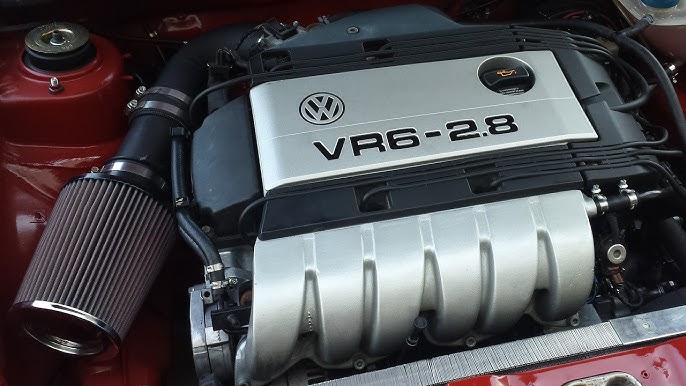
December 12, 2024 will go down in Volkswagen history as the day the legendary VR6 engine will be discontinued. Andreas G. Schleith, Public Relations Manager for Volkswagen Passenger Cars, announced the event on LinkedIn. The VR6 engine, which has been produced in a circulation of almost 1.87 million units over 34 years, has become a cult among car enthusiasts due to its unique design and characteristics.
History and features of the VR6
The VR6 engine was first introduced in 1991 at the Geneva Motor Show in the third generation of the VW Golf. The arrangement of the cylinders in the engine is similar to the V-shaped arrangement, the difference is that the angle between the cylinders is 15°, and not 45°, 60° or 90°.
The name VR6 comes from a combination of the words V-shaped engine (German V-Motor) and in-line engine (German Reihenmotor). The number 6 in the name indicates the number of cylinders, i.e. a V6 engine. In Europe, the VR6 engine was introduced in 1991 on the Volkswagen Passat and Volkswagen Corrado models, and in North America the following year. The Passat models, the Passat Variant station wagon and the American version of the Corrado were equipped with original 2.8-liter engines.
The European version of the Corrado and the all-wheel drive Passat Syncro had 2.9-liter engines with a capacity of 190 horsepower. In 1999, the engine was modified: a 24-valve 2.8-liter engine. The power was 204 hp, and the torque was 265 N⋅m. It was equipped with the Golf and Bora models, but the engine was incompatible with the Passat model.
Over time, the VR6 became the hallmark of many Volkswagen models, including the Passat, Corrado, Touareg, Phaeton, Sharan, as well as many other VW Group cars, such as the Audi Q7, SEAT Leon, Skoda Superb and even the Porsche Cayenne. Some Mercedes-Benz models, such as the Vito, were also equipped with this engine.
Reasons for the end of production
VR6 production in Europe was discontinued by VAG in the mid-2010s due to stricter environmental standards. However, it continued to be installed on cars for North America and especially for the Chinese market, where demand for this engine remained high. However, even in China, taking into account modern emission requirements and the transition to electrification, the VR6 had to be abandoned.
The VR6 will remain in memory as one of the most iconic engines, combining power, reliability and a unique sound. Its compactness and versatility made it an ideal choice for cars of various classes. The end of production marks the end of an era, but leaves a rich legacy of automotive history.
Don't miss interesting news
Subscribe to our channels and read announcements of high-tech news, tes

Oppo A6 Pro smartphone review: ambitious

 0
0 
Creating new mid-range smartphones is no easy task. Manufacturers have to balance performance, camera capabilities, displays, and the overall cost impact of each component. How the new Oppo A6 Pro balances these factors is discussed in our review.
Oppo Reno16 Pro 5G smartphone review: well-heeled
0 
Oppo Reno16 Pro 5G looks like a balanced smartphone, in which the manufacturer tried not to make a single characteristic the defining one. It has many advantages. Let’s tell you what
Made in Germany: Does the Gigaset GS6 Pro Live Up to the Hype?

The Gigaset GS6 Pro bets on German engineering and repairability. We explore what this status really means and whether it holds up against the competition.
Hugging Face Reveals Microduck: An AI-Powered Robot Duck

Hugging Face has introduced Microduck, a compact robot designed for AI-driven skill learning.