

China Bets Big on Humanoid Robots, but They Remain Too ‘Dumb’
28.08.26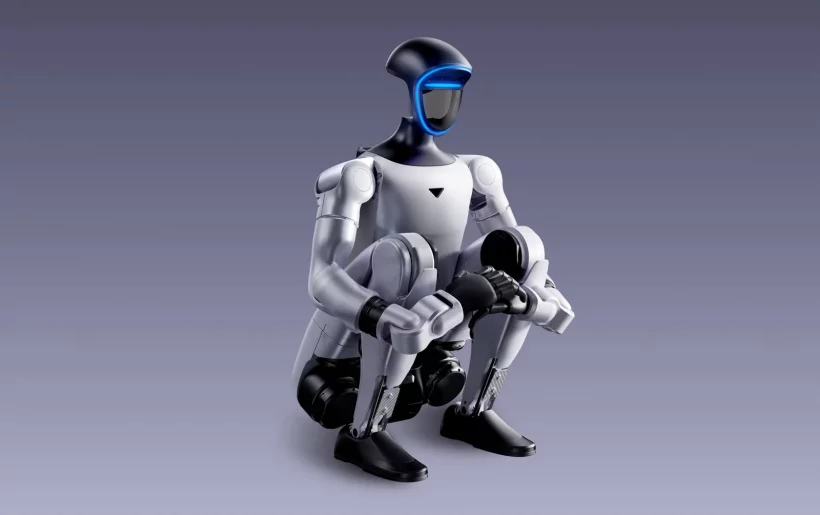
The Current State of China’s Humanoid Robotics Industry
China is rapidly expanding its capacity to build humanoid robots. Today, more than 150 companies are developing such machines. The government is investing heavily in the industry, and as of 2026, Chinese manufacturers have accounted for about 95% of the total global shipments of 20,000 units.
Performance Constraints: Why Robots Aren’t Replacing Humans Yet
Despite public demonstrations, in practice, robots still lag behind humans. In Chinese training centers, robots are learning to sort cargo, pack products, and brew coffee. However, the training process is extremely laborious: a novice trainer needs up to 300 attempts to achieve one correct movement, while an experienced one needs about 50. Task completion speeds for these robots often reach only 20% of a human worker’s productivity.
Technical Hurdles: AI vs. Physics
The main problem lies not only in the hardware but also in the AI algorithms. Modern “vision-language-action models” are extremely difficult to train. Full “physical intelligence” requires about 100 million hours of training data, while the industry currently has only 500,000 hours. In addition, robots struggle to adapt to changing conditions—for example, shifting the angle of objects or lighting makes task execution problematic.
Investment and Market Strategy
According to a Reuters report, in the first half of 2026, Chinese state-backed entities invested at least $230 million in the robotics industry, significantly exceeding the $62 million invested in the same period last year. China’s strategy focuses on mass-producing manufacturing capacity and subsidizing the industry to drive down costs through competition.
Success Stories and Future Outlook
Despite the technology’s general immaturity, there are specific breakthroughs. The company Galbot has already deployed robots into pharmacy chains, where they effectively retrieve products from shelves with a 95% success rate. However, widespread industrial use is still a long way off: current robots look more effective on stage performing dances or kung fu than they do in real-world production environments.
Don't miss interesting news
Subscribe to our channels and read announcements of high-tech news, tes

Oppo A6 Pro smartphone review: ambitious

 0
0 
Creating new mid-range smartphones is no easy task. Manufacturers have to balance performance, camera capabilities, displays, and the overall cost impact of each component. How the new Oppo A6 Pro balances these factors is discussed in our review.
Oppo Reno16 Pro 5G smartphone review: well-heeled
0 
Oppo Reno16 Pro 5G looks like a balanced smartphone, in which the manufacturer tried not to make a single characteristic the defining one. It has many advantages. Let’s tell you what
Minimal Phone 2: Physical Keyboards Make a Comeback

Minimal Phone 2 has raised $1.6M on Kickstarter, offering a physical keyboard, 12GB of RAM, and an OLED display.
China Bets Big on Humanoid Robots, but They Remain Too ‘Dumb’
China is aggressively developing its humanoid robotics industry, investing hundreds of millions of dollars. Despite these ambitions, the machines’ current capabilities remain limited, questioning their real-world impact on the labor market in the near future.