

US battery factories will be produce batteries for AI data centers instead of electric cars
16.02.26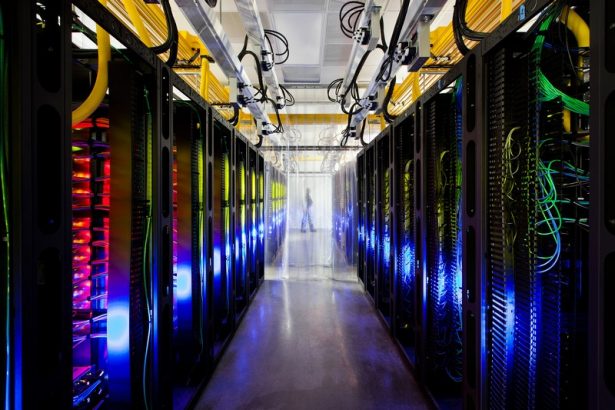
Global automakers and battery makers are shifting their strategies: instead of producing batteries for electric vehicles, they are converting factories to produce cells for energy storage systems (ESS). This is due to a sharp increase in demand for data centers due to the artificial intelligence boom, while electric vehicle sales have slowed. Therefore, the increased consumption of chips and batteries for AI and data centers is impacting component costs and limiting their availability.
According to analytics firm CRU, ten factories in North America are already being converted to produce ESS cells. These facilities previously planned to produce batteries for electric vehicles, but plans changed, leading to the cancellation of capacity capable of supplying batteries for approximately two million vehicles. Of the ten sites, seven will focus primarily on the energy storage system market.
Purpose and Functions of ESS
ESS are complexes with racks of battery modules controlled by specialized software. These systems help national power grids, as well as homes, businesses, and factories, compensate for the instability of renewable energy sources such as wind and solar power.
An example is a plant in Kentucky, which Ford initially developed to produce batteries for electric vehicles. The facility is now being modified to meet “growing customer demand for domestic energy storage systems with a limited number of qualified suppliers.”
Automakers and Big Tech
General Motors battery chief Kurt Kelty told the Financial Times that the company is considering producing batteries for ESS in-house. Stellantis, in partnership with South Korea’s Samsung SDI, is already converting production lines at its joint plant in Indiana to produce ESS cells. As a result, all three major Detroit automakers could become suppliers to tech giants building data centers for artificial intelligence.
Uninterruptible power supply is critical for data centers, as any outages or power surges can shut down servers. The rapid construction of data centers in the US is opening up new revenue streams for automakers and battery manufacturers.
Tesla and Energy Storage Revenue Growth
Tesla is already actively pursuing this goal. The company uses components from various suppliers, including CATL and LG, in its Megapack and Powerwall systems. Last year, Tesla’s revenue from energy generation and storage grew by 27% to $12.8 billion, compared to $2.8 billion in 2021. Meanwhile, revenue from electric vehicle sales decreased by 9% to $64 billion.
Changes in US government policy also impacted the market. After the Trump administration scaled back the tax incentives introduced under the Biden Inflation Reduction Act and relaxed emissions and clean air standards, government support for electric vehicles weakened. This accelerated manufacturers’ shift to the ESS segment.
Don't miss interesting news
Subscribe to our channels and read announcements of high-tech news, tes

Oppo A6 Pro smartphone review: ambitious

 0
0 
Creating new mid-range smartphones is no easy task. Manufacturers have to balance performance, camera capabilities, displays, and the overall cost impact of each component. How the new Oppo A6 Pro balances these factors is discussed in our review.
Poco M8 Pro smartphone review: give us more
0 
Poco M8 Pro 5G immediately catches the eye with its size and the manufacturer’s desire to offer more than you’d typically expect from a device in this price range. It’s not just another mid-range device.
US battery factories will be produce batteries for AI data centers instead of electric cars accumulator artificial intelligence data center
The reason was a sharp increase in demand for data centers due to the boom in artificial intelligence, while sales of electric cars slowed.
Google Translate has a chatbot mode powered by artificial intelligence Google

If you ask Google Translate a question in a certain way, the translator starts to behave more like a chatbot.