

The Snapchat program get completely new design
23.09.24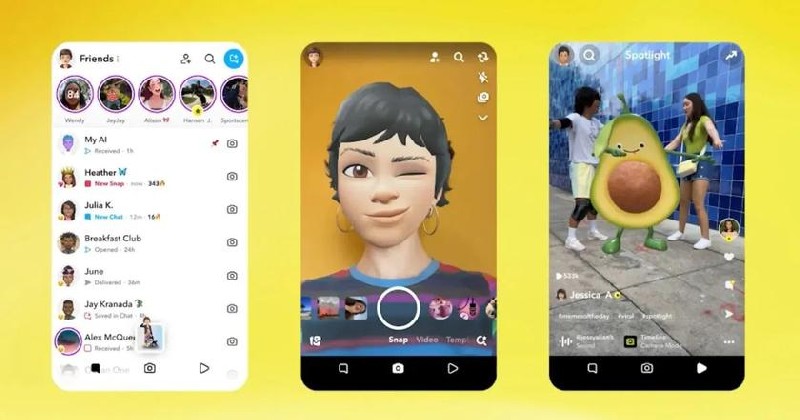
Snapchat has announced a major design overhaul for the first time in years, introducing an interface called “Simple Snapchat” as well as new AI-powered features. The updated interface now includes three main tabs: “Chat”, “Camera” and “For you”.
- The Chat tab combines features like Anchor Map, Stories, and private chats, making these sections easier to access.
- The For You tab uses a new recommendation system that shows videos from friends and offers personalized content recommendations.
One of the main innovations was the appearance of a new AI lens called Grandparents, which allows users to see what they will look like in old age. This lens is available through the Camera tab.
In addition, Snapchat has added an AI Memories feature that presents memories in full-screen mode, creating collages and video mixes.
Snapchat+ subscribers have access to the AI Snaps feature, which is based on My Selfie technology, allowing you to create unique AI avatars based on user images.
Snapchat has already started testing the new interface and plans to fully implement it in the coming days.
Don't miss interesting news
Subscribe to our channels and read announcements of high-tech news, tes

Oppo A6 Pro smartphone review: ambitious

 0
0 
Creating new mid-range smartphones is no easy task. Manufacturers have to balance performance, camera capabilities, displays, and the overall cost impact of each component. How the new Oppo A6 Pro balances these factors is discussed in our review.
Oppo Reno16 Pro 5G smartphone review: well-heeled
0 
Oppo Reno16 Pro 5G looks like a balanced smartphone, in which the manufacturer tried not to make a single characteristic the defining one. It has many advantages. Let’s tell you what
PlayStation Gaming Monitor: 240Hz Display with Built-in DualSense Dock

Sony has launched its first PlayStation-branded monitor. The 27-inch IPS panel features QHD resolution and a 240Hz refresh rate.
Piston V: A Futuristic Ryzen AI 9 365 Mini-PC With a Touchscreen

Piston V is an unconventional mini-PC featuring a Ryzen AI 9 365 processor, retro design, and a dedicated touchscreen for managing Windows and SteamOS dual-booting.