

The EU accuses Meta of violating child protection: Facebook and Instagram face billions in fines
01.05.26
The European Commission has brought preliminary charges against Meta Corporation. Regulators believe the Facebook and Instagram platforms are failing to comply with the strict requirements of the Digital Services Act (DSA), putting children under 13 at risk.
EU investigation
The European Commission claims that Meta ignores the basic principles of the protection of minors laid down in the updated European legislation. The investigation, which lasted more than two years, focused on how effectively social networks limit access to harmful content and verify the age of their users. As a result of the inspection, it became clear that the current control systems do not fulfill their tasks.
Security issues and age restrictions
According to the regulator’s findings, Meta did not provide a reliable age verification mechanism. The main claim is that the company does not prevent children under 13 from registering. Moreover, the platforms do not have a sufficient set of tools for timely detection and removal of minor accounts after their creation. According to the estimates of the European Commission, despite official bans, from 10% to 12% of children in Europe under the age of 13 are active users of Facebook and Instagram.
Risk assessment and technical solutions
The EU Commissioner for Digital Affairs, Henna Virkkunen, in her official statement emphasized that formal rules for using social networks should be supported by real technological barriers. The regulator requires the company to completely review the approach to the assessment of risks for children and implement automated systems for detecting violators of the age limit.
Penalties and Consequences for Meta
If ultimately found guilty, Meta will face unprecedented financial sanctions. According to the provisions of the Digital Services Act, the maximum fine can be up to 6% of the company’s total annual turnover worldwide. At this point, Meta’s management has the legal right to appeal the allegations and propose a specific plan to correct the identified violations before a final verdict is reached.
Comparison with lawsuits in other countries
The European case is not Meta’s only legal problem related to children. Earlier, the company already lost a court case in the USA, where it was found guilty of contempt for the health of minors (development of addiction to social networks). Then the American regulators imposed a fine of $3 million, which is equivalent to approximately UAH 123.6 million at the current exchange rate. New claims from the EU could be a much more serious blow to the company’s capitalization.
Should we expect changes
This incident was one of the first major applications of DSA to global social networks. Experts say that if Meta does not present a convincing plan to modernize its filters, it will set a precedent for tighter controls on all major platforms in the EU. Users should expect more stringent age checks in the near future.
Don't miss interesting news
Subscribe to our channels and read announcements of high-tech news, tes

Oppo A6 Pro smartphone review: ambitious

 0
0 
Creating new mid-range smartphones is no easy task. Manufacturers have to balance performance, camera capabilities, displays, and the overall cost impact of each component. How the new Oppo A6 Pro balances these factors is discussed in our review.
Oppo Reno16 Pro 5G smartphone review: well-heeled
0 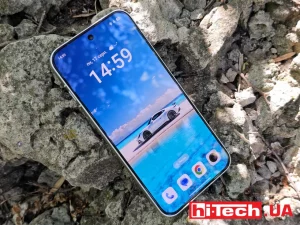
Oppo Reno16 Pro 5G looks like a balanced smartphone, in which the manufacturer tried not to make a single characteristic the defining one. It has many advantages. Let’s tell you what
Xiaomi TV S Pro RGB-Mini LED 2027 Supreme Edition: A New Era of Tri-Color Backlighting

Xiaomi has introduced its most advanced television to date — the Xiaomi TV S Pro RGB-Mini LED 2027 Supreme Edition.
Infinix Xpad 30 Pro Debuts With 11-Inch Display and 2TB Storage Support

Infinix has officially unveiled the Xpad 30 Pro tablet, combining an 11-inch 90Hz screen with an affordable price tag. The device offers support for memory cards up to 2TB and is powered by the MediaTek Helio G200 processor.