

Surgery of the future: scientists performed the first operations with the help of humanoid robots
12.07.26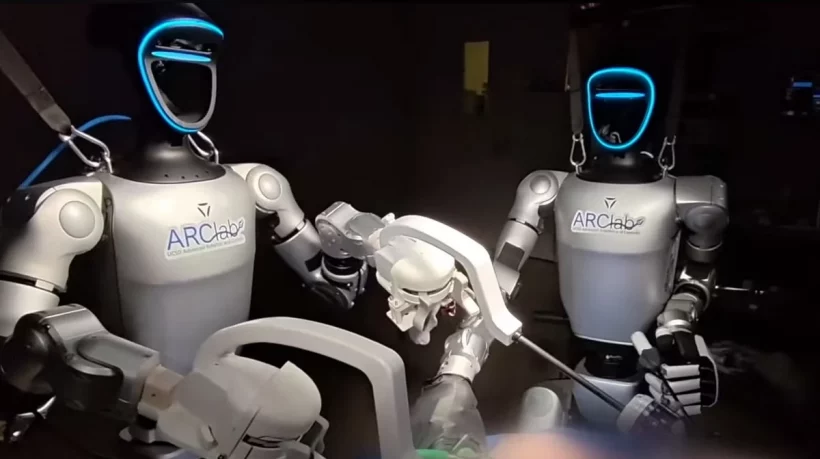
Researchers from the University of California, San Diego (UCSD) have made a breakthrough in medicine by successfully performing the world’s first series of operations using remote-controlled humanoid robots. During the tests, the workers performed a cholecystectomy (gall bladder removal) with the assistance of a surgeon, and also performed a complex operation as part of a group of two robotic systems.
Surgical robot surgeons
Unlike classic robotic complexes, which can weigh more than 800 kg, require complex installation and specific software, surgical robots have high mobility. Their key parameters are:
- Weight of one robot: 27 kg
- Height: about 1.5 meters
- Design features: compact dimensions allow you to use them in standard operating rooms without the need for large-scale reconstruction of the premises.
Scientists equipped Surgery with special adapters that allow integration of standard surgical instruments. This greatly facilitates the use of robots in current clinical protocols.
Features of the process and perspectives
In the experiment, the procedures were carried out on large non-primates. Physicians operating the robots noted that Surgie’s interfaces proved to be more intuitive than the control systems in traditional robotic surgical units.
However, the technology is at an early stage of development. Specialists identified two critical obstacles: the need for repeated calibration of robots during the operation, which increases the intervention time, as well as the delay in communication between the operator and the system. Reducing the latter is of crucial importance for the future development of telemedicine, in particular for long-distance remote operations.
Why are humanoid robots needed in the operating room?
According to Michael Yip, associate professor of electrical engineering at UCSD, the robots’ humanoid form makes them versatile assistants. They can be useful not only in specialized hospitals, but also in field conditions, disaster zones or hard-to-reach regions where the lack of qualified surgeons is acute.
In the future, humanoids will be able to not only assist, but also independently perform a wide range of clinical procedures, making advanced medical care more accessible around the world.
Don't miss interesting news
Subscribe to our channels and read announcements of high-tech news, tes

Oppo A6 Pro smartphone review: ambitious

 0
0 
Creating new mid-range smartphones is no easy task. Manufacturers have to balance performance, camera capabilities, displays, and the overall cost impact of each component. How the new Oppo A6 Pro balances these factors is discussed in our review.
In-Ear headphones Active Noise Cancellation: how Oppo eliminate noise
0 
In-ear headphones remain one of the most popular form factors due to their lightweight design. However, this design is considered one of the most challenging to implement active noise cancellation (ANC). We’ll explain how Oppo solved this problem.
Windows 11 Update Breaks Games: The RGB Fix

The latest cumulative Windows 11 update has caused issues with game performance and stability. Microsoft confirmed the conflict is triggered by RGB peripheral software.
Asus Challenges MacBook Pro With Powerful ProArt Creation 16

Asus has introduced a new version of its ProArt Creation 16 laptop for professionals. The device is equipped with an AMD Ryzen AI 9 processor, 64GB of RAM, and a high-quality 120Hz OLED screen.