

The car as a digital observer: what it knows about you
21.05.26
Modern connected vehicles are rapidly turning into analogues of huge smartphones on wheels. Unfortunately, the integration of modern smart systems not only simplifies navigation or makes the trip more comfortable, but also imposes significant obligations. Many experts ask: how do cars track their owners and turn the collected telemetry into a commercial product? By buying a modern car, you are actually approving the drawing of a complete portrait of your life.
Auto spy
Manufacturers started collecting the simplest information quite a long time ago — in the mid-2000s from primitive telemetry packages. It was assumed that the function is useful in the event of an accident or independent communication between the car service center and the on-board computer in the event of a malfunction. With the use of worldwide wireless Internet, the situation has fundamentally changed. The report released by Mozilla Foundation specialists states an extremely harsh fact: consumer smart car systems are the worst product niche tested by them in terms of information privacy and user security.
Cars accumulate a colossal number of aspects of your private life: music playlist, favorite travel routes, interior temperature and even religious or professional information.
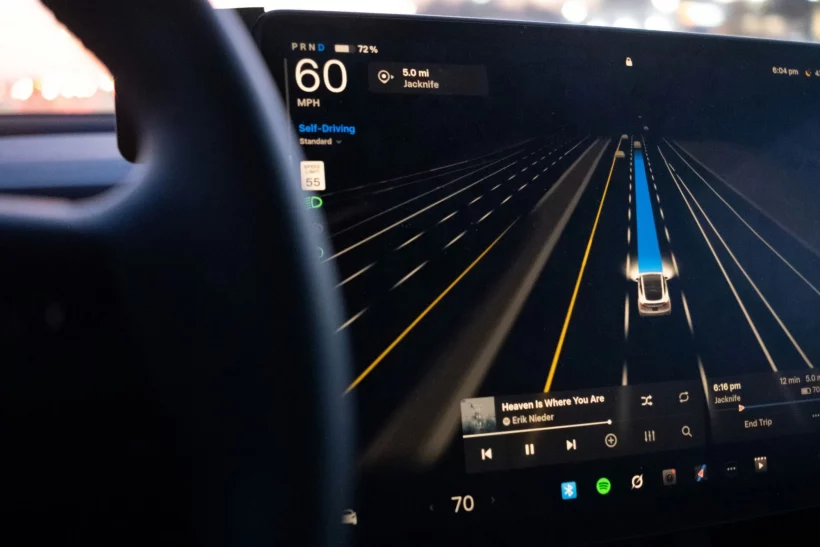
“Spy equipment” car
In terms of technical equipment, the advanced multimedia and internal systems of the car are not inferior to the full-fledged infrastructure of professional tracking agents:
- Surveillance cameras: in addition to keeping a lane or fixing signs, some internal video sensors record the behavior of people in the cabin around the clock;
- Audio sensors: ultra-sensitive directional microphones are required to process the incoming audio stream and accurately distinguish your lines, but can also record the driver’s private conversations;
- Logs of movement (GPS): the navigator remembers with impeccable perfection any short-term parking near nightclubs, medical institutions or banks;
- Access to mobile devices: connecting a smartphone via wired ports or using Wi-Fi and Bluetooth transfers data from the contact book, correspondence and even geo-metadata of photos.
Legislative uncertainty
What happens to your constitutional rights to data privacy? Professional lawyers note the deplorable state of affairs in the markets of some Eastern European countries. For example, the profile Ukrainian Law of Ukraine “On the Protection of Personal Data” was developed after the signing of Convention 108 of the 1981 model. Naturally, in the past era, no one physically assumed the deployment of the automotive e-SIM infrastructure. The new provisions of the amendments to the Convention 108+ have not been officially implemented, which makes it almost pointless to demand court decisions, appealing to transnational brands to violate the confidentiality of personal files in a number of regional jurisdictions.

More than personal threat
Recently, the armed forces of the United Kingdom, Israel and the United States of America have begun to directly restrict the presence of advanced Chinese vehicles (primarily popular brands such as BYD) near critical government infrastructure or on military training grounds. Experts are sure that the passive scanning of the situation by the external cameras of the cars can instantly debunk the secret deployment of defense facilities with the quick uploading of the collected analytics to Chinese hostings on the Internet.
Workarounds and risks
The most technically advanced users are thinking about independent power jamming of transmission complexes: desoldering eSIM, deactivating cellular modules in transmitting boards, or cutting GPS/GLONASS antenna cables. However, due to the critically complex and closed scheme of integration of electronic on-board units, such a crude, artisanal blocking of communication will most likely cause significant damage to the functionality of the car itself:
- Damage of the electronic safety module paralyzes the ability to start the power plant;
- You will be deprived of free navigation maps and regular updates of the firmware microcode of electrical equipment, which increases the stability of the operation of key life support units;
- Direct autocorrection of data from built-in driving assistants will stop.
A more careful preemptive tactic is to refuse uncontrolled acceptance of telemetry consent agreements in the on-board touchscreen settings. You have the right to deliberately deactivate irrelevant content submission points.
Of course, in the case of critically increased personal concern about your cyber security, it is logical to focus on automotive technology of the last century, deprived of access to the World Wide Web.
Don't miss interesting news
Subscribe to our channels and read announcements of high-tech news, tes

Oppo A6 Pro smartphone review: ambitious

 0
0 
Creating new mid-range smartphones is no easy task. Manufacturers have to balance performance, camera capabilities, displays, and the overall cost impact of each component. How the new Oppo A6 Pro balances these factors is discussed in our review.
Oppo Reno16 Pro 5G smartphone review: well-heeled
0 
Oppo Reno16 Pro 5G looks like a balanced smartphone, in which the manufacturer tried not to make a single characteristic the defining one. It has many advantages. Let’s tell you what
Samsung Galaxy S26 FE: Everything We Know Before the Launch
Samsung is gearing up for the Galaxy S26 FE launch scheduled for this week. Anatel certification confirms the smartphone retains its predecessor’s battery capacity while adding support for up to 45W fast charging.
LinkedIn Users File Million Complaints a Month Against AI Slop

Users are actively utilizing a new LinkedIn tool to combat low-quality posts generated by artificial intelligence.