

Microsoft admitted that it could not fully unlock the commercial potential of Xbox
17.06.26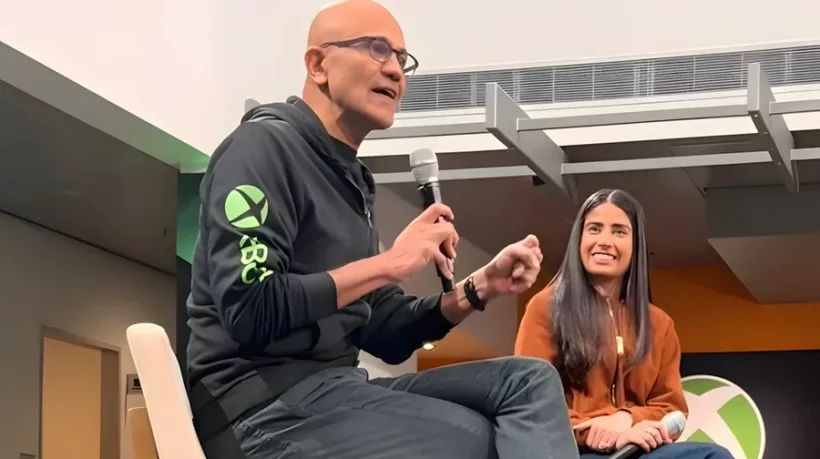
Microsoft CEO Satya Nadella has openly stated that the company is still facing problems monetizing Xbox’s gaming division. Speaking at the Hard Fork event organized by The New York Times, the head of the corporation noted that for a quarter of a century, Microsoft has invested huge funds in the development of gaming products, equipment and services, but the question of long-term economic efficiency remains relevant even today.
According to Nadella, the corporation has never spared resources for the development of the game business. In recent decades, Microsoft has created several generations of Xbox consoles, launched the Game Pass service, invested in cloud technologies, acquired dozens of game studios and made the largest deals in the history of the industry. However, the company now faces the challenge of turning these investments into a sustainable and profitable ecosystem.
The main revenue around Xbox is generated outside of Microsoft
One of the talking points of the speech was the statement that today more money is generated around Xbox games than within the Microsoft ecosystem itself. The head of the company emphasized that for many years, the corporation actually subsidized the gaming sector, investing in it to expand the audience and strengthen its position in the market.
Although no specific figures were given, it could be about the revenues received by streaming platforms, video services, ad networks, bloggers, eSports organizations and other industry participants. Modern game franchises have long ceased to exist exclusively within the framework of consoles and PCs. They create a large-scale content ecosystem, much of which generates revenue for third-party companies.
As a result, Microsoft faces a situation where the popularity of the Xbox brand and its game series does not always translate directly into comparable growth in its own revenues.
Billion dollar purchases have not yet solved the problem
In recent years, Microsoft has significantly strengthened its presence in the gaming market through a series of large acquisitions. First, the company bought ZeniMax Media along with the group of studios it owns, and then completed one of the largest deals in the history of the technology industry, gaining control of Activision Blizzard.
These acquisitions significantly expanded the catalog of Microsoft game franchises and strengthened the position of Game Pass. However, even such large-scale investments did not save the company from the need to look for new sources of growth and review the existing Xbox development strategy.
An additional signal was the recent statements of the new head of Xbox, Asha Sharma, who recognized the need for changes within the gaming division. Nadella’s comments actually explained the reasons for this approach: the company is not just trying to maintain a presence in the market, but to achieve a more efficient financial model.
The situation in the technology market is also putting pressure
Separately, the head of Microsoft noted the impact of external factors. One of them was the increase in the price of semiconductors and memory, caused by the growing demand from the artificial intelligence industry. The increase in prices for components is reflected not only in the production of game consoles, but also in the development of the server infrastructure necessary for the operation of cloud services and digital platforms.
Against the background of these changes, Microsoft is forced to find a balance between the development of the hardware direction, the expansion of subscription services and the support of its own network of game studios. The company continues to bet on the Xbox console, Game Pass, cloud gaming and the mobile segment, but now more and more attention is paid to the issue of profitability of each of these areas.
The new goal is to build a single profitable ecosystem
Today, Microsoft is trying to combine all elements of the game business into a single system, where consoles, subscriptions, cloud technologies, mobile games and its own studios will work as parts of the same mechanism. The company’s management considers the creation of such a model to be a key task for the coming years.
Despite the leadership positions in the industry and multi-billion investments, Microsoft admits: the popularity of Xbox in itself is no longer a sufficient indicator of success. For a corporation, the ability to turn a large-scale gaming audience into a stable and long-term source of income is becoming increasingly important.
Don't miss interesting news
Subscribe to our channels and read announcements of high-tech news, tes

Oppo A6 Pro smartphone review: ambitious

 0
0 
Creating new mid-range smartphones is no easy task. Manufacturers have to balance performance, camera capabilities, displays, and the overall cost impact of each component. How the new Oppo A6 Pro balances these factors is discussed in our review.
In-Ear headphones Active Noise Cancellation: how Oppo eliminate noise
0 
In-ear headphones remain one of the most popular form factors due to their lightweight design. However, this design is considered one of the most challenging to implement active noise cancellation (ANC). We’ll explain how Oppo solved this problem.
Ninkear L20: A Compact Intel Lunar Lake Mini PC With Copilot+ Support
Ninkear L20 is a new mini PC based on the Intel Lunar Lake architecture with 40 TOPS NPU support and official Copilot+ PC compliance.
Samsung Wallet Adds Digital Key Support for Volkswagen EVs
Samsung Wallet is adding support for digital car keys for Volkswagen ID series electric vehicles, allowing Galaxy smartphone users to unlock and start their cars key-free.