

AI companies are buying up books that are no longer being reprinted
29.07.26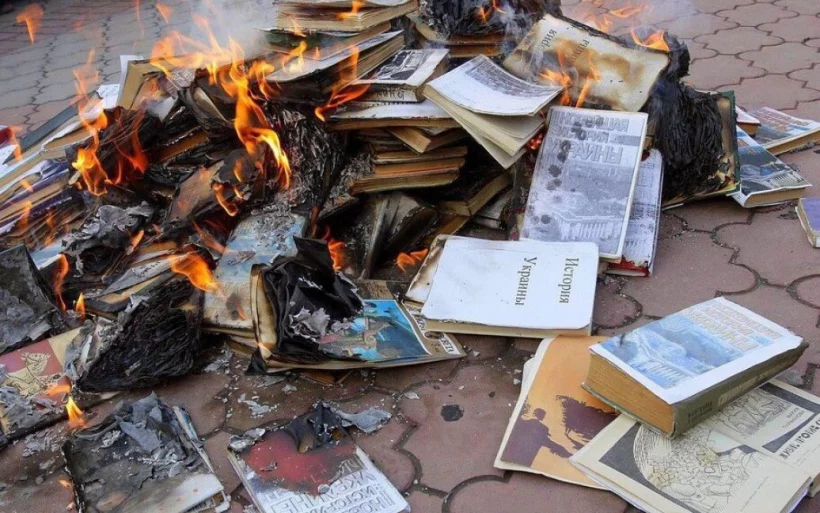
The boom in generative artificial intelligence has had an unexpected impact on the paper book market. As developers of large language models struggle to find quality data to train new systems, one of the most sought-after resources is old print. After purchase, they are digitized, and the books themselves mostly no longer exist.
As reported by 404 Media, the ISBNdb company, which for many years specialized in the cataloging of book publications, began to provide a new service — the search and mass purchase of printed books for laboratories engaged in the development of artificial intelligence. Order volumes are calculated not in hundreds, but in thousands and even millions of copies.
The Internet is no longer an ideal source of data
One of the main problems of modern language models is the quality of information used in training. The Internet is increasingly filled with texts created by other neural networks, due to which developers face the effect of the so-called “contamination” of data. gradually decreases.
That is why the attention of large companies switched to books published before the mass distribution of generative neural networks. Such publications contain texts written and edited by people, which makes them especially valuable for the formation of new educational samples.
ISBNdb openly promotes this idea, citing paper books as one of the highest quality sources of information for learning large language models. The company notes that it is the printed editions that allow you to get content that cannot be found during the usual collection of data from the Internet.
For the sake of a digital copy, the book is literally taken apart
After the purchase, the digitization process begins. In fact, it rarely involves keeping the original copy.
To speed up the process, the books are cut from the spine, after which individual pages are automatically passed through high-speed industrial scanners. This method is much cheaper than manual processing and allows you to convert huge volumes of literature into digital format in a short time. However, after such a procedure, the paper copy cannot be restored.
ISBNdb admits that such a practice can cause a negative reaction from society. The company understands that news of millions of destroyed books can become a serious reputational problem, so special attention is paid to customer privacy.
Customers are asked to sign non-disclosure agreements that prohibit the disclosure of information about which books are being purchased, who is the buyer, and for which projects the received materials are being used.
Booksellers are already recording an unusual surge in demand
The consequences of the new trend are already felt by independent sellers of old books.
Owners of small bookstores on Alibris and Biblio platforms say that starting from April 2026, the volume of orders unexpectedly increased several times. If earlier sellers sent a few dozen books a week, now we are talking about hundreds of copies.
At the same time, buyers practically do not pay attention to the content of books. Instead of certain authors or thematic selections, different editions are purchased, united only by the presence of an ISBN. It is this nature of purchases that makes many sellers assume that companies working on artificial intelligence are behind them.
The fact that among the purchased copies there are books that have long been discontinued or exist in extremely limited quantities is of particular concern. If such publications are indeed destroyed after scanning, part of the cultural heritage may disappear irretrievably.
Court decisions made this approach more legal
The growth of interest in printed books coincided with important changes in American jurisprudence.
A court recently approved a settlement in the Anthropic case involving the use of books in language model training. At the same time, the judge concluded that the use of legally purchased paper books with subsequent scanning may fall under the principle of fair use.
One of the arguments was that a digital copy is created on the basis of an officially purchased copy, which after processing actually ceases to exist. This approach is significantly different from the use of pirated electronic libraries, which became the cause of previous legal proceedings.
Old book market gets unexpected value
The number of printed books produced before the age of generative artificial intelligence is limited. That is why similar publications are gradually turning into a strategic resource for technology companies.
AI developers seek to form their own archives as soon as possible, since it will no longer be possible to obtain similar data by simply collecting information from the Internet. As a result, the second-hand market, which for many years existed mainly thanks to collectors and lovers of literature, unexpectedly turned out to be connected with one of the largest branches of the world technological industry.
At the same time, the question remains open to what extent the destruction of millions of paper books is justified in order to create new models of artificial intelligence. If this practice becomes widespread, the consequences may affect not only the market for rare editions, but also the preservation of printed cultural heritage.
Don't miss interesting news
Subscribe to our channels and read announcements of high-tech news, tes

Oppo A6 Pro smartphone review: ambitious

 0
0 
Creating new mid-range smartphones is no easy task. Manufacturers have to balance performance, camera capabilities, displays, and the overall cost impact of each component. How the new Oppo A6 Pro balances these factors is discussed in our review.
Oppo Reno16 Pro 5G smartphone review: well-heeled
0 
Oppo Reno16 Pro 5G looks like a balanced smartphone, in which the manufacturer tried not to make a single characteristic the defining one. It has many advantages. Let’s tell you what
Piston V: A Futuristic Ryzen AI 9 365 Mini-PC With a Touchscreen

Piston V is an unconventional mini-PC featuring a Ryzen AI 9 365 processor, retro design, and a dedicated touchscreen for managing Windows and SteamOS dual-booting.
Xiaomi 17 Max: Affordable Leica-Powered Camera Phone That Outshines Flagships

The Xiaomi 17 Max demonstrates how mid-range capabilities can compete with top-tier Samsung and Apple solutions. Thanks to its partnership with Leica and impressive hardware, the device offers an excellent camera at an attractive price.