

“Earthrise” in a new way: the Artemis II crew will try to recreate the iconic photo
07.04.26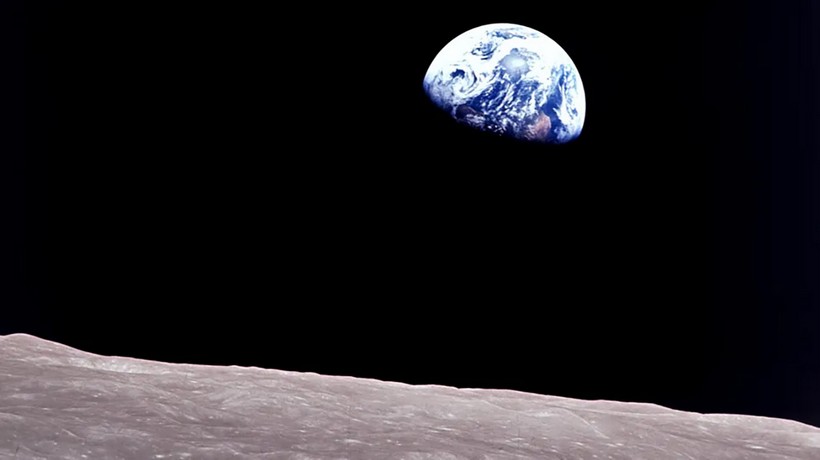
The Artemis II crew is preparing to recreate one of the most iconic images in the history of space exploration — Earthrise. The goal is to produce a modern interpretation of the photograph taken by the Apollo 8 crew in 1968, which became a powerful symbol of Earth’s fragility.
From a spontaneous shot to a planned objective
Unlike the original image, this time the shot will not be accidental. Back in 1968, astronaut Bill Anders unexpectedly spotted Earth rising above the lunar horizon and managed to capture the moment on a Hasselblad camera just in time. The image quickly became iconic and significantly shaped public perception of environmental issues and humanity’s place in the universe.
Now, recreating a similar image is part of the official Artemis II mission objectives. NASA sees it not merely as a photograph, but as a symbolic milestone marking humanity’s return to deep space. However, an exact replica is unlikely due to different flight conditions.
A different orbit, a different perspective
One of the key differences lies in altitude. While Apollo 8 operated in a low lunar orbit (around 100 km above the surface), Artemis II will travel much farther away — at distances of several thousand kilometers. This will inevitably alter the composition: the Moon will appear smaller, and Earth more distant.
This perspective will give the image a different feel — less intimate, yet more expansive in its cosmic context.
From film to digital imaging
The equipment has also evolved significantly. Instead of the film cameras used in the 1960s, the Artemis II crew will rely on modern digital cameras such as the Nikon D5. These devices offer high resolution and a wide dynamic range, which is crucial when capturing scenes with extreme contrast between the bright Earth and the darkness of space.
Even with advanced technology, the task remains challenging. Astronauts will need to account for spacecraft velocity, orientation, and lighting angles to capture the perfect moment.
More than just a photograph
Despite technological progress, the meaning of the image remains unchanged. It serves as a reminder of how small and fragile Earth is against the vastness of space. Just as it did more than half a century ago, the new image may once again reinforce the idea that humanity shares a single, delicate home.
Don't miss interesting news
Subscribe to our channels and read announcements of high-tech news, tes

Oppo A6 Pro smartphone review: ambitious

 0
0 
Creating new mid-range smartphones is no easy task. Manufacturers have to balance performance, camera capabilities, displays, and the overall cost impact of each component. How the new Oppo A6 Pro balances these factors is discussed in our review.
Oppo Reno16 Pro 5G smartphone review: well-heeled
0 
Oppo Reno16 Pro 5G looks like a balanced smartphone, in which the manufacturer tried not to make a single characteristic the defining one. It has many advantages. Let’s tell you what
Gemini, Keep, and Motion Assist: The New Android Drop Features

Google introduced a fresh package of Android Drop updates for smartphone users, including AI integration in search, new messaging capabilities, and health-related features.
Acer Predator Atlas 7: A New Handheld With 24GB RAM and 1TB SSD

At IFA 2026, Acer introduced the Predator Atlas 7, an updated 7-inch handheld gaming console.