

Drones instead of towers: how “flying relays” solve weak signal issues
02.04.26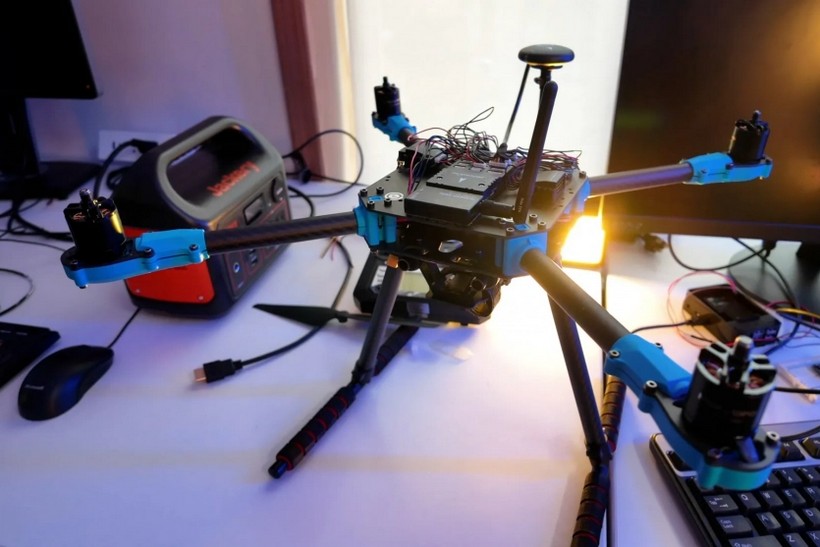
Traditional mobile networks rely on fixed towers, but this approach often struggles with sudden traffic spikes or infrastructure failures. Researchers from Stevens Institute of Technology have introduced an alternative — a flexible system based on drones.
Dynamic coverage instead of static infrastructure
In this concept, drones act as temporary base stations. They can be quickly deployed to areas with poor or no coverage, strengthening the signal and expanding network availability where needed.
The solution, called AURA-GreeN, was described in IEEE Transactions on Vehicular Technology.
A network that moves
Unlike traditional infrastructure, the system operates as a dynamic network. Drones communicate with each other and with user devices, adjusting their positions and roles depending on current conditions.
Algorithms continuously analyze signal quality, interference, and traffic load, optimizing data routing and resource allocation in real time.
Where it matters most
This approach is particularly relevant in densely populated urban areas where deploying new towers is difficult. It could also prove crucial during emergencies, disaster response, and search-and-rescue operations.
Not just connectivity, but data freshness
The system evaluates not only connection stability but also how up-to-date the transmitted information is. This is measured using the “age of information” metric, which reflects how quickly users receive fresh data.
According to the researchers, this показатель has improved several times, enhancing overall communication efficiency.
Balancing multiple factors
The system must simultaneously manage latency, spectrum allocation, traffic load, and energy consumption. Optimizing these factors is complex, as improving one may negatively impact others.
Use at large-scale events
Concerts, festivals, and sports events are another promising use case, where mobile networks often face heavy congestion.
Drones already used for filming such events could also serve as signal relays, combining multiple functions in a single platform.
Integration without full overhaul
The solution is implemented as an xApp within the Open-RAN framework, allowing integration into existing telecom infrastructure without requiring a complete rebuild.
The advantage of altitude
A key benefit of drones is their elevated position. This provides a clearer line of sight between transmitters and user devices, improving signal reliability, especially in dense urban environments.
Don't miss interesting news
Subscribe to our channels and read announcements of high-tech news, tes

Oppo A6 Pro smartphone review: ambitious

 0
0 
Creating new mid-range smartphones is no easy task. Manufacturers have to balance performance, camera capabilities, displays, and the overall cost impact of each component. How the new Oppo A6 Pro balances these factors is discussed in our review.
Logitech MX Keys S Combo wireless keyboard and mouse set review: tactile hi-end
0 
The Logitech MX Keys S Combo combines a top-of-the-line mouse, keyboard, and palm rest, providing good ergonomics, build quality, and extensive functionality when working with multiple devices
Assassin’s Creed Black Flag Resynced reveals PS5 Pro capabilities

Ubisoft has revealed details of the remake of Assassin’s Creed Black Flag Resynced, focusing on support for PlayStation 5 Pro technologies.
ASUS ROG Strix OLED XG34WCDMS received Tandem QD-OLED technology with increased burn-in protection

ASUS expands the line of Republic of Gamers (ROG) gaming solutions by releasing the XG34WCDMS monitor.