

Budget Laptops at Risk as Component Costs Surge by 50%
07.09.26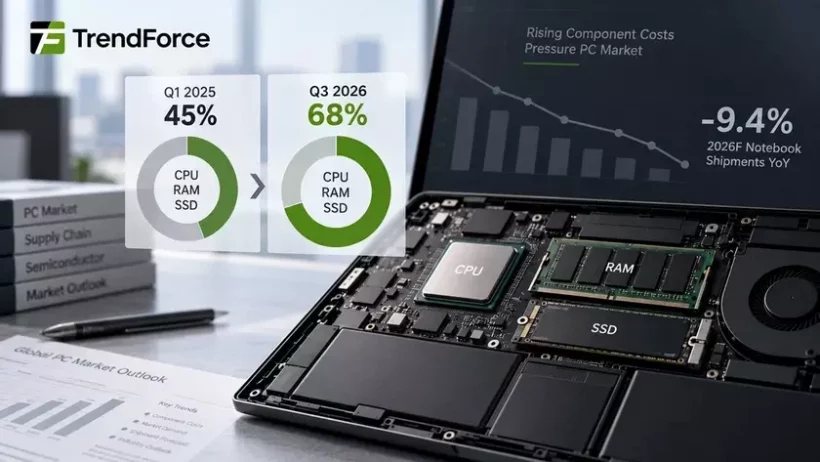
The laptop market is facing a new wave of rising production costs that is beginning to threaten device affordability. According to analysts at TrendForce, manufacturing expenses for processors, DRAM, and NAND storage have surged by approximately 50% between early 2025 and the third quarter of 2026.
The Math Behind Rising Component Costs
The report indicates that total costs for the three key elements of any laptop—the CPU, DRAM modules, and NAND storage—have increased by one and a half times over the past year.
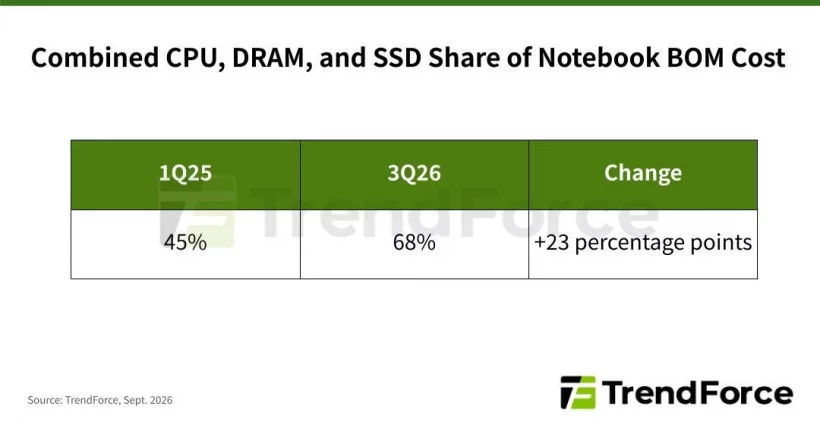
The numbers illustrate the problem clearly: while these components accounted for an average of 45% of the Bill of Materials (BOM) in early 2025, that figure reached 68% by the third quarter of 2026. This 23-percentage-point increase leaves manufacturers with critically little room for maneuver while trying to maintain reasonable retail pricing.
Why Did Component Production Costs Skyrocket?
The sharpest price hike was recorded in the third quarter of 2025. The primary drivers were memory price volatility and the industry’s active transition to new standards, specifically LPDDR5X. As component costs rise, budgets that were previously allocated to high-quality chassis materials, long-lasting batteries, or premium displays are now being consumed by the internal hardware.
The Aftermath: What Awaits the Market and Buyers
Analysts predict a 9.4% drop in global laptop sales for 2026 compared to 2025. High price sensitivity is forcing brands to either drastically cut their margins or compromise on the accessibility of their product lines for the average user. Nevertheless, some manufacturers are attempting to stand out through engineering innovation, even with limited budgets. For instance, experts point to the Acer Swift Blade 14 (2026 model), which has achieved a record weight of just 799 grams.
The laptop market is gradually facing a situation where the traditional formula for an affordable device is no longer viable. The more of the production cost consumed by processors, memory, and storage, the less room manufacturers have for expensive materials, high-quality displays, and other features that were recently considered standard, even in entry-level models.
For buyers, this means an unpleasant choice: pay more for the usual performance level or accept compromises to stay within budget. This pressure is particularly noticeable in the entry-level segment, where even a few percentage points of added cost can significantly impact demand. While manufacturers are trying to offset rising costs through design optimization and engineering solutions, the overall trend is clear—the era of laptops that are simultaneously more powerful and cheaper is temporarily colliding with the reality of rising hardware costs.
Don't miss interesting news
Subscribe to our channels and read announcements of high-tech news, tes

Oppo A6 Pro smartphone review: ambitious

 0
0 
Creating new mid-range smartphones is no easy task. Manufacturers have to balance performance, camera capabilities, displays, and the overall cost impact of each component. How the new Oppo A6 Pro balances these factors is discussed in our review.
Oppo Reno16 Pro 5G smartphone review: well-heeled
0 
Oppo Reno16 Pro 5G looks like a balanced smartphone, in which the manufacturer tried not to make a single characteristic the defining one. It has many advantages. Let’s tell you what
Budget Laptops at Risk as Component Costs Surge by 50%
According to a TrendForce report, components like processors, RAM, and storage now account for 68% of a laptop’s production cost, up from 45% last year.
Blackview Xplore 6: The Rugged Beast With a 12,000mAh Battery and 10x Optical Zoom

Blackview has unveiled the rugged Xplore 6 featuring a 12,000mAh battery, a 10x optical zoom via an attachable teleconverter, and a secondary rear display. The smartphone hits the market in late September for €950.