

AMD Zen 6: A powerful breakthrough in server computing and AI
13.07.26
AMD is preparing for a major update to its processor architecture. The technical director and executive vice president of the company Mark Papermeister said that the presentation of the new generation of Zen 6 processors will take place on July 22-23 as part of the Advancing AI event.
What is known about the AMD Zen 6 architecture
The new generation of processors is aimed at maximum performance in the x86 architecture with the integration of advanced computing power for working with AI. The deployment of the architecture will begin with the server segment: AMD will present the sixth-generation EPYC processors, codenamed Venice, which will be included in the new AMD Helios servers. In the configuration of these servers, the new chips will work in conjunction with the AMD Instinct MI455 GPU.
According to unofficial data, the flagship representative of the Venice series can get up to 256 Zen 6 cores. This provides a 33% advantage compared to the current line of 192-core Turin processors.
Features and performance of new solutions
According to AMD, the Venice processors will offer a 30% increase in thread density, and an increase in performance and energy efficiency of more than 70%. The chips will receive expanded support for AI data formats and an increased number of corresponding pipelines.
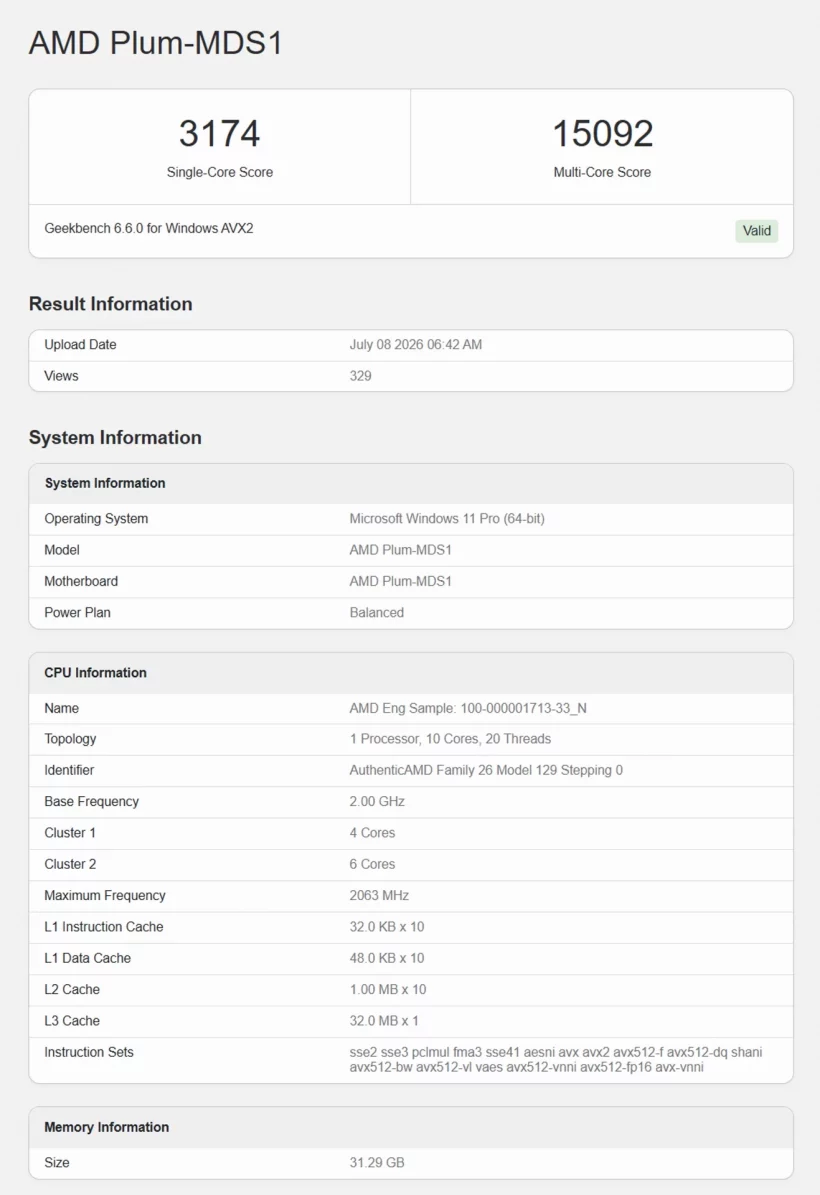
The first test results of the AMD Zen 6 Medusa Point engineering sample in the Geekbench 6.6.0 database have already appeared on the network. The main specifications of the processor mentioned in the report include 10 cores and 20 threads, as well as 10 MB of L2 and 32 MB of L3 cache.
Performance comparison (Geekbench 6.6.0)
| Test | AMD Zen 6 Medusa Point (Eng Sample) | Ryzen AI 9 HX 370 |
| Single-Core | 3174 | 2605 |
| Multi-Core | 15092 | 13396 |
Prospects for the release of consumer processors
Despite the activity in the server sector, the exact dates of the release of Ryzen consumer processors based on Zen 6 have not yet been announced – analysts expect their appearance no earlier than CES 2027. Nevertheless, the first synthetic tests demonstrate the advantage of new developments: the tested Medusa Point chip turned out to be 22% more multi-core than the current Ryzen AI 9 HX 370.
Don't miss interesting news
Subscribe to our channels and read announcements of high-tech news, tes

Oppo A6 Pro smartphone review: ambitious

 0
0 
Creating new mid-range smartphones is no easy task. Manufacturers have to balance performance, camera capabilities, displays, and the overall cost impact of each component. How the new Oppo A6 Pro balances these factors is discussed in our review.
Oppo Reno16 Pro 5G smartphone review: well-heeled
0 
Oppo Reno16 Pro 5G looks like a balanced smartphone, in which the manufacturer tried not to make a single characteristic the defining one. It has many advantages. Let’s tell you what
Samsung Galaxy S26 FE: Everything We Know Before the Launch

Samsung is gearing up for the Galaxy S26 FE launch scheduled for this week. Anatel certification confirms the smartphone retains its predecessor’s battery capacity while adding support for up to 45W fast charging.
LinkedIn Users File Million Complaints a Month Against AI Slop

Users are actively utilizing a new LinkedIn tool to combat low-quality posts generated by artificial intelligence.