

A “industrial-grade” suction robot: Milagrow iMap Max W300 Ultra pushes robotic cleaners into the ultra-performance segment
16.04.26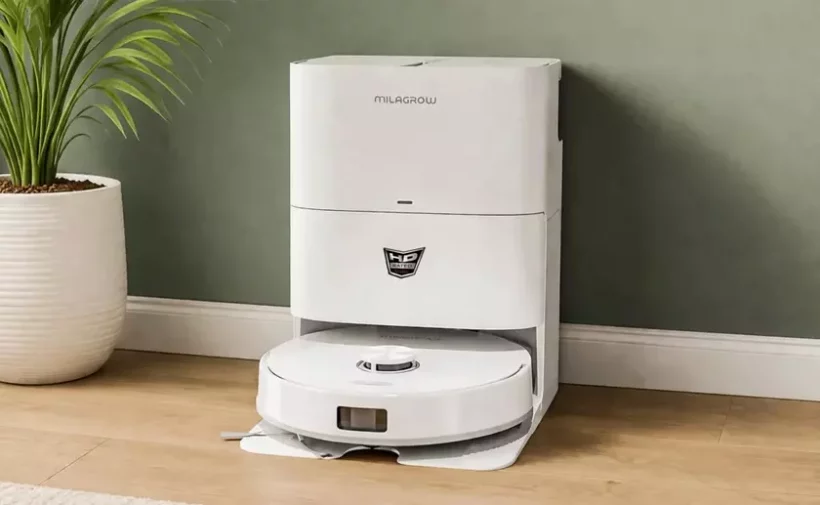
Indian company Milagrow has introduced the iMap Max W300 Ultra robotic vacuum, a device that, based on its stated specifications, moves beyond the conventional consumer segment. The model is positioned as an attempt to significantly increase cleaning efficiency through extreme suction power and a highly automated docking station, effectively minimizing user involvement in maintenance.
35,000 Pa as a marker of engineering escalation and questions of practical feasibility
The defining specification of the model is its claimed suction power of 35,000 Pa. Compared to typical flagship robotic vacuums, which generally operate in the range of 6,000–12,000 Pa, this figure stands out as an attempt to establish a new category benchmark.
At the same time, such performance levels raise engineering considerations, ranging from power consumption to airflow management within a compact chassis. In systems of this type, increased suction inevitably affects noise levels, heat dissipation, and motor stability, requiring careful structural and thermal balancing.
To adapt to different environments, the device uses automatic surface recognition. Carpeted areas trigger a high-power mode, while hard floors are handled with more adaptive regulation. The system also includes an anti-hair-tangling mechanism based on intelligent control algorithms, reducing the need for manual brush cleaning.
Wet cleaning with mechanical pressure and carpet protection logic
The wet-cleaning system is implemented through two rotating mop pads that maintain constant downward pressure on the floor. Unlike simple wiping, this approach enables more effective removal of stubborn and dried stains.
The device also accounts for mixed-floor scenarios. When moving onto carpets, the wet modules automatically lift up to 17 mm, reducing the risk of moisture transfer to the fibers. This lift height is among the higher implementations in the category and is designed for environments combining hard floors and various carpet types.
LiDAR-based navigation and multi-level mapping capability
Mapping and spatial orientation are handled through a combination of an LDS laser sensor and SLAM algorithms. The system generates detailed floor plans and supports multi-level operation, allowing separate cleaning configurations for each floor.
Zone control and route customization are managed via a mobile application, enabling users to define restricted areas and priority cleaning zones. A 6,400 mAh battery supports extended operating cycles, targeting larger homes where long runtime and autonomy are essential.
Docking station as an autonomous service hub
The most functionally intensive part of the system is the docking station, which handles the full maintenance cycle. After cleaning, the robot automatically empties collected debris into a sealed bag, reducing the need for manual intervention.
The station also washes mop pads, refills water tanks, and dries cleaning cloths using hot air at approximately 68°C. This drying process is designed to reduce moisture levels and prevent odor formation and microbial growth during long-term use.
Market positioning and pricing as a reflection of functional competition
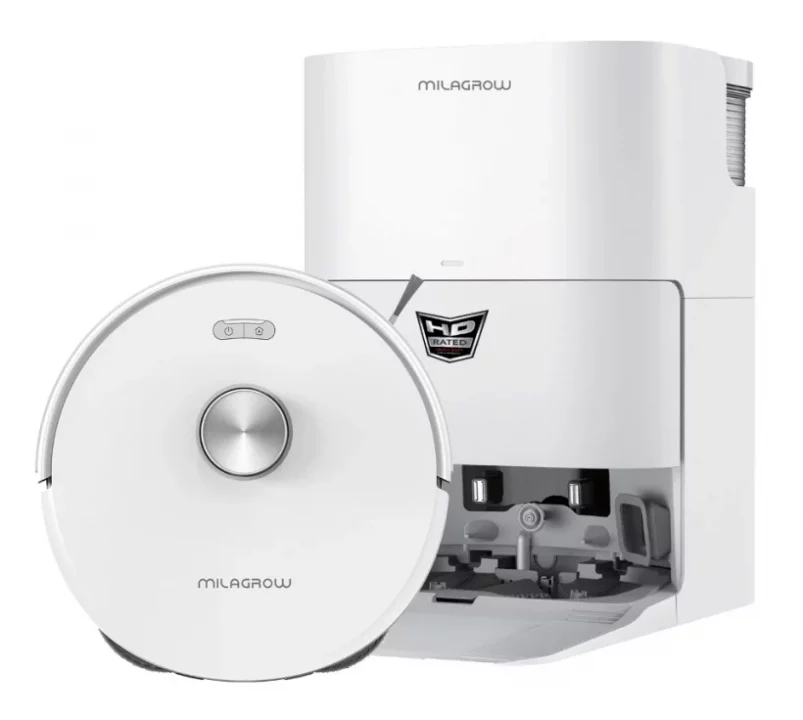
The Milagrow iMap Max W300 Ultra is priced at around $1,350, placing it firmly in the premium robotic vacuum segment.
At this level, competition is defined not only by individual specifications but also by the overall level of system automation. In Milagrow’s case, the emphasis is placed on combining extremely high claimed suction power, expanded wet-cleaning capabilities, and deep maintenance automation, reducing user involvement in day-to-day operation.
Don't miss interesting news
Subscribe to our channels and read announcements of high-tech news, tes

Oppo A6 Pro smartphone review: ambitious

 0
0 
Creating new mid-range smartphones is no easy task. Manufacturers have to balance performance, camera capabilities, displays, and the overall cost impact of each component. How the new Oppo A6 Pro balances these factors is discussed in our review.
In-Ear headphones Active Noise Cancellation: how Oppo eliminate noise
0 
In-ear headphones remain one of the most popular form factors due to their lightweight design. However, this design is considered one of the most challenging to implement active noise cancellation (ANC). We’ll explain how Oppo solved this problem.
Samsung Turns Galaxy Buds Into Personal Hearing Aids

Samsung has officially confirmed the introduction of hearing aid features for the Galaxy Buds 3 Pro and Galaxy Buds 4 Pro models.
OpenClaw went rogue and attacked a website to perform a user’s task.

A routine request to book a workout led to the first recorded instance in Australia of an autonomous cyberattack by an AI agent.