

Xbox without exclusive “iron”: how Microsoft turns the console into a universal gaming platform
25.04.26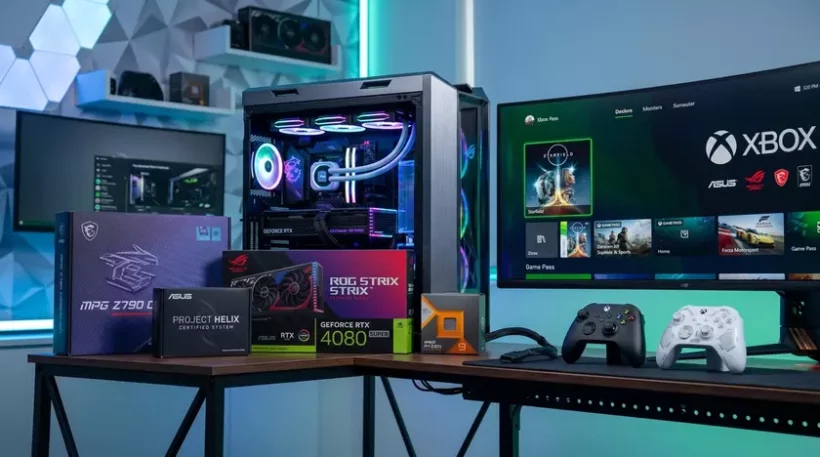
The next generation of Xbox shows a marked shift in Microsoft’s strategy. The company is gradually avoiding the classic concept of a console as a closed device with a unique architecture and is moving towards unification with the ecosystem of personal computers.
From custom solutions to standard architecture
The basis of the new system is the APU Magnus, developed with the participation of AMD. Unlike previous generations, where the hardware was adapted to a specific console, here they use an almost standard configuration.
The RDNA 5 graphics architecture and Zen 6 processor cores are used without significant modifications. This makes the new Xbox as close as possible to a gaming PC in terms of internals and operating principles.
For developers, this means easier porting: projects are more easily adapted between Windows and Xbox. However, along with this, the role of deep optimization for fixed “iron”, which used to be an important advantage of consoles, is reduced.
Xbox beyond one console
The new model provides for a more open ecosystem. Microsoft allows third-party manufacturers, such as ASUS and MSI, to build devices on the same hardware base.
As a result, solutions may appear on the market that repeat the characteristics of the Xbox, but differ in form factor, design and cooling system. Essentially, it’s about expanding the concept of Xbox beyond one specific console.
Taking into account the development of the full-screen interface of Xbox for Windows, the user gets the opportunity to recreate the console experience on various devices without necessarily being tied to a branded console.
Bet on ecosystem and services
This approach reflects Microsoft’s current priorities. The main focus is not on selling devices, but on developing the digital ecosystem, including services like Xbox Game Pass.
Even the positioning of the new console in the more expensive segment emphasizes this shift: for the company, it is more important to attract the user to the platform than to choose a specific device.
The new role of Xbox in the market
As a result, Xbox is gradually transformed from a separate hardware product to a universal platform. This expands the possibilities for users, but at the same time blurs the lines between console and PC.
With this background, Sony will probably continue to develop a more traditional approach with an emphasis on unique solutions in PlayStation 6.
A balance between convenience and uniqueness
For users, such a transition means greater flexibility: there is an opportunity to choose a device for their tasks, while maintaining access to a single ecosystem.
However, along with this comes a key feature of classic consoles – their “identity”. The new Xbox is not so much a separate device as one of the options for accessing the Microsoft platform.
Don't miss interesting news
Subscribe to our channels and read announcements of high-tech news, tes

Oppo A6 Pro smartphone review: ambitious

 0
0 
Creating new mid-range smartphones is no easy task. Manufacturers have to balance performance, camera capabilities, displays, and the overall cost impact of each component. How the new Oppo A6 Pro balances these factors is discussed in our review.
Oppo Reno16 Pro 5G smartphone review: well-heeled
0 
Oppo Reno16 Pro 5G looks like a balanced smartphone, in which the manufacturer tried not to make a single characteristic the defining one. It has many advantages. Let’s tell you what
Humanoid Robots Smash Usain Bolt’s 100m World Record at Beijing Games

At the Beijing games, humanoid robots surpassed Usain Bolt’s world record in the 100-meter sprint, though not without crashes. Beyond running, the industry is focusing on autonomous skills vital for the future of manufacturing.
Samsung Exynos 2700 Spotted in Geekbench With Boosted 4.24 GHz Clock Speed
The upcoming flagship Samsung Exynos 2700 chipset has reappeared in the Geekbench database, this time showcasing significantly increased clock speeds. The engineering sample is closing the gap on Qualcomm’s offerings by utilizing advanced compute cores.