

SpaceX has revealed the characteristics of the cooling system for orbital data centers Starmind
12.07.26
SpaceX has taken an important step in the implementation of the project of an orbital constellation of data centers called Starmind. The company has launched the official website of the project, which describes in detail the technical parameters of the AI1 satellites, which are designed to transfer AI computing power from the surface of the Earth to space.
What is the SpaceX Starmind project?
Starmind is an ambitious concept to create a network of millions of satellites capable of performing complex AI calculations directly in orbit. Unlike traditional Starlink satellites, which serve to transmit Internet traffic, AI1 devices are focused on processing data “on the fly” using laser communication channels and subsequent transmission of the results to Earth.
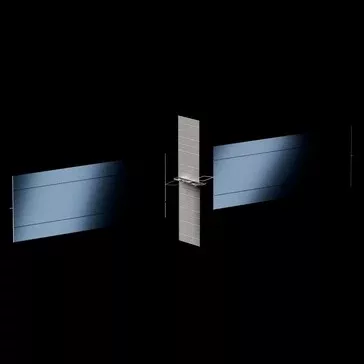
Each AI1 satellite is designed to support AI chips from a variety of manufacturers, including Nvidia or Tesla’s own 2nm Terafab chips. The computing power of one unit averages 120 kW with the possibility of a peak increase of up to 150 kW, which is comparable to modern server rack equipment.
Dimensions and technical features of AI1 satellites
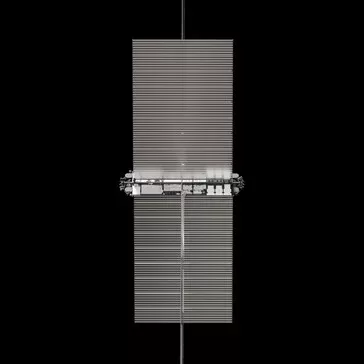
The scale of the satellite is impressive: the height of the structure reaches 20 meters, and the span of the open wings of the solar panels is 70 meters. This is even larger than the fuselage of a Boeing 747 aircraft, which explains the need to use the Starship rocket to launch into an orbit of about 600 km.

Cooling AI equipment in a vacuum
One of the key engineering challenges was to ensure heat dissipation in the vacuum of space. SpaceX plans to use liquid radiators with a total area of 110 m², which remove heat through pumping circuits and shielding to protect against micrometeoroids. According to official information, this solution will allow the use of free solar energy and natural cold vacuum to operate the infrastructure.
Release date and production
The first prototypes of the AI1 satellites are scheduled for launch in early 2027. Full-scale production is planned at the company’s new site called Gigasat. Despite critics’ concerns about the debris in the orbit and cooling efficiency, the project moved from concept to implementation.
Don't miss interesting news
Subscribe to our channels and read announcements of high-tech news, tes

Oppo A6 Pro smartphone review: ambitious

 0
0 
Creating new mid-range smartphones is no easy task. Manufacturers have to balance performance, camera capabilities, displays, and the overall cost impact of each component. How the new Oppo A6 Pro balances these factors is discussed in our review.
Oppo Reno16 Pro 5G smartphone review: well-heeled
0 
Oppo Reno16 Pro 5G looks like a balanced smartphone, in which the manufacturer tried not to make a single characteristic the defining one. It has many advantages. Let’s tell you what
Signia Unveils MaX Platform With Quad-Neural Engine for Hearing Aids

Signia Pure CG MaX is the first hearing aid based on the new MaX platform, utilizing four specialized neural networks.
Samsung Galaxy S26 FE: Everything We Know Before the Launch

Samsung is gearing up for the Galaxy S26 FE launch scheduled for this week. Anatel certification confirms the smartphone retains its predecessor’s battery capacity while adding support for up to 45W fast charging.