

Revolution in chipmaking: AI designed a RISC-V processor from scratch in a record 12 hours
27.04.26
An agent-based artificial intelligence system has achieved a semiconductor breakthrough by designing a full-fledged RISC-V processor core in just 12 hours. According to experts, this is the first recorded case when an AI went through absolutely all stages of development – from the primary specification to the formation of a production-ready GDSII file – completely independently.
What is Design Conductor and review of the VerCore processor
The project was implemented by the startup Verkor.io, which specializes in automating the development of microcircuits. The basis for their success was their own agent system called Design Conductor. Unlike simple automation tools, this system simulates the actions of a skilled engineer, performing design, in-depth testing and error correction without human intervention in the intermediate steps. The result of the work was a chip called VerCore, which is a functional embodiment of the capabilities of modern language models (LLM).
Technical characteristics and description of the AI chip
The VerCore processor has very specific specifications, confirmed during simulations. The chip architecture is based on a five-stage pipeline (pipeline) and operates on the principles of in-order and single-issue. According to the company’s documentation, the target processor clock speed is 1.48 GHz. In terms of pure power, the core scored 3261 points in the CoreMark synthetic test. For clarity: this performance is comparable to the level of budget Intel Celeron SU2300 processors, which were popular in 2011. However, for a fully automated design this is an outstanding result.
How AI designed a processor in 12 hours: from words to GDSII
The main sensation of the experiment was the speed of development. The Design Conductor AI system received an introductory specification of just 219 words. Based on this text, she prepared a GDSII file in 12 hours. By comparison, standard commercial development cycles for processors of similar complexity at large corporations typically take 18 to 36 months of painstaking work. Such a radical reduction in development time could completely change the economics of the chip market.
Features of the technical process and project verification
At the moment, the VerCore processor exists in the form of a high-fidelity simulation and has not yet been physically implemented “in silicon”. Its performance was tested in detail using the Spike software emulator. During the design, the open ASAP7 PDK toolkit was used. This is a library that simulates the 7-nanometer process technology, which was created with the participation of engineers at Arizona State University and the ARM research division. The startup Verkor plans to make all the developments of the project publicly available by the end of this month, and the official live demonstration of VerCore will take place in July at the prestigious Design Automation Conference (Long Beach, California).
History and development of AI in chip architecture
The use of AI algorithms in electronics development is not new. Back in 2020, the DAVE model (based on GPT-2) was generating Verilog logic circuits, and last year there was news of an 8-bit processor being built via GPT-4. However, Design Conductor goes a step further, acting not just as a code generator, but as a full-fledged process coordinator. The system is able to correctly instruct large language models and monitor the implementation of design standards.
Should we expect an AI revolution in electronics development?
The Verkor.io case proves that neural networks are capable of coping with complex engineering work, but so far only within the framework of simple architectures of the level of 15 years ago. Does this mean the end of traditional engineering? Rather, it is the birth of a powerful tool for speeding up prototyping. At the current stage, the reliability of solutions still requires human control, but the trend towards complete design autonomy is already
Don't miss interesting news
Subscribe to our channels and read announcements of high-tech news, tes

Oppo A6 Pro smartphone review: ambitious

 0
0 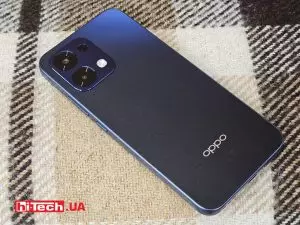
Creating new mid-range smartphones is no easy task. Manufacturers have to balance performance, camera capabilities, displays, and the overall cost impact of each component. How the new Oppo A6 Pro balances these factors is discussed in our review.
Oppo Reno16 Pro 5G smartphone review: well-heeled
0 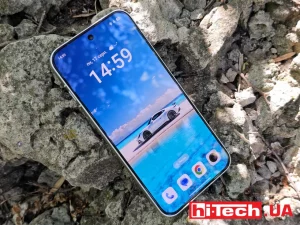
Oppo Reno16 Pro 5G looks like a balanced smartphone, in which the manufacturer tried not to make a single characteristic the defining one. It has many advantages. Let’s tell you what
New Cube Nuroad Hybrid C:62 Electric Gravel Bike Weighs Only 15.4kg

Cube has introduced the Nuroad Hybrid C:62 Race 400X FE 2027 electric gravel bike. The model stands out with a lightweight carbon frame, a Bosch motor, and a full set of accessories for daily riding.
Philips Launches Free 3D-Printable Replacement Parts for OneBlade and More

Philips has started providing free STL files for 3D printing attachments for its shavers and trimmers in collaboration with Prusa Research. This allows OneBlade owners to print their own accessories and extend the service life of their devices.