

Pulsar Fusion thermonuclear engine could shorten journey to Mars to just a few weeks
30.03.26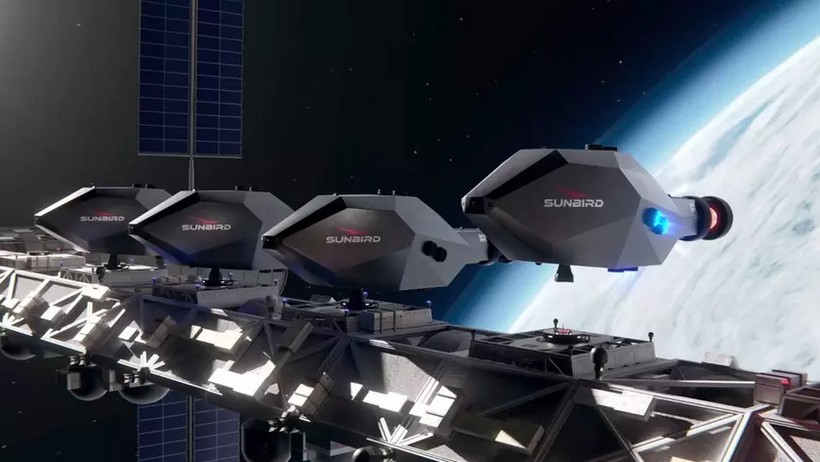
Pulsar Fusion has reported a key milestone in its technology development — engineers successfully initiated a plasma process inside the engine. This test marks one of the first practical confirmations that the concept works.
The demonstration took place at the Amazon MARS conference, where the company presented its latest progress. At the core of the project is the Sunbird system, which uses powerful magnetic and electric fields to control streams of charged particles.
According to CEO Richard Dinan, this step is significant as the project is moving beyond theory into real-world experimentation.
Implications for space missions
Modern spacecraft remain limited by chemical propulsion, which makes trips to Mars take several months. This creates challenges both for mission logistics and crew conditions.
The new technology could change that. Estimates suggest such engines could reach speeds of hundreds of thousands of kilometers per hour — theoretically up to 800,000 km/h, significantly reducing travel time to just a few weeks.
Shorter missions directly improve safety by reducing radiation exposure and minimizing the negative effects of prolonged weightlessness on the human body.
What comes next
The next phase of development will focus on improving key components, including superconducting magnets and fuel systems. These upgrades are essential for increasing efficiency and stability.
Advancements in such technologies come amid growing interest in the space sector, where faster interplanetary transport is becoming increasingly important.
Still at the experimental stage
At this point, Sunbird remains an experimental platform. One of the main challenges is achieving stable plasma operation, which is critical for the system’s reliability.
However, the current results indicate that the technology is steadily progressing toward practical use. In the long term, fusion propulsion could reshape how space missions are conducted, making them faster and more efficient.
Don't miss interesting news
Subscribe to our channels and read announcements of high-tech news, tes

Oppo A6 Pro smartphone review: ambitious

 0
0 
Creating new mid-range smartphones is no easy task. Manufacturers have to balance performance, camera capabilities, displays, and the overall cost impact of each component. How the new Oppo A6 Pro balances these factors is discussed in our review.
Oppo Reno16 Pro 5G smartphone review: well-heeled
0 
Oppo Reno16 Pro 5G looks like a balanced smartphone, in which the manufacturer tried not to make a single characteristic the defining one. It has many advantages. Let’s tell you what
Mobile OS Market Share: Android, iOS, and Harmony OS Performance in Q2 2026

Counterpoint Research analysts have released data on mobile OS market shares based on smartphone shipments for the second quarter. Android maintains its leadership, while Harmony OS continues to strengthen its position in the Chinese market.
US Administration Weighs New Tariffs on Laptops and Consoles: The Risks

The Trump administration is considering new tariffs on semiconductors and electronics, which could significantly drive up retail prices for laptops and game consoles.