

Intel has developed an application for communication between PCs – Thunderbolt Share
17.05.24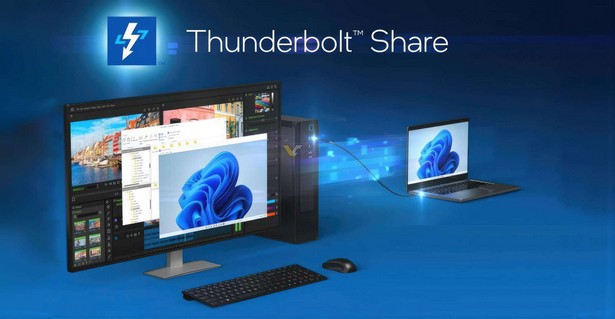
Intel has introduced a new Thunderbolt Share application that will allow you to connect two computers using the high-speed Thunderbolt interface. Interestingly, Intel has decided that connecting two PCs with a cable is a good idea in 2024.
This is not a new version of the interface, but an application that allows users of different PCs to share screens, keyboards and mice, storage and files. Users will be able not only to transfer files between devices, but also to fully use the second computer, for example, by connecting a laptop to it.
However, there are several limitations. The application requires Windows computers with Thunderbolt 4 or 5 and Intel licensing. Currently licensed by MSI, Lenovo, Acer, Razer, Kensington, Belkin, Promise Technology and Plugable.
Don't miss interesting news
Subscribe to our channels and read announcements of high-tech news, tes

Oppo A6 Pro smartphone review: ambitious

 0
0 
Creating new mid-range smartphones is no easy task. Manufacturers have to balance performance, camera capabilities, displays, and the overall cost impact of each component. How the new Oppo A6 Pro balances these factors is discussed in our review.
Oppo Reno16 Pro 5G smartphone review: well-heeled
0 
Oppo Reno16 Pro 5G looks like a balanced smartphone, in which the manufacturer tried not to make a single characteristic the defining one. It has many advantages. Let’s tell you what
OpenAI Reinstates Strict Usage Limits for ChatGPT Plus

OpenAI has restored the 5-hour usage limit for standard ChatGPT Plus users. This decision aims to optimize server load, while premium Pro tiers remain unaffected.
iPhone 18 Price Hike Surfaces: $100 Increase Expected

It has emerged that the iPhone 18 lineup will likely see a price hike. Apple is forced to increase costs by $100 due to rising prices for RAM and NAND memory.