

“Time bomb” in Gigabyte RTX 5090: video cards break after the end of the warranty
07.05.26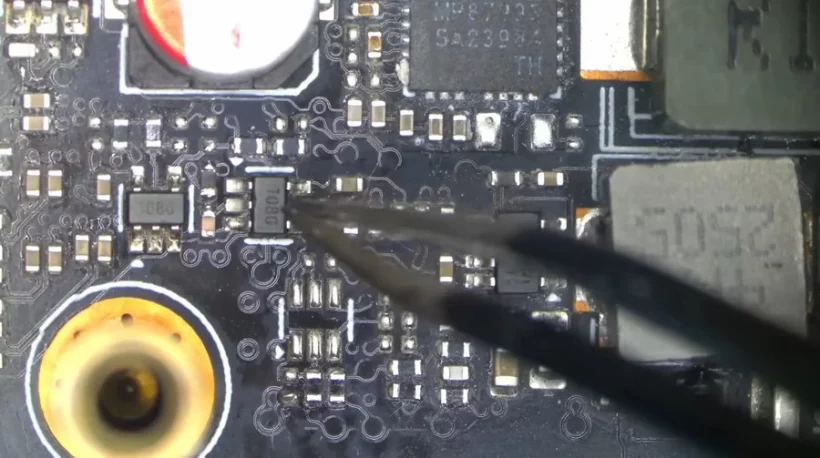
GeForce RTX 5090 video cards from Gigabyte were at the center of a technical scandal. Repair shop Northwestrepair has discovered a hidden defect in top models, which experts call an “engineering bomb”. According to the results of the diagnostics, a specific selection of electronic components in the power circuits can lead to irreversible damage of the graphics accelerator just before the end of the warranty period.
Overview of the situation
Electronic repair specialists discovered a problem in the circuitry of Gigabyte’s flagship solutions. According to Northwestrepair, the situation affects the AORUS and Gaming lines. The main claim concerns the accuracy of the selection of component ratings, which do not leave a margin for the natural wear and tear of electronics. The VideoCardz video points out that this can be a conscious move to shorten the product’s life cycle, as well as a serious engineering mistake in the design of the PCB (printed circuit board).
Characteristics of the technical defect
Technical analysis showed that the circuit of switching on the NVVDD voltage line is vulnerable. It uses a 100 kΩ pull-up resistor. Its work is critical for providing a turn-on signal. In normal operation, this resistor holds the signal at just above 1.0 V. The problem is that 1.0 is the lower trigger threshold. Any deviation in the smaller direction due to aging of the material or changes in the characteristics of neighboring elements leads to the fact that the video card stops starting.
Release date and current issue status
At the moment, RTX 5090 series video cards are already available on the market and are in use by users. The problem was discovered during the practical repair of the failed instance. It is worth noting that the malfunction does not appear immediately, but as the silicon and passive components degrade, which makes it especially dangerous for those who plan to use the card for more than two or three years.
Differences and similarities between AORUS and Gaming versions
Research confirmed that the board architecture of Gigabyte’s AORUS and Gaming series are almost identical in terms of NVVDD power system implementation. Both lines suffer from the same choice of resistor rating. While other manufacturers make wider tolerances (for example, setting the voltage at 1.1 for a stable start), Gigabyte’s engineers have come too close to the limit of performance.
Features and nuances of repair
Repairing failed Gigabyte RTX 5090 graphics cards is possible, but it requires jewel-like precision. A Northwestrepair specialist successfully restored the card by replacing the stock resistor with a lower resistance analog. This made it possible to raise the voltage of the turn-on signal to 1.1, which guarantees a stable start even taking into account the future degradation of the components. Other power lines, such as MSVD (memory) and PEX (PCIe), worked fine during the tests, which confirms the local nature of the problem in the NVVDD node itself.
Don't miss interesting news
Subscribe to our channels and read announcements of high-tech news, tes

Oppo A6 Pro smartphone review: ambitious

 0
0 
Creating new mid-range smartphones is no easy task. Manufacturers have to balance performance, camera capabilities, displays, and the overall cost impact of each component. How the new Oppo A6 Pro balances these factors is discussed in our review.
In-Ear headphones Active Noise Cancellation: how Oppo eliminate noise
0 
In-ear headphones remain one of the most popular form factors due to their lightweight design. However, this design is considered one of the most challenging to implement active noise cancellation (ANC). We’ll explain how Oppo solved this problem.
The new Radeon RX 9050 4GB is only for pre-built PCs.
AMD has unveiled the Radeon RX 9050 with 4GB of VRAM, a 64-bit bus, and 16MB of Infinity Cache.
Honor Turbo 5G Hands-On: Affordable Phone With Massive Battery and IP69 Rating

Honor has officially released the Honor Turbo 5G smartphone. The new device packs a large AMOLED screen, an 8,560 mAh battery, a Snapdragon 6 Gen 4 chipset, and IP69 protection.