

You may lose all your games: Sony may delete inactive PlayStation account after 3 years
06.07.26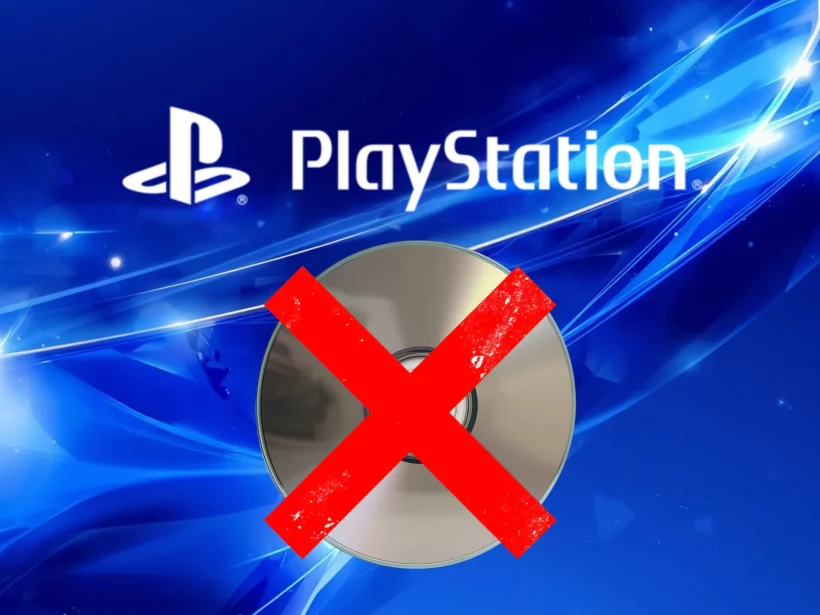
Discussions about the future of physical media in the world of games are ongoing, especially amid news of Sony’s plans to stop releasing games on disc by early 2028. A new round of discussions was sparked by a clause in the user agreement (TOS), according to which the company reserves the right to close a user’s account for prolonged inactivity.
What are Sony’s rules?
According to clause 21.2 of the agreement (SIE TOS), if the owner has not been active on his PlayStation account for 36 months, the company can take steps to delete it. It’s worth noting that this protection mechanism requires notice: before terminating an account, Sony must contact the user via email and provide a 6-month “grace period” to log in or confirm intent to keep the account.
Why was this important news
For players in the European Union, this rule has been in place for several years, but it remained in the shadows until the recent controversy over the removal of discs. Now critics of the “digital future” see this as a serious risk: owners of PS4 and PS5 consoles fear that after years of absence they may permanently lose access to their vast library of purchased digital games.
Will deleting accounts become a widespread problem?
Although Sony’s legal documents allow for such actions, there are currently no documented cases of mass deletion of game accounts. Such practices are not something unique—Microsoft reserves a similar right. However, the community’s concerns are fueled by the recent precedent of Sony removing more than 550 films and shows from StudioCanal from users’ libraries.
Should users be worried?
Most experts agree that the average player is not in danger of being deleted if he periodically uses the service. However, the risks increase for those who take long breaks: someone is at war, someone left and is a refugee somewhere in Europe, someone switches to other platforms or temporarily puts their hobby aside. The situation once again emphasizes the vulnerability of the digital model of content ownership to physical media, which still remains independent of the policies of company servers.
FAQ
Does Sony actually delete accounts after 3 years of inactivity?
Yes, Rule 21.2 gives Sony the right to close an account if it has not been logged in for 36 months. However, this does not happen automatically: the company must first send a notification and give six months to restore access.
Does this rule apply to users in the US?
In the US, a company cannot close an account based on prolonged inactivity alone unless other terms of the user agreement have been violated.
What happens to my digital purchases when I delete my account?
If your account is permanently deleted, you will lose access to all digital games, licenses, and other content associated with that account.
Are there any proven cases of Sony gaming accounts being deleted?
Currently, there are no documented facts where Sony deleted a gaming account due to 36 months of inactivity.
Don't miss interesting news
Subscribe to our channels and read announcements of high-tech news, tes

Oppo A6 Pro smartphone review: ambitious

 0
0 
Creating new mid-range smartphones is no easy task. Manufacturers have to balance performance, camera capabilities, displays, and the overall cost impact of each component. How the new Oppo A6 Pro balances these factors is discussed in our review.
Oppo Reno16 Pro 5G smartphone review: well-heeled
0 
Oppo Reno16 Pro 5G looks like a balanced smartphone, in which the manufacturer tried not to make a single characteristic the defining one. It has many advantages. Let’s tell you what
Lenovo Qira Transforms into a Central AI Hub Across Devices and Services

Lenovo scales its Qira AI, bringing support to PCs with 16GB of RAM, Motorola smartphones, and Moto Watch Ultra.
Lenovo Debuts Yoga Tab Gen 2 and Tab Plus Gen 2 with 4K Displays and Android 17

At IFA 2026 in Berlin, Lenovo introduced its new flagship tablets, the Yoga Tab Gen 2 and Tab Plus Gen 2.