

Robots instead of employees: China introduced the first fully automated hotel complex
29.06.26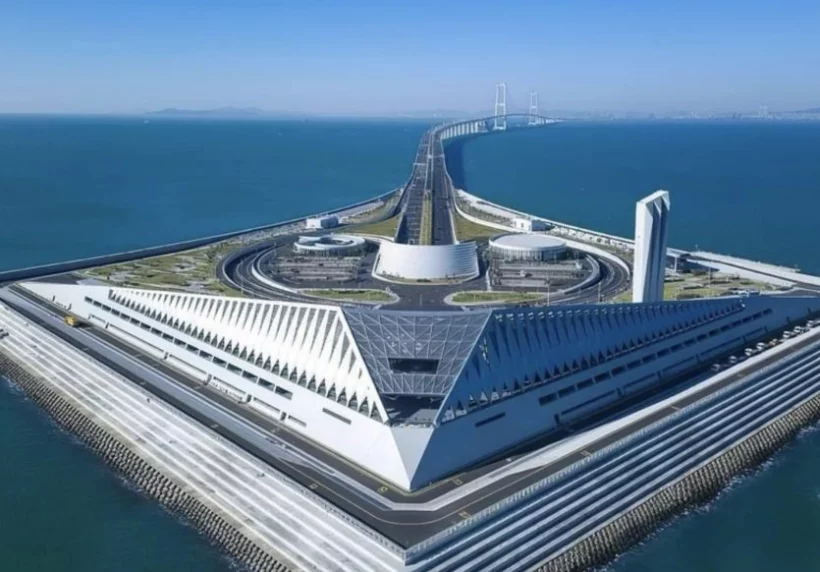
China continues to actively introduce robotic technologies into the service sector. Already next year, a unique hotel complex will start operating in the country, which will be the first hotel in the world with a completely autonomous management system. There will be no usual administrators, maids, porters or waiters – all duties will be taken over by robots united by a common artificial intelligence platform.
The project is implemented by Pudu Robotics together with Shenzhen Culture & Tourism Industry Development. The new facility will be part of a large-scale program to create a technology center on the West Artificial Island, located near the grand Shenzhen-Zhongshan Bridge across the Pearl River Delta.
Demonstration site for physical AI
The new hotel complex is designed not just as an unusual place for tourists to live, but as a full-fledged training ground for demonstrating the capabilities of modern artificial intelligence and service work.
According to representatives of Pudu Robotics, the project should show that autonomous robots are already capable of independently providing almost the entire cycle of hotel service without human intervention. It is not about the usual automation of individual processes, but about the creation of a completely interdependent ecosystem in which each robot performs its own task and interacts with the rest of the system participants.
All processes will be managed using the proprietary PuduFM 1.0 platform in combination with the PuduAgent intelligent agent, which will distribute tasks between robots and coordinate their work in real time.
All guest services will be completely handled by cars
After opening, visitors will no longer have to interact with traditional staff. Virtually every service will be performed by robotic assistants.
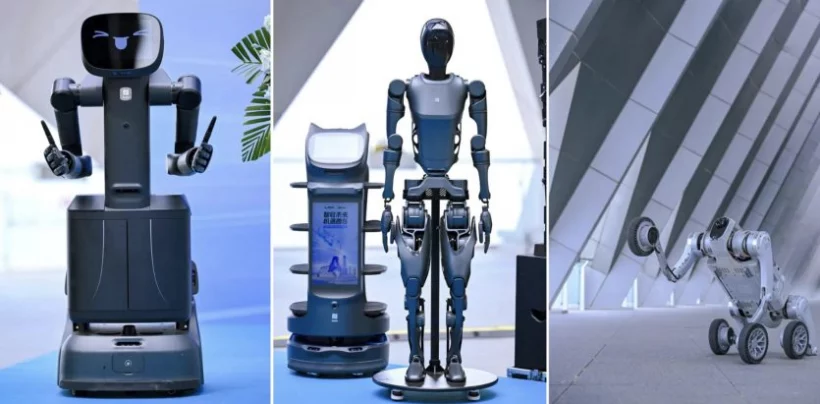
Autonomous systems will meet guests at the reception desk, check-in, answer questions, escort customers to the hotel, deliver luggage, bring food and drinks, clean the premises and monitor the cleanliness of public areas.
At the same time, each robot will be responsible for its own direction of work.
For example, FlashBot will ensure automatic delivery of orders from vending machines directly to rooms. PUDU T300 will be responsible for transporting luggage between the hall and residential floors, and cleaning will be handled by PUDU CC1 Pro and PUDU MT1, which use computer vision technologies and artificial intelligence algorithms to identify garbage and build the most effective cleaning routes.
During the presentation of the project, the company also demonstrated other representatives of its line. BellaBot Pro served coffee to guests, while KettyBot Pro delivered drinks and snacks.
Robots will be able to make their own decisions
Developers paid special attention to system autonomy.
Robots will not act according to pre-written scenarios. They will be able to independently build travel routes, analyze the surrounding environment, avoid obstacles and change work algorithms depending on the current situation.
Reception desk robots will learn to recognize gestures and interact with visitors in almost the same way as a regular hotel employee. Other devices will be able to coordinate each other’s actions, ensuring continuous operation of the entire infrastructure.
In fact, the hotel will become a single digital organism where all processes will be synchronized with each other.
Guests will be accepted gradually
The launch of the project will take place in several stages.
The first visitors will be able to enter the hotel by the end of this year. At the initial stage, a limited number of rooms will be opened to test the operation of key services in real conditions.
Guests will be able to appreciate the process of automatic registration, robot service and the system of autonomous delivery of orders directly to the room.
After the tests are completed, the hotel will be fully operational.
In China, jobs are already becoming a part of everyday life
The use of service robots for China has long ceased to be an experiment.
In many hotels of big cities, autonomous devices already deliver food and other orders to the rooms. The humanoid XMAN-R1 recently started working at the Shanghai airport, which helps passengers check in for flights.
However, Pudu Robotics’ new project is different in scope. If the existing solutions only complement the work of people, then all processes will be fully automated.
The hotel has 44 luxury rooms
After completion of construction, the complex will offer guests 44 luxury rooms, a restaurant, a fitness room and other public spaces.
All objects will be united by a single intelligent control system that will coordinate the work of dozens of service robots without human intervention.
The developers expect that this project will be the first step towards the mass implementation of fully autonomous hotels and will show what the hotel business can become in the coming years.
Don't miss interesting news
Subscribe to our channels and read announcements of high-tech news, tes

Oppo A6 Pro smartphone review: ambitious

 0
0 
Creating new mid-range smartphones is no easy task. Manufacturers have to balance performance, camera capabilities, displays, and the overall cost impact of each component. How the new Oppo A6 Pro balances these factors is discussed in our review.
In-Ear headphones Active Noise Cancellation: how Oppo eliminate noise
0 
In-ear headphones remain one of the most popular form factors due to their lightweight design. However, this design is considered one of the most challenging to implement active noise cancellation (ANC). We’ll explain how Oppo solved this problem.
Windows 11 Update Breaks Games: The RGB Fix

The latest cumulative Windows 11 update has caused issues with game performance and stability. Microsoft confirmed the conflict is triggered by RGB peripheral software.
Asus Challenges MacBook Pro With Powerful ProArt Creation 16

Asus has introduced a new version of its ProArt Creation 16 laptop for professionals. The device is equipped with an AMD Ryzen AI 9 processor, 64GB of RAM, and a high-quality 120Hz OLED screen.