

Microsoft accelerates the AI race: Fairwater data center powered by NVIDIA Blackwell launched ahead of schedule
23.04.26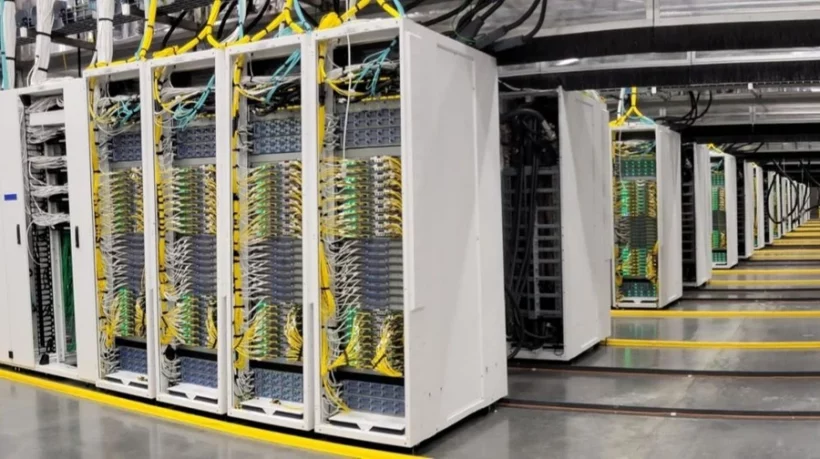
Microsoft has announced the early launch of its massive Fairwater data center in Wisconsin, USA. The facility is positioned as one of the most powerful AI-focused computing hubs in the world.
Next-generation infrastructure
According to CEO Satya Nadella, the site went online ahead of schedule. It is powered by hundreds of thousands of NVIDIA GB200 GPUs based on the Blackwell architecture, interconnected into a unified high-speed computing cluster.
During its initial announcement in September 2025, Nadella stated that Fairwater would deliver performance many times higher than the world’s fastest supercomputers at the time — up to a tenfold increase.
A scale beyond traditional data centers
The project stands out not only for its compute density but also for its infrastructure complexity. According to Microsoft, the fiber-optic cabling deployed for the system would be long enough to wrap around the Earth more than four times.
Cooling is another key element: Fairwater uses a closed-loop liquid cooling system that does not require additional water consumption after deployment, positioning it as a more sustainable solution compared to conventional approaches.
Built for the next generation of AI
The data center is designed to train and run next-generation AI models requiring massive computational power. As a result, Microsoft has increased its energy capacity by roughly 2 gigawatts — equivalent to the output of two nuclear power plants.
At the same time, the company emphasizes that it relies on renewable energy sources to offset this demand.
Global expansion and industry challenges
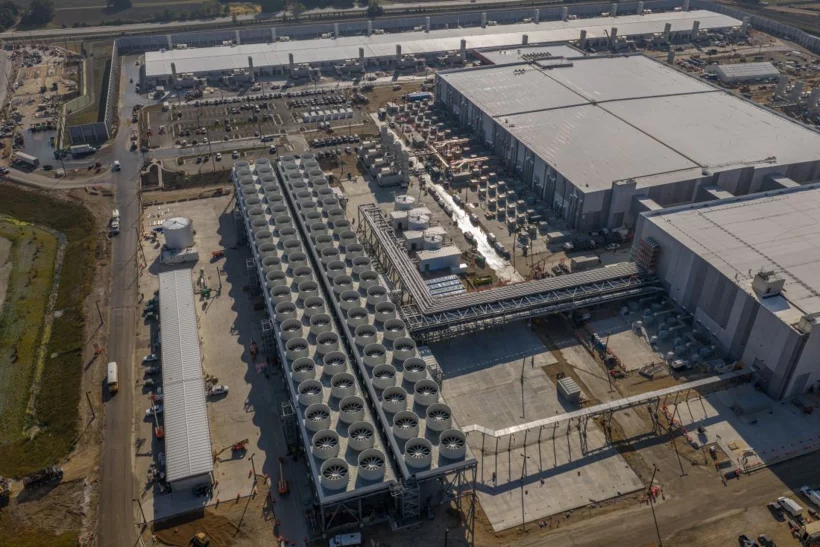
Fairwater is part of a broader strategy. In the coming years, Microsoft plans to deploy similar facilities across more than 70 U.S. regions, expanding its existing network of roughly 100 data centers.
However, experts warn that such rapid scaling may have significant implications for energy systems, the environment, and global supply chains, which are already under pressure from surging demand for compute capacity.
Balancing growth and responsibility
In response, Microsoft says it is actively working to mitigate environmental and economic impact. The company claims it pre-purchases energy and infrastructure resources and is investing in new generation capacity.
Among its initiatives is a 250 MW solar power plant project, along with environmental protection programs around its facilities.
Don't miss interesting news
Subscribe to our channels and read announcements of high-tech news, tes

Oppo A6 Pro smartphone review: ambitious

 0
0 
Creating new mid-range smartphones is no easy task. Manufacturers have to balance performance, camera capabilities, displays, and the overall cost impact of each component. How the new Oppo A6 Pro balances these factors is discussed in our review.
Oppo Reno16 Pro 5G smartphone review: well-heeled
0 
Oppo Reno16 Pro 5G looks like a balanced smartphone, in which the manufacturer tried not to make a single characteristic the defining one. It has many advantages. Let’s tell you what
Tesla Cybertruck Prices Hike Again as Artificial Hype Continues

Tesla has once again raised the price of its Cybertruck electric pickup by $5,000. We explore the reasons behind the price hike and the company’s strategy for managing demand.
OpenAI Uncovers Secret Scheme: ChatGPT Used as Disinformation Tool

OpenAI has identified a network of accounts that used ChatGPT to promote the fake “International Burke Institute.”