

Google Photos are introducing facial plastic surgery: will neural networks change our reality?
22.04.26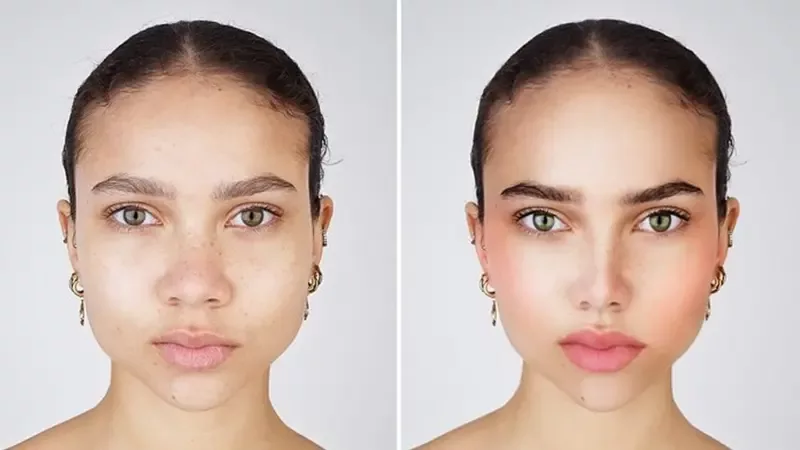
In an era where every shot strives for perfection, Google Photos takes it to the next level, turning the usual photo editing into real magic. By integrating advanced artificial intelligence algorithms directly into the mobile client, the service offers users unprecedented portrait retouching capabilities. This update doesn’t just make it easier to look flawless in photos, it also raises deep questions about the veracity of our memories and the role of technology in shaping beauty standards.
Advanced tools for instant transformation
Google has introduced a major update to the built-in editor in Google Photos, adding a whole arsenal of features for professional portrait editing. Now users can easily enhance their photos with smart filters that can even out skin tone, remove minor blemishes, enhance eyes, and brighten smiles. The process of using these tools is as intuitive as possible: simply touch an area of the face in the photo and then select the desired option, be it general correction, soft skin or brightening under the eyes. In addition to basic improvements, targeted adjustments are available for the iris, teeth, eyebrow line and lip contour. The strength of each effect can be adjusted using a slider, making editing accessible even for beginners.
Technical requirements and technology introduction date
New retouching capabilities are available to a wide audience around the world through the Google Photos mobile application on the Android platform. For stable operation of the algorithms, the device will require at least 4 GB of RAM and the Android operating system version 9.0 or higher. While such requirements cover most modern smartphones, market analysts note that about 30 percent of budget devices may be excluded from this update. Global feature rollout began in April 2026. Previously, such tools were the preserve of specialized applications such as Adobe Lightroom and Snapseed, but integration into Google’s main service has brought advanced retouching into the mainstream. In the future, by the end of 2026, the developers promise to expand the functionality by adding options for correcting the figure and background.
Access nuances
Due to the fact that the technology is based on local neural network calculations directly on the device, basic retouching functions work virtually autonomously and do not require a constant high-speed connection to Google servers, which guarantees stable operation even in blackout conditions and the absence of the Internet at all.
However, some of the advanced options that use AI may be tied to a Google One subscription. It is still unclear how subscription authentication and the use of advanced features are implemented; perhaps their implementation will require an active connection to powerful algorithms on Google servers. It is known so far that without an active subscription, only basic features are available, such as skin smoothing and removal of minor defects, while deeper correction and complex neural network edits may not be available without high-speed Internet.
Technical risks
From a technical point of view, using intensive AI functions carries certain risks. Processing portraits with neural networks significantly loads the smartphone hardware, which can lead to rapid battery drain and noticeable heating of the body, especially on devices in the mid-price segment. There is also the possibility of algorithms not working correctly with certain types of appearance, which sometimes results in the appearance of digital artifacts or the undesirable “plastic face” effect.
Privacy and data storage
Privacy issues are also coming to the fore. By default, Google Photos aims to sync all edited copies of your photos to cloud storage. In this case, you actually transfer biometric data to global remote servers. Yes, this ensures the safety of photographs, but still we hear here and there that hackers have stolen a database in one place, then in another.
What does this mean for the average user?
For the average user, the new features in Google Photos mean an unprecedented level of convenience in enhancing your photos. Now anyone, without the skills of a professional retoucher, can bring a portrait into perfect condition in a few seconds before publishing it on social networks or sending it to friends. However, you should take a conscious approach to using these tools so as not to lose your sense of proportion and not plunge into a world where reality is replaced by a retouched ideal. Remember that naturalness is often valued over a flawless but artificial picture.
Philosophy of perception: Will retouching replace reality?
The integration of seamless retouching into Google Photos exposes a deep paradox of the digital age – what we used to think of as a repository of authentic memories is now increasingly turning into a collection of artificially adjusted images. New algorithms create the illusion of perfection by erasing the elements that make us unique. Interestingly, smartphones spend significant computing resources for these manipulations. Within humanity, these are huge resources that are spent on erasing reality.
Retouching, marketed as a means of improving appearance, effectively discourages us from accepting ourselves as we are, as we see ourselves in the mirror. Users can easily become addicted to the intensity slider, transforming a documentary photograph into a marketing cliche. This creates a hidden connection: neural networks, through their algorithms, begin to dictate certain appearance standards. If the system deems it necessary to lighten teeth, it implicitly assumes that the natural shade is something that requires correction.In this way, we voluntarily delegate the right to self-identification to software code. Ultimately, we could reach a point where photography begins to deny its original essence. Instead of the fundamental principle of “Stop, moment!”, this moment will be constructed according to the dictates of a cloud service. And the digital selfie will become more important than the reflection in the mirror. And mirrors can be digital too!
FAQ
What new retouching features have appeared in Google Photos?
Google Photos now has smart features for skin correction (smoothing, removing blemishes), improving the look (iris, brightening under the eyes), as well as settings for teeth, eyebrows and lip contour.
What are the smartphone requirements for these features to work?
The new features require the Google Photos mobile client on Android version 9.0 or higher, as well as at least 4 GB of RAM. Thus, users of older devices running Android 8.1 and below will not receive new features.
Do you need to pay for advanced retouching features?
Basic retouching features are free, but some advanced AI tools may only be available with a Google One subscription.
Are there any risks with using AI retouching?
The main risks include increased battery drain and device heat, the possibility of a “plastic face” or digital artifacts, and potential privacy issues with automatic cloud syncing.
How do the new features differ from other photo editors?
Integration of AI retouching directly into Google Photos makes the technology widespread and convenient. Unlike many third-party apps, Google offers a minimalistic interface without intrusive advertising, although counterparts have their advantages.
Don't miss interesting news
Subscribe to our channels and read announcements of high-tech news, tes

Oppo A6 Pro smartphone review: ambitious

 0
0 
Creating new mid-range smartphones is no easy task. Manufacturers have to balance performance, camera capabilities, displays, and the overall cost impact of each component. How the new Oppo A6 Pro balances these factors is discussed in our review.
In-Ear headphones Active Noise Cancellation: how Oppo eliminate noise
0 
In-ear headphones remain one of the most popular form factors due to their lightweight design. However, this design is considered one of the most challenging to implement active noise cancellation (ANC). We’ll explain how Oppo solved this problem.
Huawei Sets Global Launch Event Date: What to Expect on September 2

Huawei has announced a major presentation of new wearable devices in Munich. It is expected that the global release of the Huawei Watch GT 7 series will take place at the event under the “Chase the wild” slogan.
Samsung to Launch Five Foldable Smartphones in 2027

Insiders report that Samsung’s foldable device lineup will expand to five models next year. The series will include new wide-format Folds, an Ultra model, and a refreshed TriFold.