

Google moves search to the system level: Windows gets a standalone desktop tool with AI and local indexing
16.04.26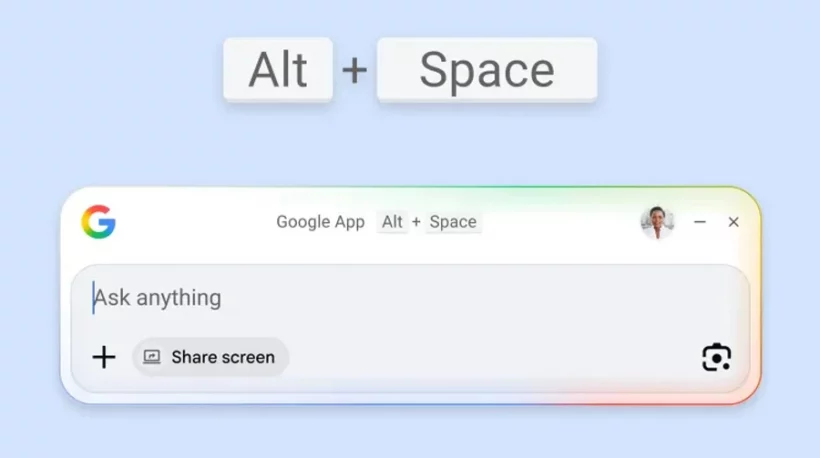
Google has released a dedicated search application for Windows, taking search functionality beyond the browser and turning it into an independent system-level tool. Following a testing phase in September, the service is now available to users worldwide, although at this stage it supports only English.
In essence, the company is attempting to integrate search directly into the user’s workflow by combining web queries, local files, and cloud data within a single interface that runs on top of the operating system.
A system-layer search experience: an interface that runs above Windows
In terms of its logic, the new tool is closer to system search mechanisms such as Spotlight, where access to information is embedded into the operating environment and does not require launching separate applications or a browser.
In the Windows version, the search window appears above all active applications and serves as a universal entry point to data. It enables searches across the internet, local files on the device, and Google Drive content, effectively merging multiple information sources into a unified retrieval system.
Quick launch, multi-layered results, and visual content integration
The application is activated using the Alt + Space shortcut, after which a pop-up search window appears. It operates in a dynamic mode, generating results as the user types, without requiring navigation to a browser.
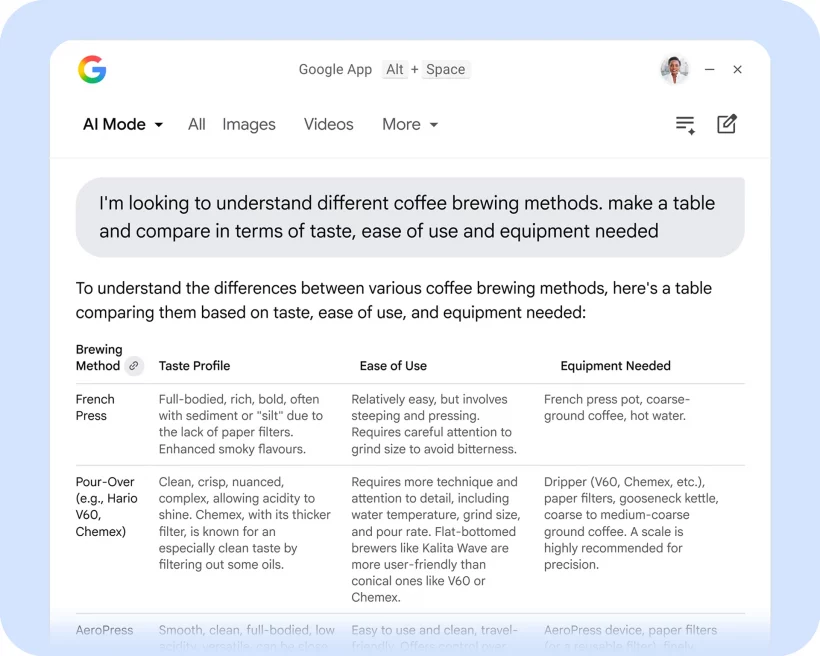
The interface organizes results into several categories, including web, images, video, and AI-powered modes. This allows users to switch between different types of information within a single query while maintaining context.
A notable feature is integration with Google Lens, which enables analysis of on-screen content, object recognition, and the use of the display itself as a source for query generation.
Conversational search and a shift toward AI-driven interaction
Unlike traditional search models, the new system supports query refinement directly within the results window. Users can continue interacting with the system by asking follow-up questions without restarting the search process.
This effectively moves desktop search toward a hybrid model where conventional search results are combined with AI-driven interpretation and contextual responses, reshaping how information is accessed on personal computers.
Limited availability and potential ecosystem expansion
The application is available for download via Google’s official website and runs on Windows 10 and newer versions. At this stage, functionality is limited to English, positioning the product primarily for a global but not yet localized audience.
Google has not yet announced plans for a macOS or Linux version. However, the company is simultaneously testing a separate desktop Gemini application for Apple devices, which may indicate the early formation of a broader ecosystem of AI-powered desktop tools.
Don't miss interesting news
Subscribe to our channels and read announcements of high-tech news, tes

Oppo A6 Pro smartphone review: ambitious

 0
0 
Creating new mid-range smartphones is no easy task. Manufacturers have to balance performance, camera capabilities, displays, and the overall cost impact of each component. How the new Oppo A6 Pro balances these factors is discussed in our review.
In-Ear headphones Active Noise Cancellation: how Oppo eliminate noise
0 
In-ear headphones remain one of the most popular form factors due to their lightweight design. However, this design is considered one of the most challenging to implement active noise cancellation (ANC). We’ll explain how Oppo solved this problem.
Redmi M100 Debuts With Massive 7900mAh Battery and HyperOS 3

Xiaomi has released the Redmi M100, a smartphone with a record-breaking 7900mAh battery and a specialized interface for seniors.
Google to Exit China Production for Pixel Devices by 2027

Google plans to completely phase out the production of Pixel devices in China by 2027, moving capacity to Vietnam and India. The company expects an increase in smartphone shipments and more efficient component procurement.