

Gigabytes are a thing of the past: Huawei offers mobile operators to sell AI tokens instead of traffic
28.06.26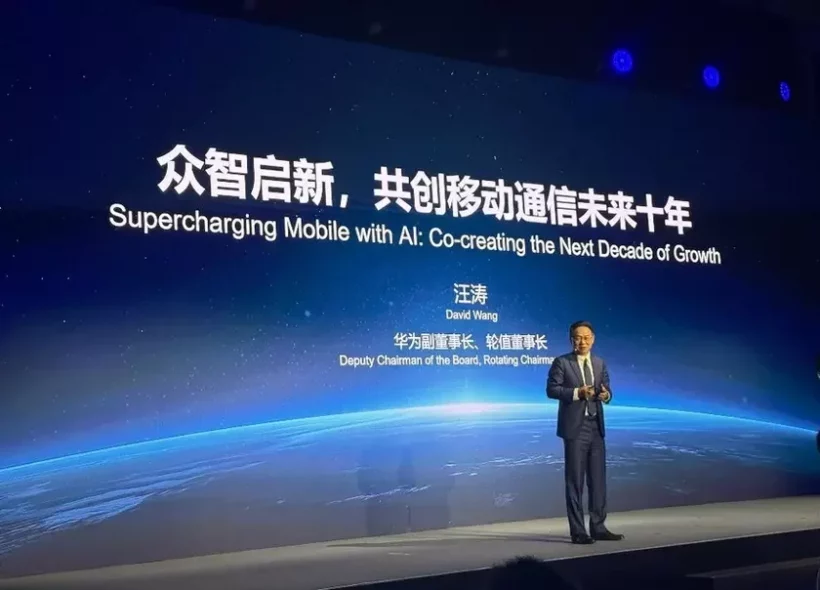
It seems that the traditional gigabyte packages will soon be a thing of the past. Huawei CEO David Wang at the international technology exhibition MWC Shanghai 2026 announced a revolutionary transition: instead of the usual traffic, mobile operators will start selling AI tokens, turning telecommunications networks into providers of computing power for remote neural networks.
Huawei’s concept of replacing gigabytes with AI tokens
The new era under the slogan Mobile AI implies a fundamental change in the logic of the work of mobile operators. The traditional bundle sale of megabytes and gigabytes no longer meets the requirements of the times. According to David Wang from Huawei, the smartphone becomes just a smart terminal for remote neural network requests, and the communication operators themselves turn into distributors of distributed computing power. This transition is designed to bring together traditional network connections, edge cloud computing and deep machine learning algorithms.
Characteristics of the three pillars of the new network architecture
To provide users with a completely different level of communication and ultra-low delays when calling embedded intelligent applications, cellular operators need to update the architecture of their equipment. Huawei highlights three key technological pillars of this ecosystem:
- Normal basic high-speed wireless channel;
- Built-in computing hardware resources in network elements;
- Adaptive platform of machine learning technologies based on AI.
The point of the reform is to force the computation of neural networks to take place on intermediate nodes of the operator. Instead of sending massive data packets to a remote cloud or transferring calculations entirely to the physical processor of a smartphone, 5G-Advanced networks will perform AI processing almost instantly at base stations near the subscriber.
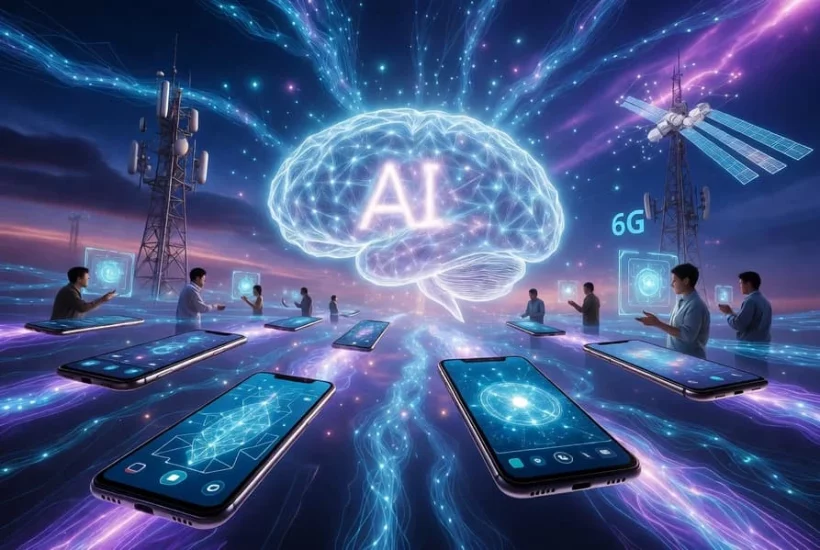
The implementation of such concepts favorably distinguishes the offer of AI services in the eyes of developers, for whom the stable delivery of valuable information to the end user is critically important.
How will the price of mobile Internet change with the arrival of AI tariffs?
The main financial goal of the new initiative is to save the business of telecom companies from falling into the trap of a “dumb pipe”, which deals exclusively with simple and unprofitable traffic transportation. With AI tokens, cellular operators avoid byte charging. Monetization is now directly dependent on the value of AI query execution within networks. Simple commands are priced cheaply, and more demanding requests cost the operator more. David Wang claims that the rapid processing of AI tasks directly on the operator’s towers is exactly the kind of convenient feature that subscribers will be happy to pay their money for.
Don't miss interesting news
Subscribe to our channels and read announcements of high-tech news, tes

Oppo A6 Pro smartphone review: ambitious

 0
0 
Creating new mid-range smartphones is no easy task. Manufacturers have to balance performance, camera capabilities, displays, and the overall cost impact of each component. How the new Oppo A6 Pro balances these factors is discussed in our review.
Oppo Reno16 Pro 5G smartphone review: well-heeled
0 
Oppo Reno16 Pro 5G looks like a balanced smartphone, in which the manufacturer tried not to make a single characteristic the defining one. It has many advantages. Let’s tell you what
Lenovo Qira Transforms into a Central AI Hub Across Devices and Services

Lenovo scales its Qira AI, bringing support to PCs with 16GB of RAM, Motorola smartphones, and Moto Watch Ultra.
Lenovo Debuts Yoga Tab Gen 2 and Tab Plus Gen 2 with 4K Displays and Android 17

At IFA 2026 in Berlin, Lenovo introduced its new flagship tablets, the Yoga Tab Gen 2 and Tab Plus Gen 2.