

Europe is abandoning WhatsApp and Signal: Why governments are introducing their own messaging apps
21.04.26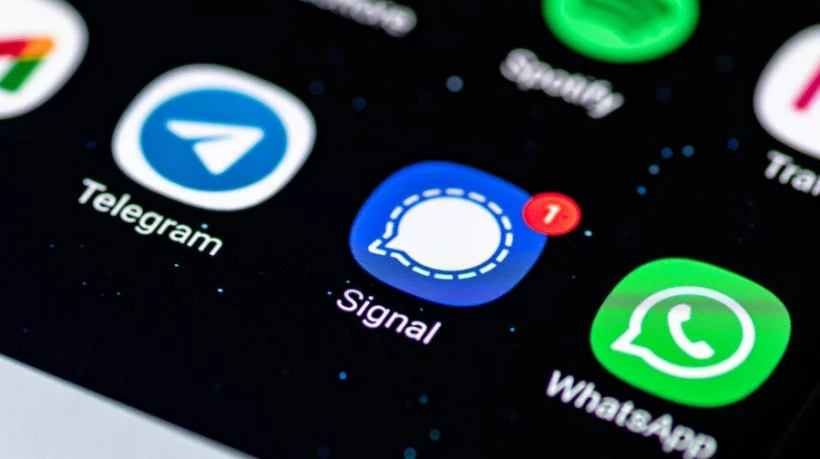
European officials are gradually being shifted from WhatsApp and Signal to domestically developed, state-controlled messaging applications. According to Politico, governments aim to move away from platforms they do not control in order to reduce strategic dependence on US technologies. WhatsApp is owned by Meta, while Signal is developed by an American nonprofit organization.
Search for strategic autonomy and cybersecurity
Six European countries — France, Germany, Poland, the Netherlands, Luxembourg, and Belgium — have already begun implementing their own messaging systems for exchanging sensitive information between officials. NATO already has its own solution, and the European Commission plans to complete the transition by the end of the year. This shift is driven by the need to control metadata and communication channels in a world where technology has become an instrument of power.
Cybersecurity concerns have played a decisive role. Last month, it was reported that Russian hacker groups were targeting politicians through popular messaging apps using phishing techniques. The risks became particularly evident in Brussels, where the European Commission instructed several top officials to shut down Signal groups to prevent potential data leaks.
Sovereign solutions and transparency concerns
Belgium is among the latest countries to introduce its own secure messaging app, BEAM. Officials, including Prime Minister Bart De Wever, are encouraged to use the application, which is similar in functionality to WhatsApp and Signal but fully controlled by the state. While end-to-end encryption remains the gold standard, government institutions require additional features such as restricting chats to specific participants and controlling call logs.
The pace of localization has accelerated due to geopolitical factors and infrastructure disruptions. Donald Trump’s return to power in the United States, past scandals such as “Signalgate,” and a major Amazon Web Services outage in October have highlighted Europe’s dependence on foreign tech giants. The shift is also tied to transparency concerns: activists point to the case of Ursula von der Leyen, whose messages with Pfizer’s CEO regarding multibillion-euro vaccine contracts were inaccessible due to the use of private messaging services.
Don't miss interesting news
Subscribe to our channels and read announcements of high-tech news, tes

Oppo A6 Pro smartphone review: ambitious

 0
0 
Creating new mid-range smartphones is no easy task. Manufacturers have to balance performance, camera capabilities, displays, and the overall cost impact of each component. How the new Oppo A6 Pro balances these factors is discussed in our review.
Oppo Reno16 Pro 5G smartphone review: well-heeled
0 
Oppo Reno16 Pro 5G looks like a balanced smartphone, in which the manufacturer tried not to make a single characteristic the defining one. It has many advantages. Let’s tell you what
OpenAI Uncovers Secret Scheme: ChatGPT Used as Disinformation Tool

OpenAI has identified a network of accounts that used ChatGPT to promote the fake “International Burke Institute.”
The Witcher 3 Remastered: Everything You Need to Know

At Gamescom, CD Projekt RED unexpectedly unveiled a remaster of the legendary The Witcher 3.