

Tesla Semi 2026: a production electric truck with refined design, reduced weight, and a focus on expanding charging capacity
18.04.26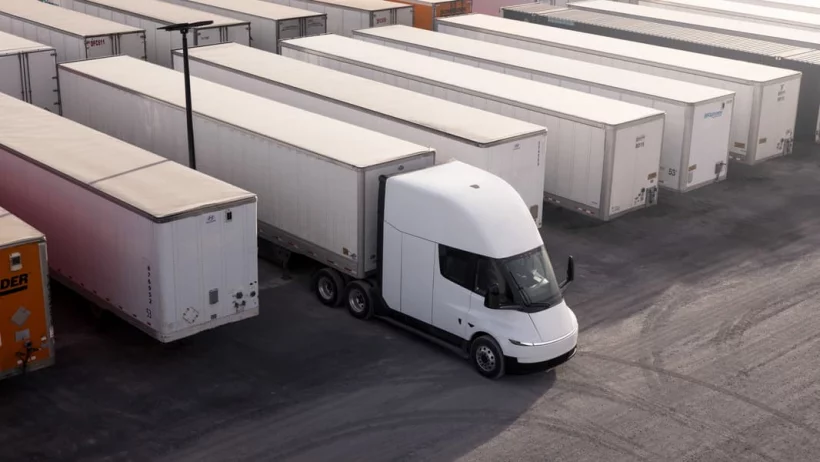
After several years of testing and limited deployments, Tesla has moved the Tesla Semi into full-scale production. The 2026 version is based on operational data collected from early corporate customers, including PepsiCo, where the trucks were used in real-world logistics routes under full load conditions.
Redesign and weight reduction
One of the notable updates is a reduction in curb weight of approximately 450 kg. In the trucking segment, this directly translates into increased payload capacity, as gross combination weight limits remain fixed.
The weight reduction was achieved through a redesign of selected components and overall optimization, improving the balance between vehicle mass and transported cargo without altering the core architecture.
Range and operational performance
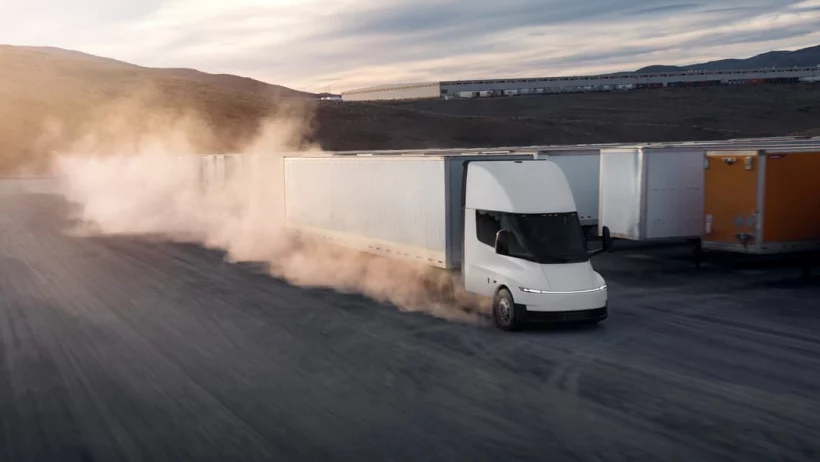
The Long Range variant is rated for up to 800 km of driving range at a total weight of around 37 tons. These figures position the electric truck within long-haul freight operations, a segment traditionally dominated by diesel-powered vehicles.
Performance characteristics remain sufficient to maintain stable speeds under full load, which is critical for adherence to transport schedules.
Aerodynamics as an efficiency factor
Significant attention was given to aerodynamics. The cab and external body elements were refined to reduce air resistance. For highway freight transport, where a substantial portion of energy consumption is tied to aerodynamic drag, such changes directly impact efficiency and driving range.
Powertrain and high-power charging
The Tesla Semi is equipped with three electric motors delivering a combined output of around 800 kW. This setup distributes load across axles and ensures consistent traction under varying driving conditions.
A key component of the system remains the Megacharger solution, capable of delivering up to 1.2 MW of power. It can restore roughly 60% of battery charge in about 30 minutes, aligning with mandatory driver rest periods. This allows charging to be integrated into logistics workflows without significantly increasing downtime.
Expansion of charging capacity
Alongside production scaling, the company is expanding its Megacharger system. Additional stations are planned across the United States, including major freight corridors. This is seen as a necessary requirement for large-scale adoption of electric heavy-duty trucks.
Without sufficient charging capacity, deployment remains limited, making its expansion closely tied to production growth.
Driver cabin and working environment
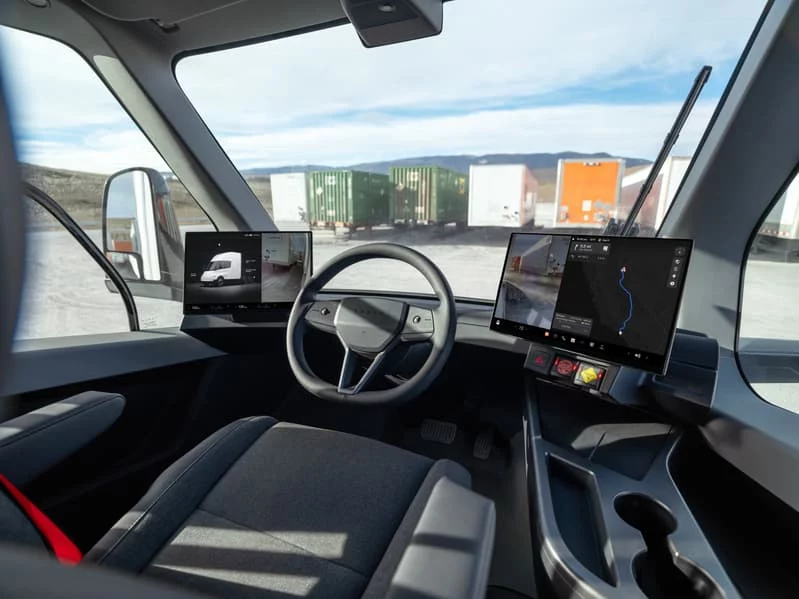
The cabin has been redesigned based on real-world operational feedback. It includes around ten cameras, as well as a driver attention monitoring system.
Practical adjustments were also made: redesigned side windows, increased storage compartments, and a revised layout of interior controls. These changes aim to improve working conditions during long-haul trips.
Operating economics
The starting price of the Tesla Semi 2026 is approximately $260,000. However, its cost efficiency is primarily based on reduced operating expenses rather than purchase price alone.
Elimination of fuel costs and potentially lower maintenance requirements are positioned as key factors that could offset the high upfront investment over intensive use cycles.
Overall, the Tesla Semi 2026 represents not just an updated model, but an attempt to adapt electric trucking to the demands of long-distance freight transport under real operational constraints.
Don't miss interesting news
Subscribe to our channels and read announcements of high-tech news, tes

Oppo A6 Pro smartphone review: ambitious

 0
0 
Creating new mid-range smartphones is no easy task. Manufacturers have to balance performance, camera capabilities, displays, and the overall cost impact of each component. How the new Oppo A6 Pro balances these factors is discussed in our review.
In-Ear headphones Active Noise Cancellation: how Oppo eliminate noise
0 
In-ear headphones remain one of the most popular form factors due to their lightweight design. However, this design is considered one of the most challenging to implement active noise cancellation (ANC). We’ll explain how Oppo solved this problem.
Apple Music to Introduce AI Music Labels

Apple Music will introduce special Made With AI labels for songs created with generative artificial intelligence by the end of 2026.
Windows 11 Update Breaks Games: The RGB Fix

The latest cumulative Windows 11 update has caused issues with game performance and stability. Microsoft confirmed the conflict is triggered by RGB peripheral software.