

SanDisk QuickFlow: a card reader with support for speeds of 190-200 MB/s
22.04.26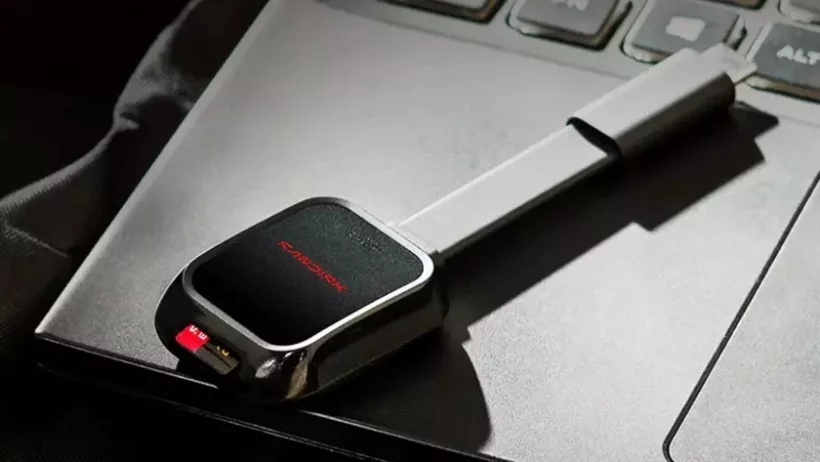
While most users are increasingly moving to cloud storage, photographers, videographers, and other data-heavy users continue relying on physical media. For them, SanDisk QuickFlow MicroSD USB-C is designed to solve a long-standing issue — slow transfer of large files from memory cards to a computer.
Minimal size, maximum practicality
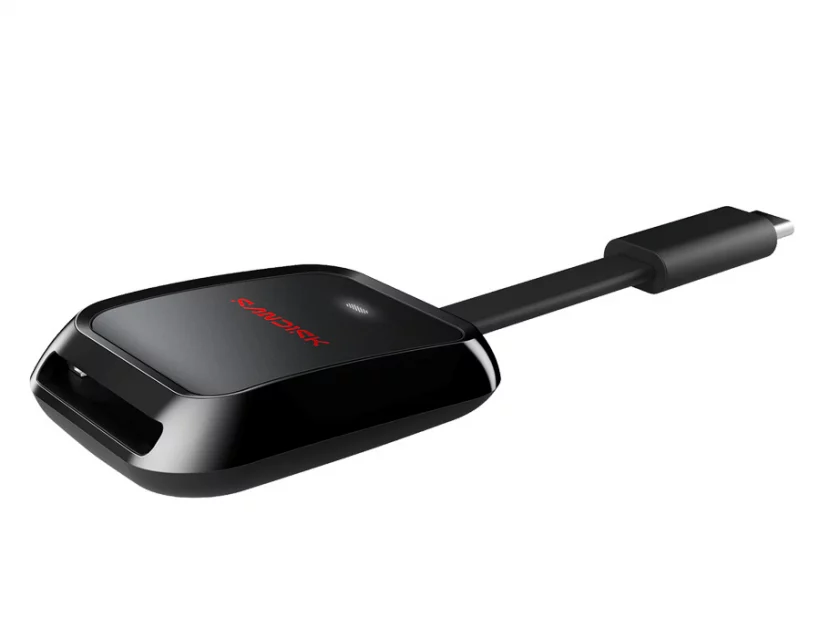
The new product has already appeared on JD.com and is positioned as a professional tool. It measures just 30 × 21 × 9 mm and weighs 21 grams. In essence, it is a tiny metal adapter that can easily get lost in a bag, yet it is built for continuous use in on-location shooting and intensive workflows.
It connects via USB-C 3.2 Gen 1. While not the fastest available standard, it is sufficient for microSD cards and serves as the foundation for the device’s main value proposition.
The key is QuickFlow, not the port
The core advantage of SanDisk QuickFlow MicroSD USB-C lies in its proprietary QuickFlow technology. Developed by SanDisk, it allows the device to bypass standard UHS-I limitations.
Where typical card readers are often capped at around 100 MB/s, this device can reach approximately 190–200 MB/s when paired with compatible Extreme or Extreme Pro cards. In practical terms, this nearly halves the time required to transfer large files.
Why users are willing to pay for it
At around $43 (approximately 1850 UAH), the price may seem high for such a small accessory. However, in professional workflows, the key metric is not the device itself but the time it saves.
When working with 4K video or large photo libraries, transferring hundreds of gigabytes can take tens of minutes or even hours. In that context, a near twofold speed increase turns from a convenience into a tangible productivity tool.
Market context: SanDisk’s strategy shift
SanDisk is actively repositioning itself toward professional-grade solutions for content creators. Following its separation from Western Digital, the company has been strengthening its high-speed storage and specialized accessory lineup.
SanDisk QuickFlow MicroSD USB-C fits naturally into this ecosystem as a compact yet important workflow component. Against the backdrop of ultra-expensive high-capacity memory cards, such devices act as small but essential accelerators within the production chain.
Conclusion
SanDisk QuickFlow MicroSD USB-C is not a mass-market gadget but a precision tool for users who regularly handle large data volumes and prioritize speed above all else.
For professionals, it becomes a straightforward way to speed up workflows. For everyone else, it remains a compact and slightly faster-than-average card reader.
Don't miss interesting news
Subscribe to our channels and read announcements of high-tech news, tes

Oppo A6 Pro smartphone review: ambitious

 0
0 
Creating new mid-range smartphones is no easy task. Manufacturers have to balance performance, camera capabilities, displays, and the overall cost impact of each component. How the new Oppo A6 Pro balances these factors is discussed in our review.
Oppo Reno16 Pro 5G smartphone review: well-heeled
0 
Oppo Reno16 Pro 5G looks like a balanced smartphone, in which the manufacturer tried not to make a single characteristic the defining one. It has many advantages. Let’s tell you what
Huawei Readies Slimmer Watch D3 and New FreeBuds Neo

Huawei has teased the Watch D3 smartwatch with blood pressure monitoring and the new FreeBuds Neo earbuds. The official announcement is scheduled for September 2.
Made in Germany: Does the Gigaset GS6 Pro Live Up to the Hype?

The Gigaset GS6 Pro bets on German engineering and repairability. We explore what this status really means and whether it holds up against the competition.