

Samsung unveiled next-generation OLED displays: blood pressure measurement, 3000-nit brightness, and Privacy mode
07.05.26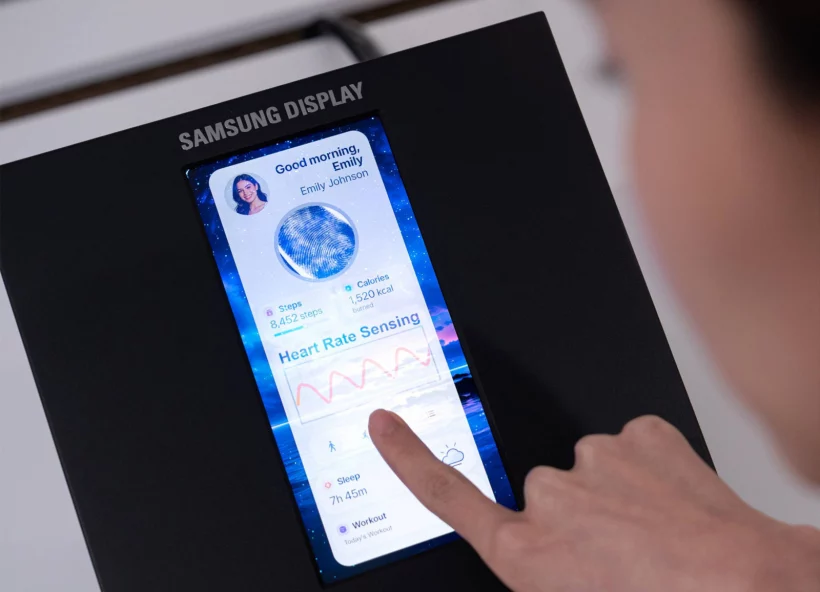
At the Display Week 2026 exhibition held in Los Angeles, USA, Samsung Display showcased the potential of next-generation displays. The key innovation was the Sensor OLED Display technology, which integrates health monitoring and privacy features directly into the panel structure.
What is it: overview of Samsung Display innovations
As part of the exhibition, Samsung presented four major направления: the updated Sensor OLED for smartphones, ultra-bright Flex Chroma Pixel, improved Quantum Dot (QD) panels, and flexible Stretchable Display 2.0 screens for the automotive industry. All these developments aim to combine image quality with additional service features.
Sensor OLED Display specifications: biometrics under glass
The upgraded Sensor OLED panel has a diagonal of 6.8 inches. Its main feature is organic photodiodes embedded directly alongside the primary OLED pixels. This allows the display to measure heart rate and blood pressure based on light reflected from the user’s finger.
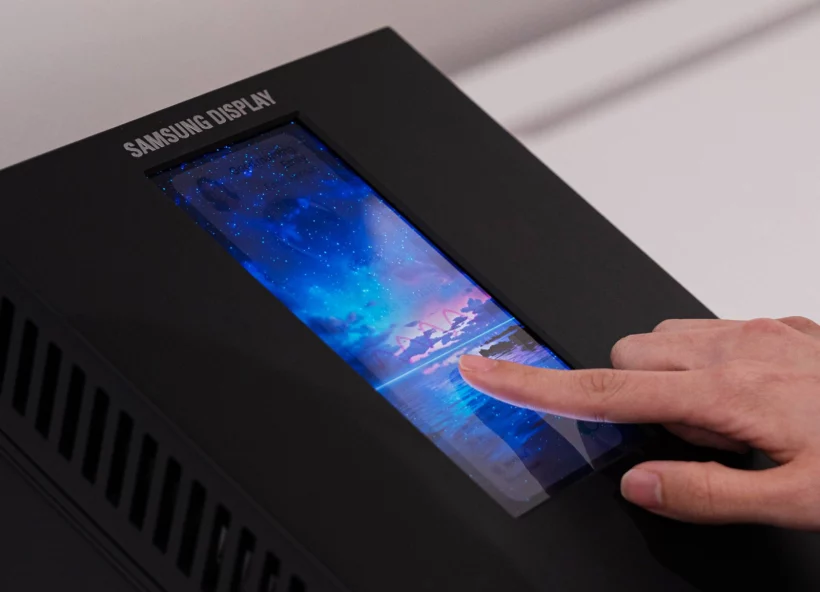
Compared to last year’s prototype, the pixel density has significantly increased. Sensor OLED now delivers image clarity at 500 ppi versus the previous 374 ppi.
Flex Magic Pixel features and privacy
In addition to medical features, Sensor OLED is equipped with Flex Magic Pixel technology, better known as Privacy Display. This option narrows viewing angles so that others cannot see the content on your smartphone screen. It is expected that this technology may debut in future Galaxy S Ultra models.
Flex Chroma Pixel description: 3000 nits brightness
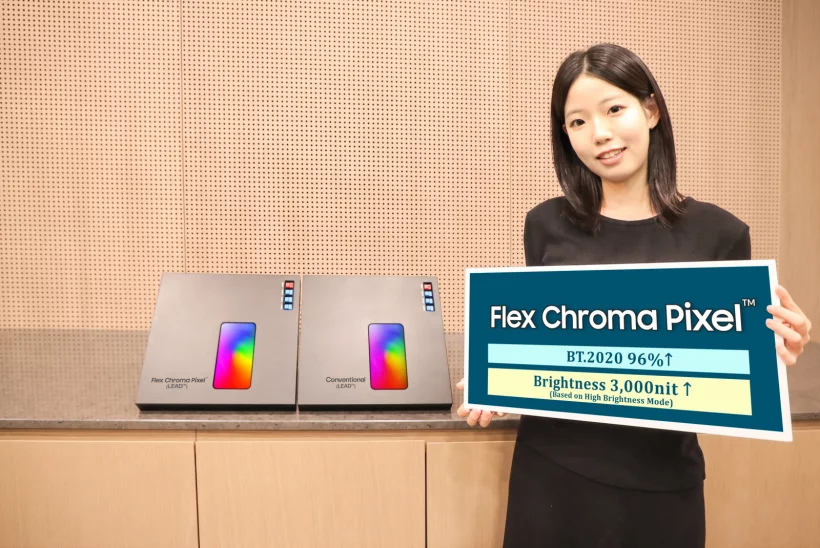
For those who need excellent readability in sunlight, Samsung has developed Flex Chroma Pixel technology. The display delivers record brightness of up to 3000 nits in High Brightness Mode. The secret lies in LEAD technology — a proprietary solution that eliminates the need for a polarizer, increasing brightness while reducing power consumption.
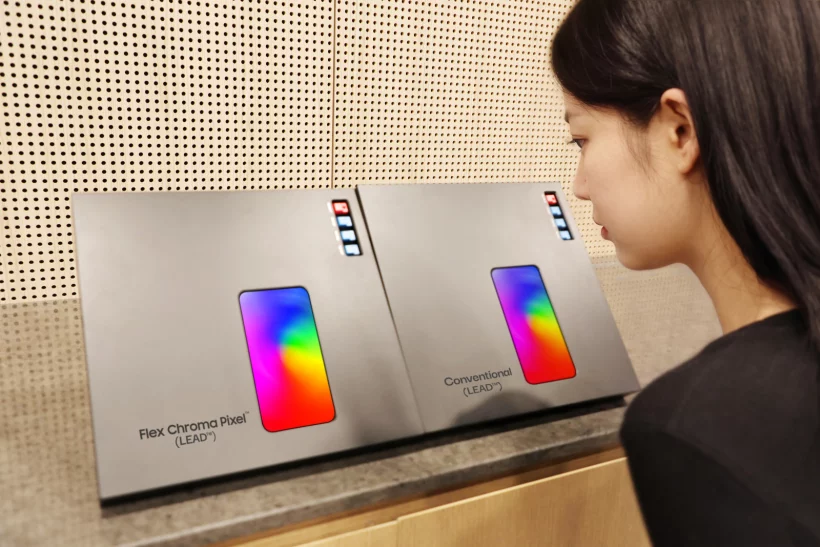
Key color performance parameters:
- BT.2020 color gamut coverage: 96%;
- Material: PSF (Phosphorescent Sensitized Fluorescence);
- Advantage: accurate color reproduction without sacrificing peak brightness.

New EL-QD panel versions
Samsung continues to develop Quantum Dot technology. At the exhibition, EL-QD panels with 25–33% higher brightness were presented:
- 18-inch version: brightness 500 nits (previously 400);
- 6.5-inch version: brightness 400 nits.
Stretchable Display 2.0 for cars
The second generation of stretchable displays is designed for automotive interiors. The panel can physically change shape, for example turning into a convex speedometer depending on driving conditions.

The resolution has increased to 200 ppi, which is 67% higher than version 1.0 (120 ppi). According to Samsung, 200 ppi is a benchmark standard for the automotive industry.
Should we expect these innovations on the market?
At the moment, Samsung has not announced exact release dates for commercial devices or pricing. However, the showcased technologies are expected to be implemented in the coming years. High touchscreen resolution and record brightness make these displays a key argument for upgrading future Galaxy flagships.
FAQ
How does a Samsung screen measure blood pressure?
The technology uses organic photodiodes embedded in the OLED matrix structure to detect blood pulsation by analyzing light reflected from the skin by the display itself.
What is Samsung Privacy Display?
It is Flex Magic Pixel technology that allows control over viewing angles, hiding information from unintended viewers.
What is the maximum brightness of the new Samsung Flex Chroma Pixel displays?
Flex Chroma Pixel panels can reach up to 3000 nits in High Brightness Mode.
What is special about Stretchable Display 2.0?
It is a stretchable display with 200 ppi density designed for cars, capable of changing shape to create a three-dimensional instrument interface.
Don't miss interesting news
Subscribe to our channels and read announcements of high-tech news, tes

Oppo A6 Pro smartphone review: ambitious

 0
0 
Creating new mid-range smartphones is no easy task. Manufacturers have to balance performance, camera capabilities, displays, and the overall cost impact of each component. How the new Oppo A6 Pro balances these factors is discussed in our review.
In-Ear headphones Active Noise Cancellation: how Oppo eliminate noise
0 
In-ear headphones remain one of the most popular form factors due to their lightweight design. However, this design is considered one of the most challenging to implement active noise cancellation (ANC). We’ll explain how Oppo solved this problem.
Apple Music to Introduce AI Music Labels

Apple Music will introduce special Made With AI labels for songs created with generative artificial intelligence by the end of 2026.
Windows 11 Update Breaks Games: The RGB Fix

The latest cumulative Windows 11 update has caused issues with game performance and stability. Microsoft confirmed the conflict is triggered by RGB peripheral software.