

NASA is developing a “brain” for future missions – a space chip with AI
18.05.26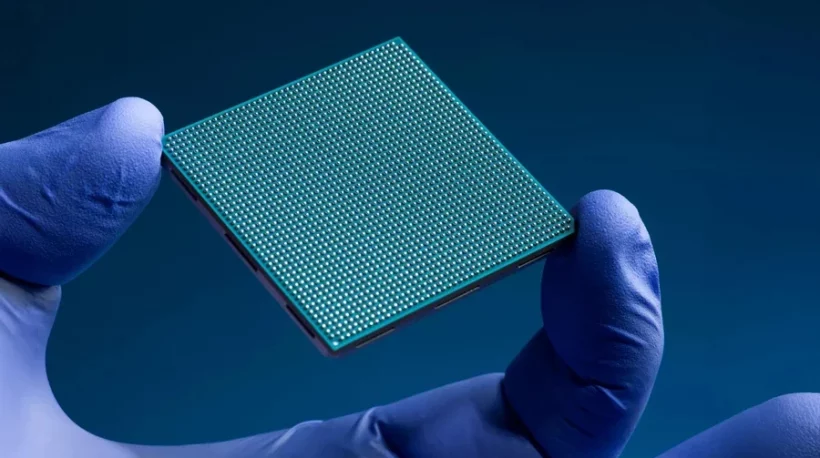
The space agency NASA is working on the creation of a specialized processor of a new generation under the code name High Performance Spaceflight Computing (HPSC). According to Science Daily, this project should radically change the way spacecraft are controlled during deep space missions. The main goal of the development is to replace outdated semiconductor solutions with modern high-performance systems using artificial intelligence, capable of independently analyzing data and making decisions in real time.
The HPSC is a “fault-tolerant, flexible and extremely high-performance” processor designed specifically to operate in the harshest environments of the universe. The project is aimed at creating a reliable basis for more complex autonomous missions. Today’s space electronics lag far behind their terrestrial counterparts due to the need to provide radiation protection, and NASA’s new chip should bridge this technology gap by offering a new level of onboard computing.
Features and performance: how much faster is it?
According to the results of preliminary tests, the new processor demonstrates tremendous performance indicators. Technical measurements show the following:
- The total performance is 100 times greater than the capabilities of current space computers.
- In some operating scenarios, the peak power of HPSC exceeds that of existing chips by more than 500 times.
- Integrated AI algorithms provide ultra-fast processing of arrays of scientific data directly on board without sending them to Earth.
The development is carried out in close partnership with the Microchip Technology Corporation, which has already made the first prototype chips for further testing.
Protection features and resistance to radiation
Space is a hostile environment for classical processors due to powerful radiation. The HPSC under development undergoes a series of stress tests in conditions as close as possible to open space. Specialists check the ability of the chip to withstand strong electromagnetic radiation, extreme temperature changes and maintain performance during critical overloads, such as entering the atmosphere and difficult landing on the surface of planets. Prototypes confirm that the device works as intended while maintaining reliability under radiation exposure.
Distinctions and Autonomy: Why AI in Deep Space?
The main difference between HPSC and its predecessors is its capacity for deep autonomy. This is critically important in situations where the delay in communication with the Earth is tens of minutes or even hours. Thanks to onboard AI algorithms, the spacecraft will be able to instantly react to unforeseen threats or adjust the route in real time.
NASA plans to implement these processors in a wide range of future research instruments. The finished product will become the “brain” for:
- Promising rovers of the next generation;
- Deep space research probes;
- Communication and meteorology satellites;
- Interplanetary missions aimed at the distant borders of the solar system.
This breakthrough will make it possible to implement missions that were previously considered impossible due to the lack of computing power to navigate the difficult conditions of other planets.
Don't miss interesting news
Subscribe to our channels and read announcements of high-tech news, tes

Oppo A6 Pro smartphone review: ambitious

 0
0 
Creating new mid-range smartphones is no easy task. Manufacturers have to balance performance, camera capabilities, displays, and the overall cost impact of each component. How the new Oppo A6 Pro balances these factors is discussed in our review.
Oppo Reno16 Pro 5G smartphone review: well-heeled
0 
Oppo Reno16 Pro 5G looks like a balanced smartphone, in which the manufacturer tried not to make a single characteristic the defining one. It has many advantages. Let’s tell you what
Made in Germany: Does the Gigaset GS6 Pro Live Up to the Hype?

The Gigaset GS6 Pro bets on German engineering and repairability. We explore what this status really means and whether it holds up against the competition.
Hugging Face Reveals Microduck: An AI-Powered Robot Duck
Hugging Face has introduced Microduck, a compact robot designed for AI-driven skill learning.