

MacOS Started Sending ChatGPT to Trash: Why Mac Considers the Program Malicious
17.05.26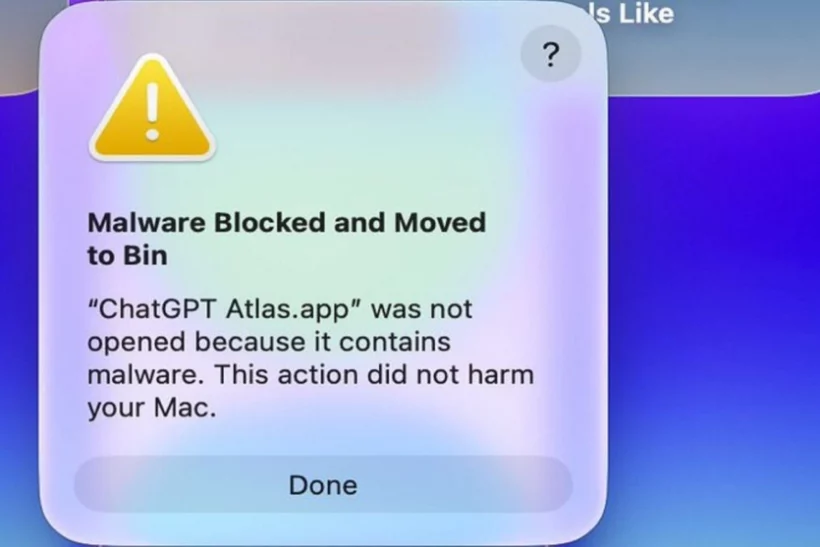
Apple users have started reporting strange behavior of macOS: the system suddenly marks the ChatGPT program as malicious software, blocks its launch and automatically moves the program to the trash. At first glance, the situation looks like a serious security incident, but the problem turned out not to be related to the infection of the program, but to changes in the certification system of the OpenAI client itself.
The failure affected macOS protection XProtect — Apple’s built-in security mechanism that automatically checks programs for the presence of malicious code and the correctness of the developer’s digital signature.
Why macOS suddenly started blocking ChatGPT
The root of the problem is the notarization system of Apple programs. Any software for macOS is digitally verified through special certificates that confirm the authenticity of the program and its origin from a trusted developer.
It is these certificates that allow XProtect to distinguish legitimate programs from potentially dangerous software.
In the case of ChatGPT, the situation was complicated by the fact that OpenAI had to urgently change the certificates for the macOS applications ChatGPT and ChatGPT Atlas. After that, part of the old versions of the client was automatically stopped being considered as a trusted MacOS system.
As a result, XProtect began to perceive outdated versions of ChatGPT as potentially dangerous and block them from running.
Security incident around the Axios tool
OpenAI has officially confirmed that the change in certificates was caused by a security incident related to the third-party Axios developer tool. The company does not reveal all the technical details, but emphasizes: no signs of user data compromise or changes to the application itself were detected.
According to OpenAI, it is more about a preventive security measure. The company decided to completely update the signature and authentication system of its macOS applications in order to prevent possible risks in the future.
In fact, OpenAI preferred to play it safe and rebuild the chain of trust between the program and Apple’s security system.
OpenAI warned users about the update in advance
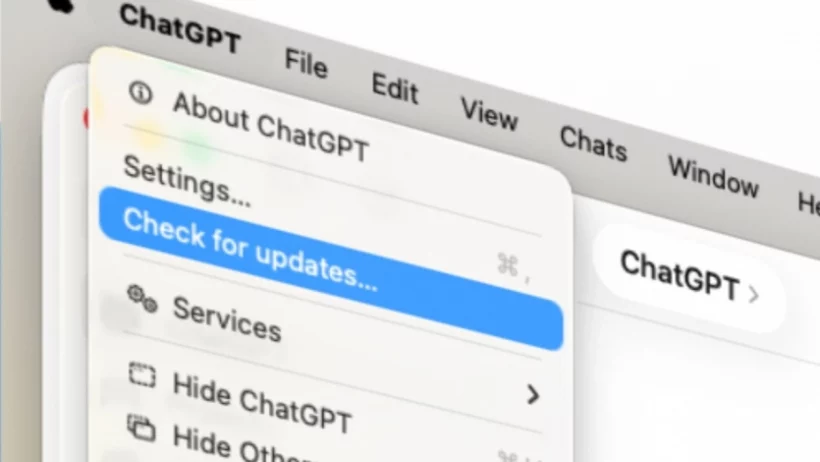
The company said it sent in-app messages and recommended that ChatGPT for macOS be updated by May 8, 2026. Users who ignored the update or continued to use old versions of the client just faced the lockout of macOS.
After the expiration of the old certificates, the Apple system began to automatically consider such versions of the program as uncertified.
How to fix the problem
The solution turned out to be quite simple: it is necessary to completely delete the old version of ChatGPT and download the current client directly from the official OpenAI website.
After installing the new version, the program passes the XProtect check again and runs without restrictions.
At the same time, OpenAI separately emphasizes that the problem is not related to device infection, data leakage or hacking of user accounts.
Hard MacOS Security
The situation surrounding ChatGPT is a good example of how Apple has strengthened macOS security mechanisms in recent years. The XProtect system, Gatekeeper and program notarization work almost automatically and are able to block even popular programs if there are problems with the developer’s digital signature.
For users, this creates certain inconveniences, but at the same time, it significantly reduces the risk of spreading malicious software under the guise of known applications.
OpenAI directly admits that if the company had not changed the certificates, attackers could theoretically use the old signature system to create fake ChatGPT applications that are virtually indistinguishable from the original.
This is why OpenAI has decided to completely update the authentication mechanism of its macOS clients, despite temporary problems for some users.
Don't miss interesting news
Subscribe to our channels and read announcements of high-tech news, tes

Oppo A6 Pro smartphone review: ambitious

 0
0 
Creating new mid-range smartphones is no easy task. Manufacturers have to balance performance, camera capabilities, displays, and the overall cost impact of each component. How the new Oppo A6 Pro balances these factors is discussed in our review.
In-Ear headphones Active Noise Cancellation: how Oppo eliminate noise
0 
In-ear headphones remain one of the most popular form factors due to their lightweight design. However, this design is considered one of the most challenging to implement active noise cancellation (ANC). We’ll explain how Oppo solved this problem.
Windows 11 Update Breaks Games: The RGB Fix

The latest cumulative Windows 11 update has caused issues with game performance and stability. Microsoft confirmed the conflict is triggered by RGB peripheral software.
Asus Challenges MacBook Pro With Powerful ProArt Creation 16

Asus has introduced a new version of its ProArt Creation 16 laptop for professionals. The device is equipped with an AMD Ryzen AI 9 processor, 64GB of RAM, and a high-quality 120Hz OLED screen.