

Volkswagen ID. Era 9X gets three rows and lot of screens
14.03.26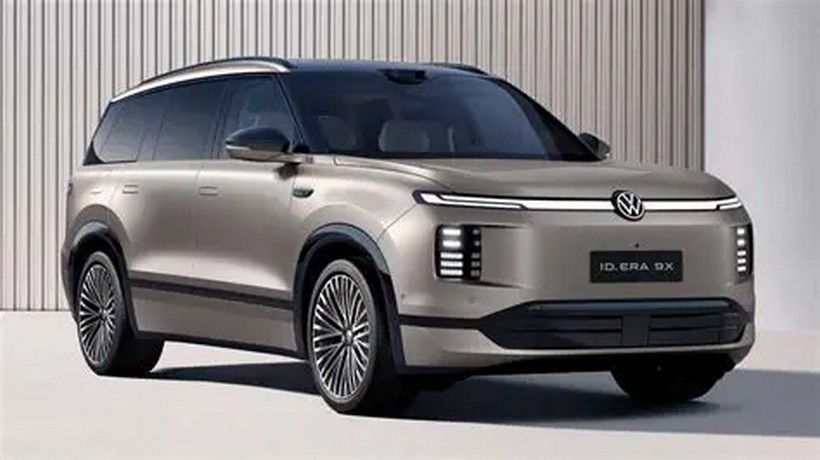
Volkswagen is preparing a new flagship SUV for the Chinese market, the Volkswagen ID. Era 9X. The model will feature an interior unusual for the brand, featuring a nearly entirely digital architecture, and will be the brand’s first production vehicle with a range-extender system—a gasoline engine-generator.
Development is being carried out by the joint venture SAIC Volkswagen.
An interior without familiar buttons
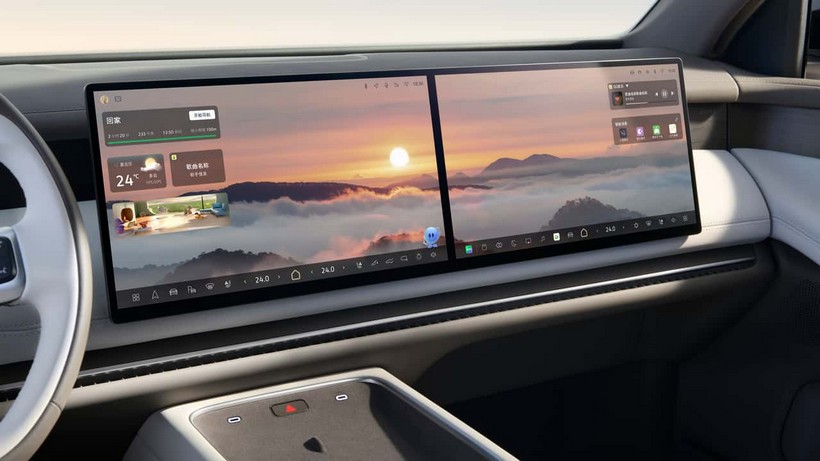
The interior of this six-seat SUV is virtually devoid of physical buttons. Primary controls are concentrated on the displays.
The dashboard is occupied by two 15.6-inch screens. Second- and third-row passengers are provided with a 21.4-inch display that lowers from the ceiling.
The second row features individual seats, and the doors feature integrated projectors for displaying multimedia content.
There is no separate digital instrument cluster; its function is performed by the head-up display. The interior also features contour lighting with a total length of 12.8 meters, including the ceiling area around the panoramic roof. The floor of the vehicle is completely flat.
Gasoline engine generator
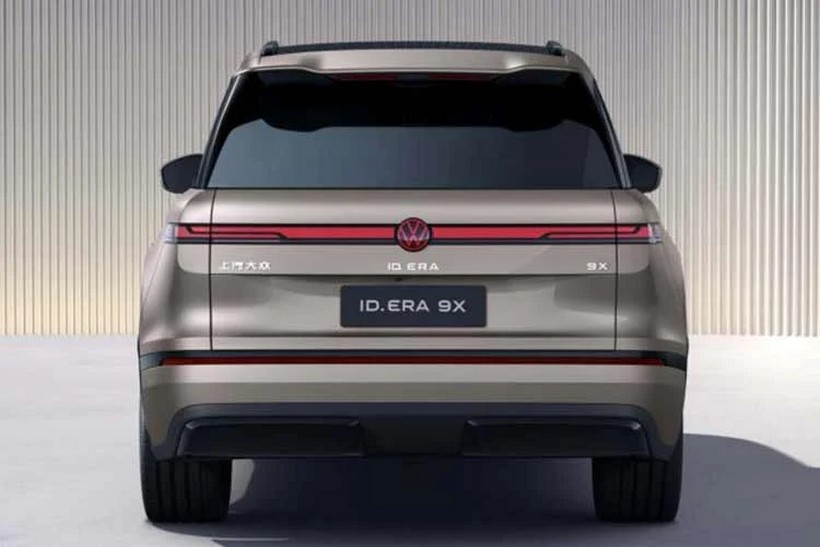
Along with the release of interior images, SAIC Volkswagen announced the launch of production of the engine-generator for the new model.
This is a 1.5-liter turbocharged unit from the EA211 family, producing 141 hp. It is used exclusively for power generation and is not directly connected to the wheels.
According to the manufacturer, the engine operates on the Lambda One combustion principle in all modes. With a λ coefficient of 1, the air-fuel ratio corresponds to a stoichiometric mixture—the amount of air required for complete combustion of the fuel. This approach should improve efficiency and reduce emissions.
Similar solutions are planned for future Mazda Skyactiv-Z powertrains and the Porsche T-Hybrid hybrid system.
Dimensions and Specifications
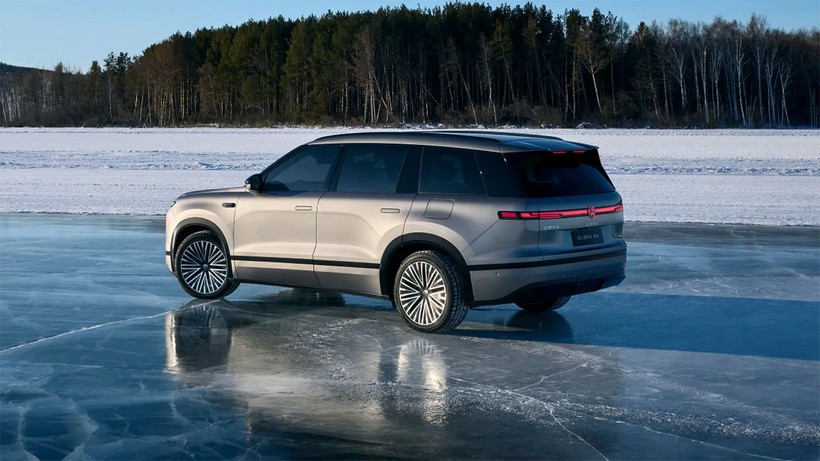
The Volkswagen ID. Era 9X will be available with rear-wheel or all-wheel drive, with one or two electric motors.
Main dimensions of the model:
- Length — 5207 mm
- Width — 1997 mm
- Height — 1810 mm
- Wheelbase — 3070 mm
The vehicle is available with two battery options: 51.1 kWh and 65.2 kWh. The larger battery is standard on the all-wheel drive version, providing a range of up to 400 km (250 mi) in the CLTC cycle.
The curb weight of the dual-motor version can reach 2,700 kg (5,700 lbs), making it one of the heaviest Volkswagen models ever built.
A new design concept and special exterior colors, including Fairy Green and Desert Gold, have also been developed for the Chinese market. The company notes that the interior is designed to combine “German aesthetics and an oriental character.”
Don't miss interesting news
Subscribe to our channels and read announcements of high-tech news, tes

Oppo A6 Pro smartphone review: ambitious

 0
0 
Creating new mid-range smartphones is no easy task. Manufacturers have to balance performance, camera capabilities, displays, and the overall cost impact of each component. How the new Oppo A6 Pro balances these factors is discussed in our review.
Oppo Reno16 Pro 5G smartphone review: well-heeled
0 
Oppo Reno16 Pro 5G looks like a balanced smartphone, in which the manufacturer tried not to make a single characteristic the defining one. It has many advantages. Let’s tell you what
Atlas Gadget: Tracking Brain Activity to Sharpen Focus

Atlas 1.0 is a miniature EEG tracker that attaches behind the ear and analyzes multiple biometric indicators at once.
CD Projekt RED Keeps Momentum: The Witcher and Cyberpunk Hit New Records

CD Projekt RED revealed its H1 2026 results, reporting on The Witcher and Cyberpunk 2077 sales and player interest in new projects.