

SpaceX is planning an orbital constellation of 100,000 AI satellites: there won’t be enough space in orbit for competitors
09.07.26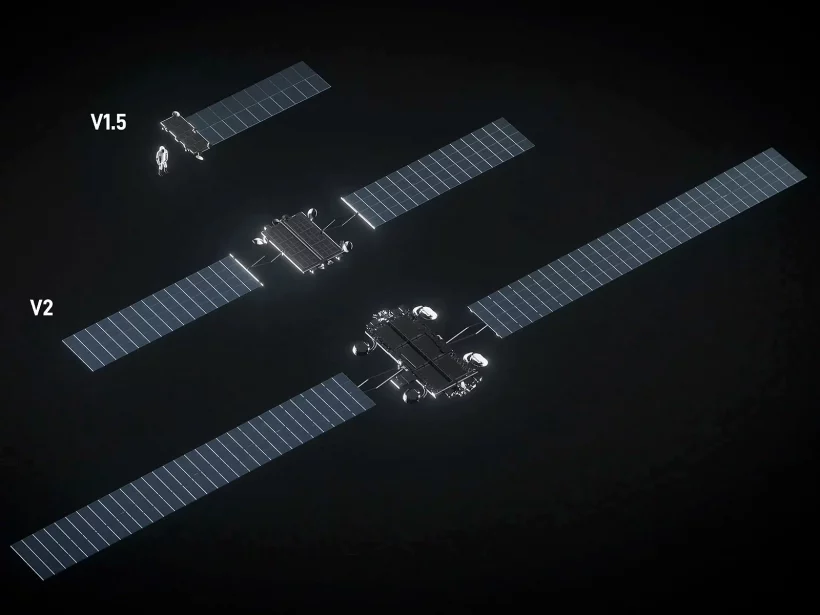
SpaceX has submitted an ambitious request to the US Federal Communications Commission (FCC) to launch and operate a third generation satellite constellation (V3/Gen3). The new network should include up to 100,000 devices, which will allow the company to increase the current number of orbital objects tenfold.
What is known about the Starlink V3 system
The Gen3 system is a non-geostationary orbital network located in two densely packed layers at altitudes between 323–327.5 km and 473–477.5 km. Orbital inclination angles range from 26 to 96.9 degrees, providing global coverage. Each third-generation device will weigh about two tons – almost three times more than the current Gen2 satellites. To launch such heavy structures into orbit, the use of a Starship rocket will be required.
Performance and the role of AI
SpaceX announces a quantum leap in technical performance. A tenfold increase in data download speed (up to 1 Tbit/s) and a 22-fold increase in upstream channel capacity are expected. Combined RF and laser communications can reach about 4 Tbps per satellite.
The company argues that the project is necessary by the fact that the development of AI requires enormous power: “The Gen3 system will provide multi-gigabit symmetric bandwidth to consumers and AI devices around the world. Without such infrastructure, the United States will not be able to remain competitive in the era of the AI revolution.”
Competition and security issues
The scale of the project raises concerns among regulators and competitors. There are currently about 10,700 Starlink satellites in orbit (out of 15,000 authorized). Deploying 100,000 V3 units will make SpaceX a dominant force, 10 times larger than the entire current global fleet of operators.
Astronomers and space traffic control experts are already expressing concern since Starlink is a major source of evasive maneuvers in low Earth orbit. Adding tens of thousands of new objects will make collision monitoring much more difficult. So far, SpaceX has been successfully interacting with regulators, but the upcoming battle for the right to pollute near-Earth space promises to be difficult.
The early bird catches the worm
The FCC’s decision has not yet been made, but SpaceX’s intention to capture the AI communications market is clear. The company strives to displace competitors as quickly as possible, using its technological and financial capabilities. The cost of such launches is not directly disclosed, but it can be assumed that the scalability of the Starlink system will significantly reduce costs per user in the future.
Don't miss interesting news
Subscribe to our channels and read announcements of high-tech news, tes

Oppo A6 Pro smartphone review: ambitious

 0
0 
Creating new mid-range smartphones is no easy task. Manufacturers have to balance performance, camera capabilities, displays, and the overall cost impact of each component. How the new Oppo A6 Pro balances these factors is discussed in our review.
In-Ear headphones Active Noise Cancellation: how Oppo eliminate noise
0 
In-ear headphones remain one of the most popular form factors due to their lightweight design. However, this design is considered one of the most challenging to implement active noise cancellation (ANC). We’ll explain how Oppo solved this problem.
Apple Overhauls App Store Commission Structure in EU

Apple has introduced new operating rules for the App Store within the European Union, effective October 1.
Realme P4s Flagship Launching Next Week

Realme has officially announced the P4s, a powerful smartphone featuring a massive 8000 mAh battery and the Dimensity 7400 Ultra gaming chipset. The device boasts a cutting-edge 144 Hz Samsung M14 display and will debut on August 26.