

LilyGo T-Deck Max for a world without the Internet: LoRa and a physical keyboard
27.05.26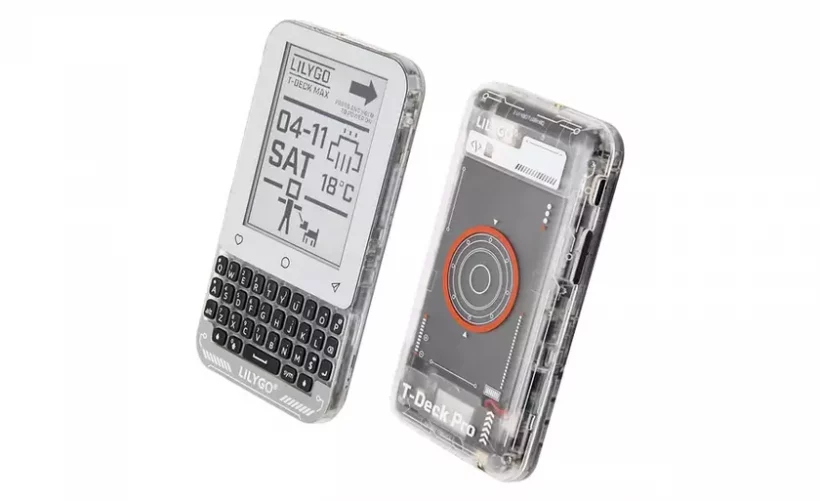
Against the background of modern smartphones, which are increasingly turning into universal entertainment platforms with dozens of AI functions, the LilyGo device looks almost like a technological artifact from an alternative future. The new T-Deck Max is not an ordinary mobile gadget and not even an attempt to compete with Android smartphones. Rather, we have before us a digital terminal for autonomous communication, aimed at developers, radio amateurs and supporters of maximally independent electronics.
In an age where most devices require constant connection to the cloud, accounts and ecosystems of large companies, T-Deck Max offers the exact opposite idea: minimalism, autonomy and full user control over the device.
Not a smartphone, but a communication terminal
The first thing that catches the eye is that the device does not try to look modern in the usual sense. There’s no bezel-less OLED display, 200-megapixel cameras, or emphasis on multimedia.
Instead, the T-Deck Max received a compact 3.1-inch E-ink screen with a resolution of 320×240 pixels and a full-fledged physical QWERTY keyboard reminiscent of old BlackBerry devices.
This approach looks almost anachronistic against the background of modern touch interfaces, but this is precisely the philosophy of the device. It was created for the endless scrolling of social networks, and the transmission of messages, work with text, programming and autonomous communication.
E-ink is not chosen here for the sake of aesthetics. Electronic paper consumes almost no energy when displaying a static image and is easy to read even under direct sunlight. For a device focused on autonomy and long-term operation away from an outlet, this is critically important.
Iron that does not try to impress with numbers
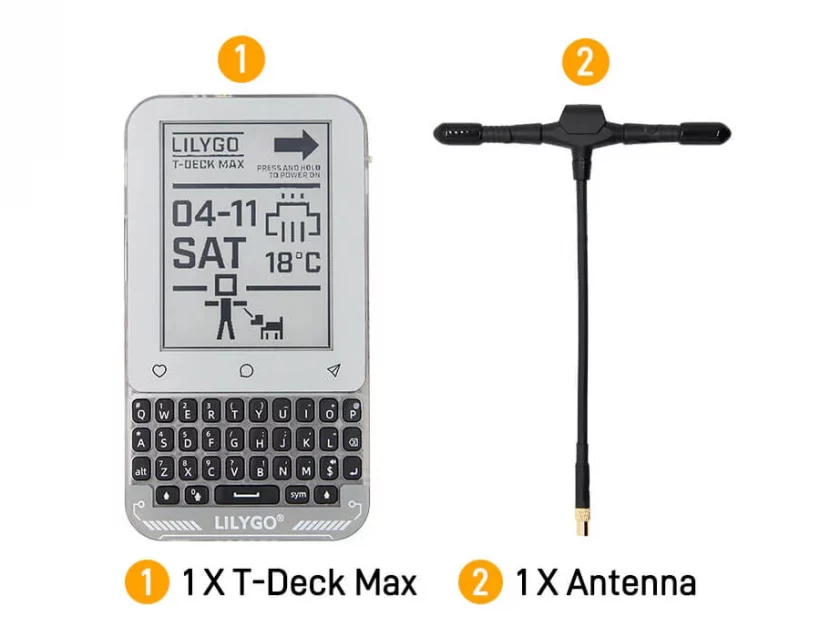
Inside the T-Deck Max is an ESP32-S3 microcontroller with a dual-core Xtensa LX7 processor running at up to 240 MHz.
Against the background of modern mobile chips, such characteristics sound almost comical. However, comparing this gadget with smartphones is pointless. His tasks are completely different.
The device is not intended for videos, games or heavy applications. The entire architecture is built around energy efficiency, stable data transfer, and the ability to run for weeks without complex infrastructure.
In fact, T-Deck Max is closer to a pocket communication terminal or mini-computer than to a classic mobile device.
LoRa — communication where the Internet does not work
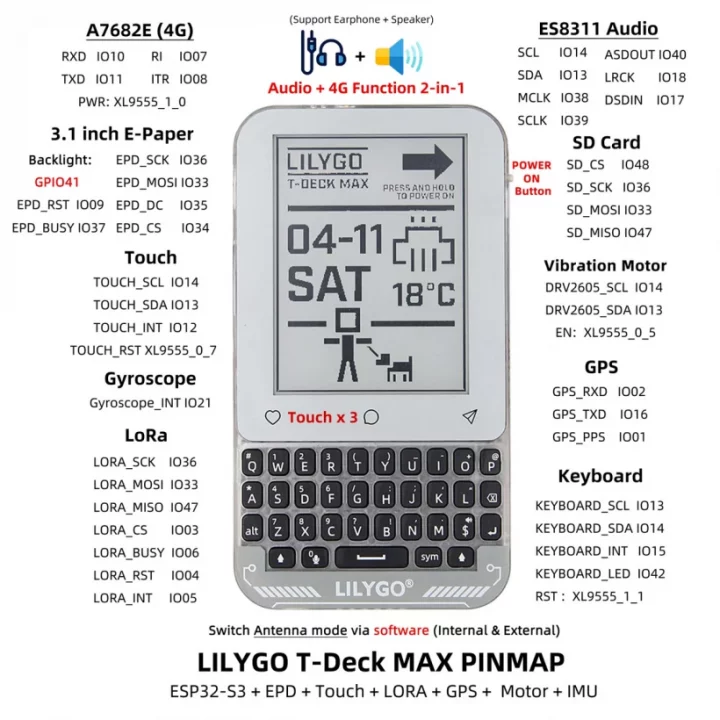
The main technological feature of the device is LoRa support. It is a long distance wireless transmission protocol with minimal power consumption.
Unlike Wi-Fi or mobile networks, LoRa does not require base stations of communication operators. Users can send short messages directly between devices several kilometers away.
That is why such gadgets are especially popular among the Meshtastic community – an open project for creating decentralized mesh networks.
Such networks make it possible to organize autonomous communication in campaigns, expeditions, remote areas or emergency situations when the usual infrastructure is not available.
In fact, T-Deck Max can be considered a “messenger for the end of the world” – a device capable of supporting basic communication even in the absence of mobile Internet.
Maximum autonomy and independence
In addition to LoRa, the device is equipped with a GPS module for transmitting coordinates, a microSD slot and a built-in microphone with a speaker.
For users who still need access to mobile networks, it is possible to connect an external 4G modem. However, the very philosophy of the device is rather aimed at minimizing dependence on centralized services.
There is no Android, Google Play, imposed cloud synchronizations and constant telemetry. The user gets almost complete control over the device and its software part.
A platform for hackers and DIY enthusiasts
It is important to understand: T-Deck Max does not fit the mass buyer. It is more of a constructor and an open platform for experimentation.
The device supports Arduino and PlatformIO, and also allows you to connect external sensors and modules. The user can create his own firmware, interfaces and work scripts.
That is why the gadget attracts not ordinary consumers, but engineers, radio amateurs, autonomous communication specialists and fans of DIY electronics.
Why interest in such devices is growing
The popularity of such projects reflects a broader trend: some users are gradually getting tired of the completely closed ecosystems of Google, Apple and other large platforms.
Against the background of growing questions about privacy, cloud dependence and digital control, more and more enthusiasts are starting to look for alternative ways of communication.
The T-Deck Max is unlikely to become a mass device, but it demonstrates well the direction in which niche independent electronics is developing: autonomy, openness, maintainability and the ability to work even when the usual infrastructure ceases to exist.
For $110, the user receives not just an unusual gadget, but a kind of digital survival kit — a pocket communication terminal for a world where the Internet can no longer be taken as guaranteed.
Don't miss interesting news
Subscribe to our channels and read announcements of high-tech news, tes

Oppo A6 Pro smartphone review: ambitious

 0
0 
Creating new mid-range smartphones is no easy task. Manufacturers have to balance performance, camera capabilities, displays, and the overall cost impact of each component. How the new Oppo A6 Pro balances these factors is discussed in our review.
Oppo Reno16 Pro 5G smartphone review: well-heeled
0 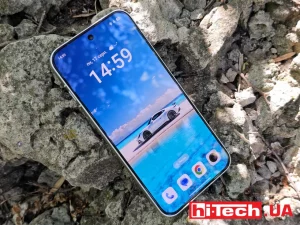
Oppo Reno16 Pro 5G looks like a balanced smartphone, in which the manufacturer tried not to make a single characteristic the defining one. It has many advantages. Let’s tell you what
Ugreen MagFlow Debuts: 25W Qi2.2 Foldable Charger for iPhone
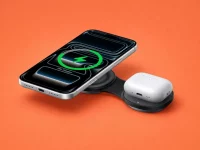
Ugreen is readying a compact 2-in-1 foldable wireless charger with Qi2.2 support. The 25W device efficiently powers the latest iPhone models and AirPods accessories.
Honor Debuts 600S 5G With Massive 8100mAh Battery
Honor has expanded its 600 series with the budget smartphone 600S 5G, headlined by a massive 8100mAh battery. The device has already hit the market in Hong Kong, starting at $255.