

Researchers have found a way to restore worn-out lithium-ion batteries to 100% capacity
28.06.26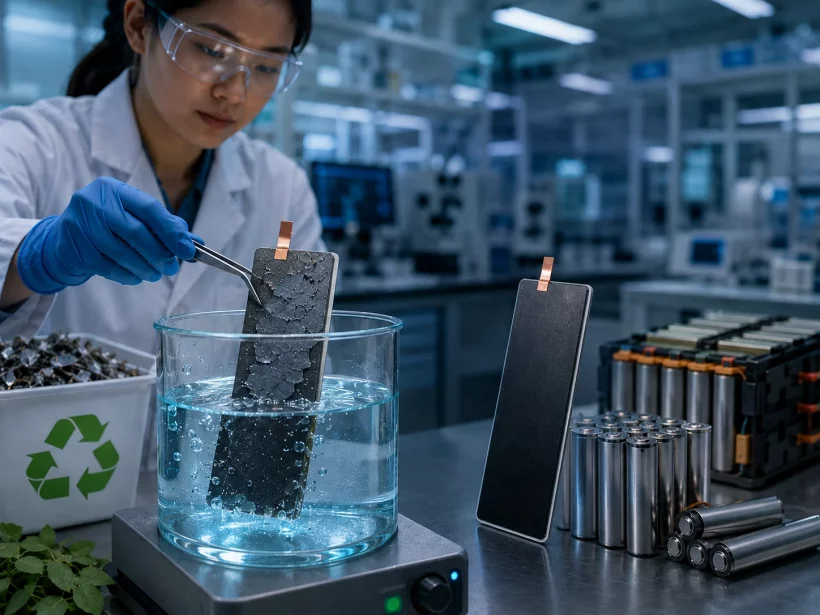
Traditional battery recycling requires complete disassembly of batteries and the use of energy-intensive chemical processes to extract the raw materials. A new technique proposed by a team from Cornell University revolutionizes this approach, extending the life of devices and reducing the cost of recycling.
What is the DEER method?
The innovative process is called Direct Electrode-to-Electrode Regeneration (DEER – direct electrode regeneration). Its essence lies in immersing the battery in a special electrochemical solution, which effectively dissolves the dense layer of solid electrolyte interface (SEI) that has accumulated during operation.
Features of the regeneration process
SEI accumulation occurs over hundreds of charge cycles: the layer gradually thickens, increasing internal resistance and reducing capacity, which becomes the main reason for battery disposal, even if the physical integrity of the battery is not compromised.
- Batteries restored using the DEER method returned up to 95% of their original capacity.
- During the processing process, a protective layer is applied to the electrodes, which slows down further degradation.
- Repeated regeneration cycles allowed the batteries to retain about 90% of their capacity, which proves the possibility of repeatedly extending their life.
Advantages and economic effect
According to analytical data, DEER technology can reduce the cost of secondary cell production by 56%. In addition, the use of this method can significantly reduce emissions of harmful substances into the atmosphere and minimize water consumption compared to classical processing methods.
Next steps for researchers
The team is currently working to expand the technology’s capabilities to combat not only SEI deposits, but also other types of wear, such as lithium loss. The ultimate goal of the developers is to make recycling batteries for electric vehicles and energy storage devices as fast, cheap and environmentally sustainable as possible.
Don't miss interesting news
Subscribe to our channels and read announcements of high-tech news, tes

Oppo A6 Pro smartphone review: ambitious

 0
0 
Creating new mid-range smartphones is no easy task. Manufacturers have to balance performance, camera capabilities, displays, and the overall cost impact of each component. How the new Oppo A6 Pro balances these factors is discussed in our review.
Oppo Reno16 Pro 5G smartphone review: well-heeled
0 
Oppo Reno16 Pro 5G looks like a balanced smartphone, in which the manufacturer tried not to make a single characteristic the defining one. It has many advantages. Let’s tell you what
The Witcher Remake Stalls: Why the Delay?

CD Projekt RED has paused active development of the original The Witcher remake to prioritize resources for The Witcher IV and the Songs of the Past expansion.
Legendary Apple-1 Hatfield Computer Heads Back to Auction

A unique collector’s item—the Apple-1 personal computer known as “Hatfield”—is returning to the Bonhams auction block.