

Google Maps will become smarter with Gemini AI and will receive 3D navigation mode
18.03.26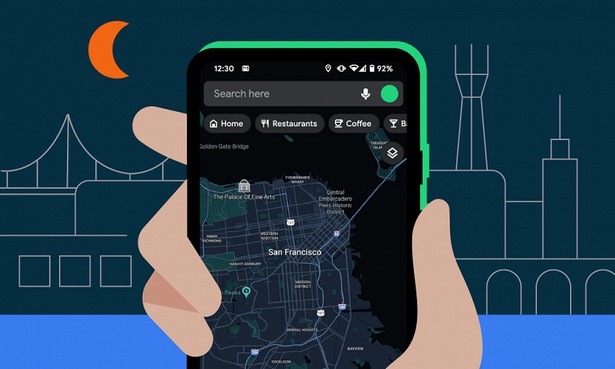
Google has introduced a major update to the Google Maps service. The application has added a new Ask Maps feature, which works on the basis of Gemini models. It allows you to search for places using natural language queries.
The user can formulate complex questions – for example, where you can charge your phone without a long queue or whether there are tennis courts with lighting nearby for playing in the evening. The application analyzes the query and suggests suitable locations.
In essence, the service tries to replace a separate search for information on the Internet. Instead of studying sites and reviews, the user can ask a question directly in the application and get a list of suitable places.
Trip planning and personal recommendations
The new system is also used for travel planning. The user can specify a destination, after which the service will suggest places that may be interesting along the way or near the location.
To form recommendations, the system analyzes data on more than 300 million places around the world, as well as reviews from more than 500 million users.
In this case, the algorithms take into account individual preferences: search history, saved places and previously visited establishments. For example, the service can remember which types of restaurants or cafes the user chooses most often.
Immersive Navigation — the biggest navigation update in a decade
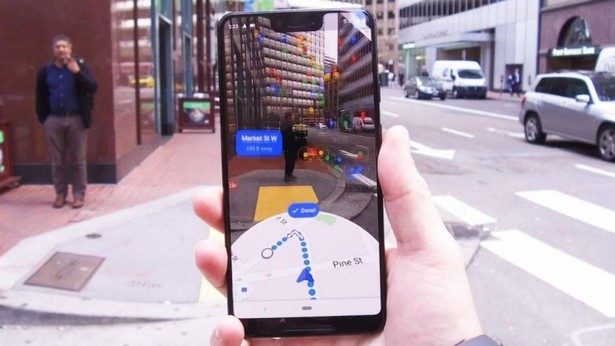
At the same time, the company introduced a redesigned navigation system called Immersive Navigation. In Google Maps, the visual design and logic of prompts while driving have changed.
Maps received a three-dimensional display of buildings, overpasses and elements of the surrounding area. Important road details are also highlighted on the screen – traffic lanes, pedestrian crossings, traffic lights and stop signs. These features also use the Gemini models.
New features for routes and traffic information
The update also applies to route planning tools. The interface has received a wider overview of the road: transparent buildings and dynamic zooming allow you to see difficult turns or the need to change lanes in advance.
Voice prompts have also changed – they have become more natural.
In addition, the service analyzes the traffic situation more actively. The system processes more than five million updates every second around the world to offer alternative routes with fewer traffic jams or faster travel times.
Don't miss interesting news
Subscribe to our channels and read announcements of high-tech news, tes

Oppo A6 Pro smartphone review: ambitious

 0
0 
Creating new mid-range smartphones is no easy task. Manufacturers have to balance performance, camera capabilities, displays, and the overall cost impact of each component. How the new Oppo A6 Pro balances these factors is discussed in our review.
Oppo Reno16 Pro 5G smartphone review: well-heeled
0 
Oppo Reno16 Pro 5G looks like a balanced smartphone, in which the manufacturer tried not to make a single characteristic the defining one. It has many advantages. Let’s tell you what
PlayStation Gaming Monitor: 240Hz Display with Built-in DualSense Dock

Sony has launched its first PlayStation-branded monitor. The 27-inch IPS panel features QHD resolution and a 240Hz refresh rate.
Piston V: A Futuristic Ryzen AI 9 365 Mini-PC With a Touchscreen

Piston V is an unconventional mini-PC featuring a Ryzen AI 9 365 processor, retro design, and a dedicated touchscreen for managing Windows and SteamOS dual-booting.